Give a Gift
 Previous
Soil is more than dirt—it’s a living sponge. Too much water and it suffocates, too little and it starves. The art of gardening lies in finding that balance. Managing water wisely is not only about keeping plants alive, but about sustaining the billions of soil organisms that make fertility possible.
Why Water Matters to Soil
- Nutrient delivery: Water dissolves minerals, carrying them to plant roots.
- Microbial activity: The right moisture fosters microbial life that builds fertility.
- Soil structure: Proper hydration encourages soil particles to bind into aggregates, creating good tilth.
- Root health: Balanced moisture prevents both drought stress and root rot.
“I used to think more water meant happier plants. Now I know—it’s not about more, it’s about right.” —Janet, Oregon
The Two Extremes: Drought vs. Waterlogging
- Drought: Roots shrink, microbes slow, soil hardens and cracks.
- Waterlogging: Roots suffocate without oxygen, diseases thrive, and nutrients leach away.
The goal is the sweet spot: moist, not soggy; resilient, not parched.
Soil Types and Water
- Sandy soils: Drain fast; need frequent light watering and organic matter to retain moisture.
- Clay soils: Hold water too tightly; benefit from organic matter and raised beds to improve drainage.
- Loam soils: Ideal balance, but still benefit from mulch and organic matter.
Drainage Strategies
- Raised beds: Lift soil above poorly drained ground.
- Organic matter: Builds pore space and structure.
- Contour gardening: Plant along natural slopes to reduce runoff.
- French drains or swales: Redirect excess water in soggy areas.
- Mulch: Protects against both evaporation and compaction from heavy rains.
Smart Watering Practices
- Deep, infrequent watering → Encourages deep root growth.
- Morning watering → Reduces evaporation and disease pressure.
- Drip irrigation/soaker hoses → Deliver water right at the soil line, conserving moisture.
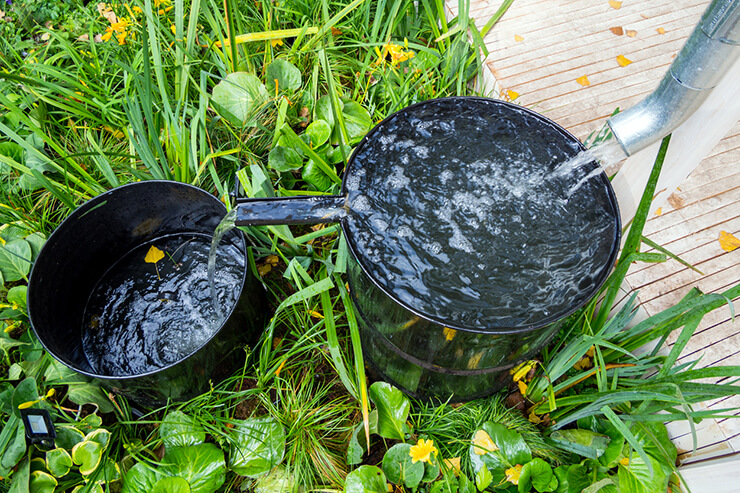
- Rainwater harvesting → Collect from roofs to supplement irrigation.
Seasonal and Zone Considerations
- Cool Zones (3–5): Watch spring thaw—avoid planting in saturated soil.
- Moderate Zones (6–8): Mulch heavily in summer to retain moisture; drainage is less of an issue.
- Warm/Dry Zones (9–12): Prioritize efficient irrigation (drip systems, ollas) and heavy mulching.
Containers and Raised Beds
- Containers: Drainage holes are non-negotiable. Use light potting mixes with perlite or vermiculite.
- Raised beds: Balance rich soil with drainage; avoid overly compacted mixes.
Common Mistakes
- Watering on a schedule instead of checking soil moisture.
- Planting in poorly drained soil without amending or raising.
- Overwatering young seedlings, leading to damping-off disease.
- Forgetting wind exposure—dry winds strip soil moisture quickly.
A Gardener’s Reflection
Water teaches humility. Too much or too little, and the soil lets us know. But when balance is struck, the whole garden thrives—roots dig deep, microbes hum, and harvests shine.
As Daniel from Georgia says:
“The day I switched from sprinklers to soaker hoses, my soil changed. Fewer weeds, fewer diseases, and a lot more life underground.”
Key Takeaway: Healthy soil is built on balanced water. Focus on drainage, choose watering methods that feed the soil (not just the plants), and adapt to your climate and soil type. The result is a garden that drinks deeply, but wisely.