×
  • Home
  • Daily
    • Buyers Guides
    • Composting
    • Container Gardening
    • Easy Healthy Recipes
    • Food Preservation
    • Garden Design
    • Garden Tools
    • Gardening LIfe
      • Animals in the Garden
      • Funny Business
      • Gardening History
      • Gardening Humor
      • Gardening Mishaps
      • Gardening Poems
      • Gardening Romance
      • Gardening Science
      • Gardening with Kids
      • Healing Gardens
      • Joy of Gardening
      • Mystical Gardens
      • Ornamental Gardening
    • Growing Fruits & Berries
    • Indoor Gardening
    • Pests & Diseases
    • Seeds & Seedlings
    • Soil & Fertilizer
    • Spice & Herb Gardening
    • Vegetable Gardening
    • Watering & Irrigation
  • Freebies
  • Videos
  • Libraries
    • Food Gardening Magazine
    • GreenPrints Magazine
    • RecipeLion Magazine
    • GuideBooks
    • Cookbooks
      • Beverages
      • Bakery
      • Breakfast
      • Appetizers
      • Salads & Dressings
      • Soups
      • Entrées
      • Side Dishes & Sauces
      • Desserts
    • Story Collections
    • StoryBooks
    • Recipe Collections
  • Kits
    • Garden Calendars
    • Garden Plans
    • Recipe Cards
    • Greeting Cards
    • ArtPrints
  • Book Club
  • About Us
  • Contact Us
  • Affiliate Program
  • Sponsor Program
  • Give a Gift
  • Privacy Policy & Terms of Use
  • Authors
  • GreenPrints Writer’s Guidelines
  • Keyword Index
  • Join
Crochet, Food Gardening, Knitting, Quilting, Rug Hooking, Sewing

Food Gardener's Book Club

Give a GiftJoin
Visit Our Amazon Store!
  • Daily
    • Buyers Guides
    • Composting
    • Container Gardening
    • Easy Healthy Recipes
    • Food Preservation
    • Garden Design
    • Garden Tools
    • Gardening Life
      • Animals in the Garden
      • Funny Business
      • Gardening History
      • Gardening Humor
      • Gardening Mishaps
      • Gardening Poems
      • Gardening Romance
      • Gardening Science
      • Gardening with Kids
      • Healing Gardens
      • Joy of Gardening
      • Mystical Gardens
      • Ornamental Gardening
    • Growing Fruits & Berries
    • Indoor Gardening
    • Pests & Diseases
    • Seeds & Seedlings
    • Soil & Fertilizer
    • Spice & Herb Gardening
    • Vegetable Gardening
    • Watering & Irrigation
  • Freebies
  • Videos
  • Libraries
    • Food Gardening Magazine
    • GreenPrints Magazine
    • RecipeLion Magazine
    • GuideBooks
    • Cookbooks
      • Beverages
      • Bakery
      • Breakfast
      • Appetizers
      • Salads & Dressings
      • Soups
      • Entrées
      • Side Dishes & Sauces
      • Desserts
    • Story Collections
    • StoryBooks
    • Recipe Collections
  • Kits
    • Garden Calendars
    • Garden Plans
    • Recipe Cards
    • Greeting Cards
    • ArtPrints
  • Book Club
  • Visit Our Amazon Store!|
  • Sign In
  • Search

Fruit Trees: Soil for the Long Haul

Book Club: Soil Care Secrets A to Z

arrow-left Previous
Next arrow-right

Fruit Trees: Soil for the Long Haul

By Don Nicholas

Planting a fruit tree is an act of hope. Unlike lettuce, which rewards you in weeks, or tomatoes, which fill your baskets in a season, a fruit tree takes years to mature. But once established, it can feed your family for generations. That kind of long-term partnership starts with the soil.

When you plant a fruit tree, you’re not just planting for today—you’re preparing the soil for decades of growth, resilience, and productivity.

Fruit Tree Soil Basics

Fruit trees are perennials with deep roots and long lifespans. They need soil that can:

  • Support strong root development.
  • Supply nutrients steadily over time.
  • Drain well but still retain enough moisture to sustain growth through dry spells.

Ideal soil for most fruit trees is a loamy, well-drained soil with plenty of organic matter. pH preferences vary by tree (see below), but most thrive between 6.0 and 7.0.

Planting for Success

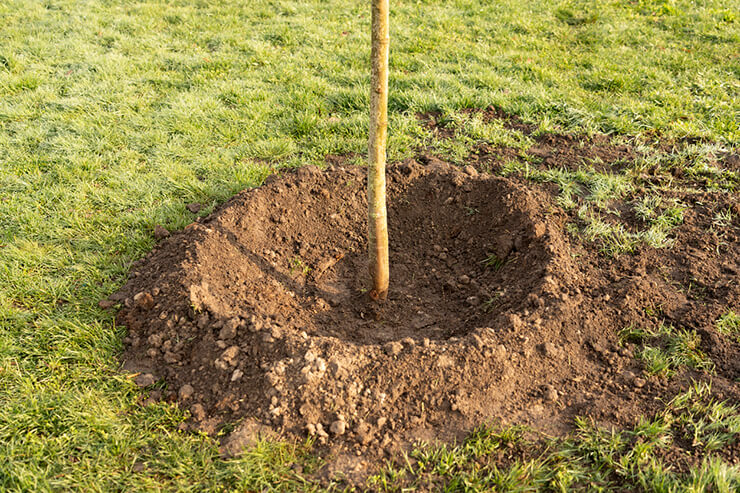
  • Dig wide, not deep: Roots spread outward more than downward. Loosen the soil in a broad circle rather than digging a deep hole.
  • Amend lightly: Add compost to enrich, but don’t overload the planting hole with fertilizer—trees need to acclimate to native soil.
  • Mulch generously: A 3–4 inch layer of organic mulch (wood chips, leaves, straw) keeps roots cool, moisture steady, and weeds at bay.
  • Keep the trunk clear: Leave a “donut hole” around the trunk to prevent rot and rodent damage.

“I thought planting my apple tree in pure compost was a kindness. Instead, the roots never spread into the clay beyond. Lesson learned—blend, don’t pamper.” —Lydia, Pennsylvania

Soil Care Over the Seasons

Spring

  • Top-dress with compost around the drip line (not the trunk).
  • Check soil moisture as trees wake up—deep water if dry.
  • Apply rock dust or kelp meal for micronutrients.

Summer

  • Maintain mulch to conserve moisture.
  • Water deeply but infrequently to encourage deep rooting.
  • For heavy feeders like citrus, supplement with compost tea or organic fertilizer mid-season.

Fall

  • Add another thin layer of compost to prepare for dormancy.
  • Refresh mulch before winter.
  • In colder zones, protect young trees with extra mulch around the root zone.

Winter

  • Let soil rest. In warm zones, cover crops like clover or vetch can enrich orchard soil.
  • Avoid compaction by keeping foot traffic and heavy equipment away.

Tree-Specific Soil Preferences

  • Apples & Pears: Thrive in slightly acidic to neutral soil (pH 6.0–7.0). Require good drainage—standing water is a killer.
  • Stone Fruits (cherries, peaches, plums, apricots): Prefer sandy loam with excellent drainage. Sensitive to waterlogged soils.
  • Citrus: Like sandy or loamy soil with high organic matter. Keep mulch away from the trunk to avoid fungal diseases.
  • Figs: Tolerant of poorer soils but appreciate compost-rich loam. Do best in slightly alkaline soils.
  • Blueberries (technically shrubs, but orchard cousins): Need acidic soil (pH 4.5–5.5) rich in organic matter.

Orchard Floor Management

Healthy trees don’t just depend on the hole you plant them in—they depend on the entire orchard floor.

  • Mulch: Wood chips, shredded bark, or straw. Replenish yearly.
  • Cover crops: Clover or vetch between rows improves nitrogen.
  • Living mulch: Low-growing herbs (thyme, chamomile) around trees attract pollinators and repel pests.
  • Weed control: A mulched ring around the base keeps trees from competing with grass.

Common Fruit Tree Soil Problems

  • Yellowing leaves → Could be iron deficiency (common in alkaline soils). Fix with sulfur to lower pH or chelated iron.
  • Poor fruit set → Soil may lack phosphorus or potassium; add bone meal or wood ash as needed.
  • Root rot → Too much water, poor drainage; fix with raised mounds or French drains.
  • Stunted growth in young trees → Soil compaction; aerate carefully and keep mulch in place.

A Gardener’s Reflection

Fruit trees are patient teachers. They remind us that soil care is not just about today’s harvest, but about years and decades of abundance. With the right start and steady care, your soil will support a tree that feeds children, grandchildren, and neighbors yet to come.

As Miguel from California put it:

“The day I planted my lemon tree, I thought about my kids drinking lemonade from it in ten years. Now they climb it to pick lemons themselves. The soil I cared for made that possible.”

Key Takeaway: Fruit trees are a long-term relationship with the soil. Build a strong foundation at planting, maintain fertility with compost and mulch, and protect drainage and structure. Care for the soil, and it will feed your family for generations.


arrow-left Previous
Next arrow-right

Tags

blueberries, bone meal, compost tea, fertilizer, fruit tree soil, fruit trees, kelp meal, organic fertilizer

Comments

Click here to cancel reply.

Leave a Reply Cancel reply

Your email address will not be published. Required fields are marked *

TABLE OF CONTENTS

  • Healthy Soil for a Bountiful Harvest
  • What Is Soil, Really?
  • Why Healthy Soil Means Healthy Food
  • The A-to-Z of Soil Health
  • Testing Your Soil: The Gardener’s Report Card
  • Amending Existing Soil: Fix, Don’t Fight
  • Building Soil from Scratch: Raised Beds and Containers
  • Organic Principles for Food Gardeners
  • In-Ground Gardens: Working with the Soil You’ve Got
  • Raised Beds: Soil Layering, Refreshing, and Renewal
  • Containers: Small Spaces, Big Potential
  • Herbs: Fragrant and Flavorful in Any Soil
  • Vegetables: Feeding the Family
  • Fruit Trees: Soil for the Long Haul
  • Berries: Sweet Soil Secrets
  • Spring: Waking the Soil
  • Summer: Feeding the Feast
  • Fall: Putting the Garden to Bed
  • Winter: Rest, Reflect, Rebuild
  • Soil Care in Cold Climates (Zones 3–5)
  • Soil Care in Moderate Climates (Zones 6–8)
  • Soil Care in Warm & Tropical Climates (Zones 9–12)
  • Composting A to Z
  • Cover Crops and Green Manure
  • Mulching Matters
  • Crop Rotation and Soil Balance
  • Water, Drainage, and Soil Health
  • Soil pH and Mineral Balance
  • Soil Life and the Food Web
  • Soil Troubleshooting Guide A to Z
  • Putting It All Together — A Year in the Life of Healthy Soil
  • A Gardener’s Promise

Enter Your Log In Credentials

This setting should only be used on your home or work computer.

  • Lost your password? Create New Password
  • No account? Sign up

Need Assistance?

Call Food Gardening Network Customer Service at
(800) 777-2658

Food Gardening Network is an active member of the following industry associations:

  • American Horticultural Society
  • GardenComm Logo
  • GardenComm Laurel Media Award
  • MCMA logo
  • Join Now
  • Learn More
  • About Food Gardening Network
  • Contact Us
  • Affiliate Program
  • Sponsor Program
  • Give a Gift
  • Privacy Policy & Terms of Use
  • Food Gardener’s Book Club FAQ

Food Gardening Network
99 Derby Street, Suite 200
Hingham, MA 02043
support@foodgardening.mequoda.com

To learn more about our Email Marketing and Broadcasting Services, Exchange Program, or to become a marketing partner with any of our publications, click here to contact us at Mequoda Publishing Network.

FREE E-Newsletter for You!

Discover how to grow, harvest, and eat good food from your own garden—with our FREE e-newsletter, delivered directly to your email inbox.

  • Facebook
  • Twitter
  • Instagram
  • Pinterest

Powered by
Mequoda Publishing Network
copyright © 2026 Mequoda Systems, LLC

Food Gardening Network®, Food Gardening Magazine® and GreenPrints® are registered trademarks of Mequoda Systems, LLC.