×
  • Home
  • Daily
    • Buyers Guides
    • Composting
    • Container Gardening
    • Easy Healthy Recipes
    • Food Preservation
    • Garden Design
    • Garden Tools
    • Gardening LIfe
      • Animals in the Garden
      • Funny Business
      • Gardening History
      • Gardening Humor
      • Gardening Mishaps
      • Gardening Poems
      • Gardening Romance
      • Gardening Science
      • Gardening with Kids
      • Healing Gardens
      • Joy of Gardening
      • Mystical Gardens
      • Ornamental Gardening
    • Growing Fruits & Berries
    • Indoor Gardening
    • Pests & Diseases
    • Seeds & Seedlings
    • Soil & Fertilizer
    • Spice & Herb Gardening
    • Vegetable Gardening
    • Watering & Irrigation
  • Freebies
  • Videos
  • Libraries
    • Food Gardening Magazine
    • GreenPrints Magazine
    • RecipeLion Magazine
    • GuideBooks
    • Cookbooks
      • Beverages
      • Bakery
      • Breakfast
      • Appetizers
      • Salads & Dressings
      • Soups
      • Entrées
      • Side Dishes & Sauces
      • Desserts
    • Story Collections
    • StoryBooks
    • Recipe Collections
  • Kits
    • Garden Calendars
    • Garden Plans
    • Recipe Cards
    • Greeting Cards
    • ArtPrints
  • Book Club
  • About Us
  • Contact Us
  • Affiliate Program
  • Sponsor Program
  • Give a Gift
  • Privacy Policy & Terms of Use
  • Authors
  • GreenPrints Writer’s Guidelines
  • Keyword Index
  • Join
Crochet, Food Gardening, Knitting, Quilting, Rug Hooking, Sewing

Food Gardener's Book Club

Give a GiftJoin
Visit Our Amazon Store!
  • Daily
    • Buyers Guides
    • Composting
    • Container Gardening
    • Easy Healthy Recipes
    • Food Preservation
    • Garden Design
    • Garden Tools
    • Gardening Life
      • Animals in the Garden
      • Funny Business
      • Gardening History
      • Gardening Humor
      • Gardening Mishaps
      • Gardening Poems
      • Gardening Romance
      • Gardening Science
      • Gardening with Kids
      • Healing Gardens
      • Joy of Gardening
      • Mystical Gardens
      • Ornamental Gardening
    • Growing Fruits & Berries
    • Indoor Gardening
    • Pests & Diseases
    • Seeds & Seedlings
    • Soil & Fertilizer
    • Spice & Herb Gardening
    • Vegetable Gardening
    • Watering & Irrigation
  • Freebies
  • Videos
  • Libraries
    • Food Gardening Magazine
    • GreenPrints Magazine
    • RecipeLion Magazine
    • GuideBooks
    • Cookbooks
      • Beverages
      • Bakery
      • Breakfast
      • Appetizers
      • Salads & Dressings
      • Soups
      • Entrées
      • Side Dishes & Sauces
      • Desserts
    • Story Collections
    • StoryBooks
    • Recipe Collections
  • Kits
    • Garden Calendars
    • Garden Plans
    • Recipe Cards
    • Greeting Cards
    • ArtPrints
  • Book Club
  • Visit Our Amazon Store!|
  • Sign In
  • Search

Soil pH and Mineral Balance

Book Club: Soil Care Secrets A to Z

arrow-left Previous
Next arrow-right

Soil pH and Mineral Balance

By Don Nicholas

If soil is the body of the garden, then pH is its heartbeat. Too acidic, and certain nutrients are locked away. Too alkaline, and others wash through unused. Striking the right balance doesn’t mean chasing a “perfect” number—it means finding the range where your crops thrive and your soil life hums.

What Is pH?

  • Definition: pH measures how acidic or alkaline soil is, on a scale of 0–14.
  • Neutral: 7.0
  • Acidic: Below 7.0
  • Alkaline: Above 7.0

Most food crops prefer a slightly acidic range (6.0–7.0), but every plant family has its quirks.

Why pH Matters

  • Nutrient availability: At the right pH, nutrients unlock for plant uptake.
  • Microbial health: Beneficial microbes thrive in balanced soil.
  • Plant resilience: Correct pH reduces stress and disease susceptibility.

“Once I tested my soil and adjusted the pH, my blueberries went from pitiful to plentiful in just two seasons.” —Laura, Maine

pH Preferences of Common Crops

  • 6.0–7.0 (Neutral-ish): Tomatoes, beans, carrots, lettuce, cucumbers
  • Slightly Acidic (5.5–6.5): Potatoes, strawberries, peppers
  • More Acidic (4.5–5.5): Blueberries, cranberries, azaleas (for berry lovers)
  • Slightly Alkaline (7.0–7.5): Asparagus, cabbage, spinach, beets

Testing Your Soil

  • Home test kits: Inexpensive, quick results, but less precise.
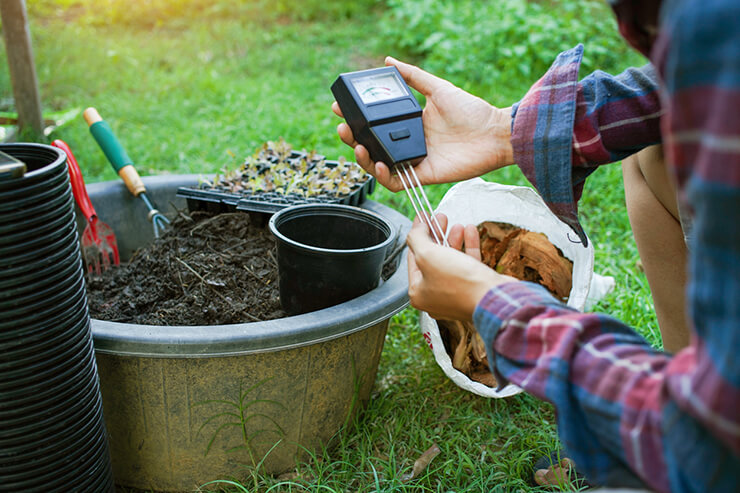
  • pH meters: Easy for regular monitoring.
  • Lab tests: Provide detailed analysis (including nutrient and mineral breakdown).

Adjusting pH Naturally

  • To raise pH (reduce acidity):
  • Agricultural lime (dolomitic lime adds magnesium as well)
  • Crushed eggshells or oyster shells (slow release)
  • To lower pH (reduce alkalinity):
  • Elemental sulfur
  • Pine needles or peat moss (slow, subtle shifts)
  • Coffee grounds (mild effect)

Note: Adjustments take time—especially lime and sulfur, which may take months to fully integrate.

Mineral Balance: Beyond pH

  • Nitrogen (N) → Leafy growth
  • Phosphorus (P) → Roots, flowers, and fruit
  • Potassium (K) → Plant vigor, disease resistance
  • Calcium → Strong cell walls (prevents blossom end rot in tomatoes)
  • Magnesium → Chlorophyll production
  • Micronutrients (iron, zinc, manganese, copper, boron) → Small amounts, big impact

Strategies for Balanced Minerals

  • Rotate crops to avoid over-mining specific nutrients.
  • Add compost annually for broad-spectrum mineral replenishment.
  • Use rock dusts or seaweed for trace minerals.
  • Apply amendments only as needed—more is not always better.

Zone and Seasonal Considerations

  • Northern zones (3–5): Acidic soils common; lime may be needed.
  • Mid zones (6–8): Usually balanced but variable with rainfall.
  • Southern/western zones (9–12): Alkaline soils common; sulfur or organic matter often required.

Common Mistakes

  • Overcorrecting—swinging soil from acidic to alkaline or vice versa.
  • Ignoring crop-specific needs (blueberries won’t thrive in “tomato soil”).
  • Forgetting minerals when focusing only on N-P-K.
  • Assuming amendments work instantly—patience is part of soil care.

A Gardener’s Reflection

Adjusting soil pH is like fine-tuning an instrument. It doesn’t need perfection, just harmony. And like a good garden orchestra, balance comes from patience, small adjustments, and listening to what the plants are telling you.

As Sam from Arizona put it:

“I used to think my desert soil was hopeless. Once I learned to lower the pH and add the right minerals, it became an oasis.”

Key Takeaway: Soil pH sets the stage for nutrient availability, and mineral balance keeps the performance going. Test regularly, adjust gently, and match your soil chemistry to your crops for tastier, healthier harvests.


arrow-left Previous
Next arrow-right

Tags

beets, blueberries, cucumbers, my soil, peppers

Comments

Click here to cancel reply.

Leave a Reply Cancel reply

Your email address will not be published. Required fields are marked *

TABLE OF CONTENTS

  • Healthy Soil for a Bountiful Harvest
  • What Is Soil, Really?
  • Why Healthy Soil Means Healthy Food
  • The A-to-Z of Soil Health
  • Testing Your Soil: The Gardener’s Report Card
  • Amending Existing Soil: Fix, Don’t Fight
  • Building Soil from Scratch: Raised Beds and Containers
  • Organic Principles for Food Gardeners
  • In-Ground Gardens: Working with the Soil You’ve Got
  • Raised Beds: Soil Layering, Refreshing, and Renewal
  • Containers: Small Spaces, Big Potential
  • Herbs: Fragrant and Flavorful in Any Soil
  • Vegetables: Feeding the Family
  • Fruit Trees: Soil for the Long Haul
  • Berries: Sweet Soil Secrets
  • Spring: Waking the Soil
  • Summer: Feeding the Feast
  • Fall: Putting the Garden to Bed
  • Winter: Rest, Reflect, Rebuild
  • Soil Care in Cold Climates (Zones 3–5)
  • Soil Care in Moderate Climates (Zones 6–8)
  • Soil Care in Warm & Tropical Climates (Zones 9–12)
  • Composting A to Z
  • Cover Crops and Green Manure
  • Mulching Matters
  • Crop Rotation and Soil Balance
  • Water, Drainage, and Soil Health
  • Soil pH and Mineral Balance
  • Soil Life and the Food Web
  • Soil Troubleshooting Guide A to Z
  • Putting It All Together — A Year in the Life of Healthy Soil
  • A Gardener’s Promise

Enter Your Log In Credentials

This setting should only be used on your home or work computer.

  • Lost your password? Create New Password
  • No account? Sign up

Need Assistance?

Call Food Gardening Network Customer Service at
(800) 777-2658

Food Gardening Network is an active member of the following industry associations:

  • American Horticultural Society
  • GardenComm Logo
  • GardenComm Laurel Media Award
  • MCMA logo
  • Join Now
  • Learn More
  • About Food Gardening Network
  • Contact Us
  • Affiliate Program
  • Sponsor Program
  • Give a Gift
  • Privacy Policy & Terms of Use
  • Food Gardener’s Book Club FAQ

Food Gardening Network
99 Derby Street, Suite 200
Hingham, MA 02043
support@foodgardening.mequoda.com

To learn more about our Email Marketing and Broadcasting Services, Exchange Program, or to become a marketing partner with any of our publications, click here to contact us at Mequoda Publishing Network.

FREE E-Newsletter for You!

Discover how to grow, harvest, and eat good food from your own garden—with our FREE e-newsletter, delivered directly to your email inbox.

  • Facebook
  • Twitter
  • Instagram
  • Pinterest

Powered by
Mequoda Publishing Network
copyright © 2026 Mequoda Systems, LLC

Food Gardening Network®, Food Gardening Magazine® and GreenPrints® are registered trademarks of Mequoda Systems, LLC.