Give a Gift
 Previous
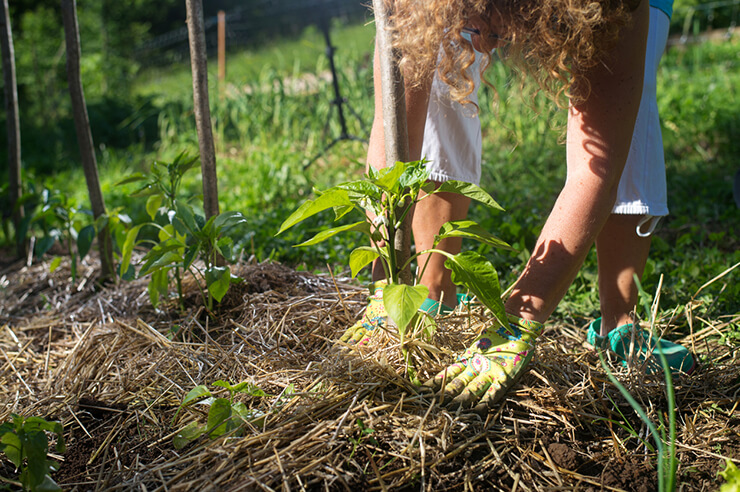
Gardeners have many allies, but mulch might be the quietest hero of them all. A good mulch is like a blanket for your soil—it shields it from the weather, conserves moisture, keeps weeds in check, and slowly adds fertility as it breaks down. If cover crops are the garden’s green armor, mulch is the patchwork quilt that tucks the soil in and keeps it cozy.
Why Mulch is Essential
- Moisture balance: Reduces evaporation in summer, insulates in winter.
- Weed control: Blocks light, smothering unwanted plants.
- Soil temperature regulation: Keeps roots cool in heat, warm in cold.
- Erosion protection: Shields soil from pounding rain and wind.
- Nutrient cycling: Organic mulches decompose, enriching soil over time.
- Habitat creation: Provides cover for beneficial insects, worms, and microbes.
“Once I started mulching, I realized I watered half as much—and weeded half as often. It’s the best garden hack I ever learned.” —Lydia, New Mexico
Types of Mulch
Organic Mulches (Soil-Feeding)
- Straw or hay (weed-free): Light, excellent for veggies.
- Wood chips & bark: Long-lasting, best around perennials and trees.
- Leaves (shredded): Abundant and free—great fall mulch.
- Grass clippings: Nitrogen boost, but apply in thin layers.
- Compost: Doubles as mulch and soil amendment.
Living Mulches
- Low-growing cover crops (like clover) planted around crops.
- Suppress weeds and feed soil without adding another task.
Inorganic Mulches (Protective Only)
- Landscape fabric: Short-term weed barrier; not soil-feeding.
- Gravel/pebbles: Long-term, good for paths or xeriscaping.
Mulching by the Seasons
- Spring: Mulch after soil warms up; too early can delay planting.
- Summer: Refresh mulch to conserve water in heat.
- Fall: Lay down thick mulch to insulate soil, protect perennials, and smother winter weeds.
- Winter: Mulch root crops and perennials for freeze protection.
Zone-Specific Mulch Strategies
- Cold Zones (3–5): Thick straw or leaves to insulate against deep frost.
- Moderate Zones (6–8): Seasonal rotation—lighter mulch in spring/summer, heavier in fall.
- Warm Zones (9–12): Use mulches that cool the soil (wood chips, straw) and prevent rapid drying.
Raised Beds & Containers
- Raised beds: A 2–3 inch layer of straw, shredded leaves, or compost keeps soil thriving.
- Containers: Light mulch (like shredded leaves or coco coir) prevents drying out without compacting.
Common Mulching Mistakes
- Mulch volcanoes around trees → Burying trunks causes rot; keep mulch pulled back a few inches.
- Too thick → Can suffocate roots and harbor pests; 2–4 inches is ideal.
- Using contaminated materials → Avoid hay with weed seeds or treated wood chips.
- Plastic sheeting left too long → Can suffocate soil life.
Mulch + Compost = Super Soil
One of the best combos? Mulch over compost.
Spread compost, then cover with straw, leaves, or chips. The compost feeds from below, the mulch protects from above—a soil sandwich with everything it needs.
A Gardener’s Reflection
Mulching is one of those simple practices that changes everything once you try it. It’s not glamorous, but it’s transformative. The soil stays moist and alive, weeds fade, and the whole garden feels more manageable.
As Eric from Maine put it:
“I thought mulch was just about looks. Now I see it’s about life—the life in the soil, and the life it gives back to my plants.”
Key Takeaway: Mulch is more than decoration—it’s soil armor, water saver, weed blocker, and fertility builder. Choose the right mulch for your garden style, refresh it seasonally, and your soil will reward you year after year.