×
  • Home
  • Daily
    • Buyers Guides
    • Composting
    • Container Gardening
    • Easy Healthy Recipes
    • Food Preservation
    • Garden Design
    • Garden Tools
    • Gardening LIfe
      • Animals in the Garden
      • Funny Business
      • Gardening History
      • Gardening Humor
      • Gardening Mishaps
      • Gardening Poems
      • Gardening Romance
      • Gardening Science
      • Gardening with Kids
      • Healing Gardens
      • Joy of Gardening
      • Mystical Gardens
      • Ornamental Gardening
    • Growing Fruits & Berries
    • Indoor Gardening
    • Pests & Diseases
    • Seeds & Seedlings
    • Soil & Fertilizer
    • Spice & Herb Gardening
    • Vegetable Gardening
    • Watering & Irrigation
  • Freebies
  • Videos
  • Libraries
    • Food Gardening Magazine
    • GreenPrints Magazine
    • RecipeLion Magazine
    • GuideBooks
    • Cookbooks
      • Beverages
      • Bakery
      • Breakfast
      • Appetizers
      • Salads & Dressings
      • Soups
      • Entrées
      • Side Dishes & Sauces
      • Desserts
    • Story Collections
    • StoryBooks
    • Recipe Collections
  • Kits
    • Garden Calendars
    • Garden Plans
    • Recipe Cards
    • Greeting Cards
    • ArtPrints
  • Book Club
  • About Us
  • Contact Us
  • Affiliate Program
  • Sponsor Program
  • Give a Gift
  • Privacy Policy & Terms of Use
  • Authors
  • GreenPrints Writer’s Guidelines
  • Keyword Index
  • Join
Crochet, Food Gardening, Knitting, Quilting, Rug Hooking, Sewing

Food Gardener's Book Club

Give a GiftJoin
Visit Our Amazon Store!
  • Daily
    • Buyers Guides
    • Composting
    • Container Gardening
    • Easy Healthy Recipes
    • Food Preservation
    • Garden Design
    • Garden Tools
    • Gardening Life
      • Animals in the Garden
      • Funny Business
      • Gardening History
      • Gardening Humor
      • Gardening Mishaps
      • Gardening Poems
      • Gardening Romance
      • Gardening Science
      • Gardening with Kids
      • Healing Gardens
      • Joy of Gardening
      • Mystical Gardens
      • Ornamental Gardening
    • Growing Fruits & Berries
    • Indoor Gardening
    • Pests & Diseases
    • Seeds & Seedlings
    • Soil & Fertilizer
    • Spice & Herb Gardening
    • Vegetable Gardening
    • Watering & Irrigation
  • Freebies
  • Videos
  • Libraries
    • Food Gardening Magazine
    • GreenPrints Magazine
    • RecipeLion Magazine
    • GuideBooks
    • Cookbooks
      • Beverages
      • Bakery
      • Breakfast
      • Appetizers
      • Salads & Dressings
      • Soups
      • Entrées
      • Side Dishes & Sauces
      • Desserts
    • Story Collections
    • StoryBooks
    • Recipe Collections
  • Kits
    • Garden Calendars
    • Garden Plans
    • Recipe Cards
    • Greeting Cards
    • ArtPrints
  • Book Club
  • Visit Our Amazon Store!|
  • Sign In
  • Search

In-Ground Gardens: Working with the Soil You’ve Got

In-Ground Gardens: Working with the Soil You’ve Got

By Don Nicholas

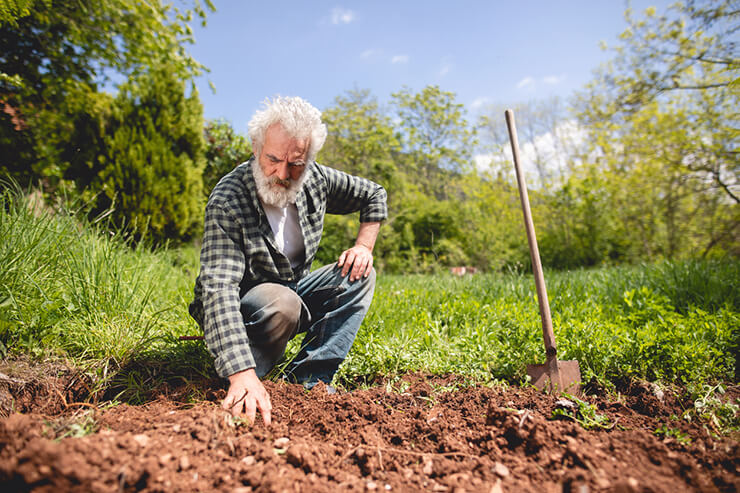
There’s a certain romance to planting straight into the earth—no lumber to buy, no bags to haul, just you, a spade, and the promise of harvest. In-ground food gardens can be wildly productive and resilient, especially when you learn to partner with the soil that’s already there. This chapter shows you how to read it, feed it, and coax it into steady, long-term fertility.

Start with Observation (and a Shovel Test)

Before amending anything, do three quick checks:

  1. Texture squeeze

Moisten a handful of soil and squeeze.

  • Ribbons smoothly = clay-leaning
  • Falls apart = sandy
  • Holds a loose ball = silty/loam
  1. Drainage check

Dig a 12″ hole, fill with water twice. The second fill should drain in 2–6 hours. Faster = sandy/low OM; slower = compaction or heavy clay.

  1. Shovel stratigraphy

Slice a spade down and pry back. Look for crumbly aggregates, roots penetrating 8–12″, and worm channels. Grey, platey layers signal compaction.

“I spent 15 minutes testing and saved myself months of guesswork.” —Kara, Missouri

Layout for Longevity

  • Bed width: 30–42″ so you never step on beds (foot traffic = compaction).
  • Permanent paths: Mulch with wood chips, leaves, or straw.
  • Contour with the land: On slopes, run beds on contour or add mild terraces to reduce erosion.
  • Wind and water: Plant hedges or low fences as windbreaks; add swales/berms where runoff scours.

The Core Amendment Plan (Organic & Scalable)

Think of this as your perennial soil-health rhythm.

Spring (Wake & Prep)

  • Rake off winter mulch, leaving a thin layer.
  • Top-dress 1–2″ finished compost (5–10 gallons per 10 sq ft).
  • Targeted mineral nudge if a lab test suggests it (e.g., lime, gypsum, rock phosphate).
  • In clay: broadfork once to 8–10″ (don’t flip soil).
  • In sand: add extra compost + biochar pre-charged with compost tea.

Summer (Feed & Protect)

  • Side-dress heavy feeders (tomatoes, corn, brassicas) with compost or worm castings mid-season.
  • Maintain 2–3″ mulch (straw, shredded leaves, or ramial chips).
  • Spot-aerate compacted bands with a garden fork.

Fall (Bank Fertility)

  • Broadcast cover crops (choose by zone; see below).
  • Top-dress 1″ compost before first frost; re-mulch beds.
  • Leave roots of finished crops in ground to decay into channels.

Winter (Rest & Plan)

  • Keep beds covered (living covers or mulch). Bare soil is losing carbon, moisture, and microbes.

“I stopped tilling, kept the beds mulched, and the worms did the heavy lifting.” —Sam, Pennsylvania

Clay, Sand, and “In-Between”: Specific Tactics

Heavy Clay

  • Annual 1–2″ compost + leaf mold.
  • Gypsum (if sodium or dispersion issues per test).
  • Avoid working when wet; use boards to spread weight.
  • Deep-rooting cover crops (tillage radish, crimson clover) to punch channels.

Sandy

  • Compost + biochar every season; keep mulch thick.
  • Seaweed/kelp meal for micronutrients.
  • Plant windbreaks; use shade cloth during heat spikes to reduce evap losses.
  • Frequent light fertigation with compost tea.

Silty/Loam

  • Guard structure: no till when wet, maintain mulch.
  • Rotate families; integrate legumes annually.

Cover Crops by Goal (and Zone Hints)

  • Add Nitrogen: Crimson clover (Zones 6–9), hairy vetch (4–7), cowpeas (8–11).
  • Break Compaction: Daikon/tillage radish (3–9).
  • Winter Armor: Winter rye (3–7), triticale (4–8), oats (5–9, winterkills for easy spring prep).
  • Summer Soil-Builder: Buckwheat (all zones warm season) for quick biomass and pollinators.

Quick mix recipes:

  • Fall (Zones 5–8): Winter rye + crimson clover.
  • Fall (Zones 3–4): Winter rye + hairy vetch (terminate late).
  • Summer (Zones 7–10): Buckwheat + cowpeas between successions.

Water & Erosion Management

  • Infiltration first: Swales along contour, rain barrels, soaker hoses under mulch.
  • Edge armor: Living borders (thyme, strawberries) at bed edges to reduce splash and erosion.
  • Flood-prone sites: Slightly raised rows; fast-draining side trenches to move standing water off beds.

Crop Family Soil Notes (In-Ground)

  • Brassicas (cabbage, kale): Even moisture; steady N from compost; pH ~6.5–6.8.
  • Solanaceae (tomatoes, peppers): Calcium access (lime if pH allows), deep mulch, mycorrhizae inoculation at transplant.
  • Root crops (carrot, beet): Loose top 10–12″; sift large debris; low-salt amendments.
  • Legumes (beans, peas): Inoculate seed; avoid high N; let roots remain to release N later.
  • Alliums (onion, garlic): High OM, consistent P; keep beds weed- and crust-free.

Zone-By-Zone Seasonal Snapshots (Soil Actions)

Zones 3–5 (Cold)

  • Spring: Delay working until soil crumbles, not smears.
  • Summer: Mulch thick to buffer heat/dry spells.
  • Fall: Rye/vetch; leaf mold heaps are gold.
  • Winter: Snow cover = moisture bank; avoid walking on frozen beds.

Zones 6–8 (Moderate)

  • Spring: Early compost + broadfork; successive plantings.
  • Summer: Compost tea side-dress; shade cloth in heat waves.
  • Fall: Big compost push; multi-species cover mix.
  • Winter: Many beds can carry winter greens under mulch/low tunnels—keep soil biology active.

Zones 9–12 (Warm/Tropical)

  • Spring: Biochar + compost to hold nutrients; partial shade for young transplants.
  • Summer (wet): Raised ridges; relentless mulch; living covers between rows.
  • Fall/Winter: Prime production window—rotate heavy feeders with legumes; flush salts if irrigating.

“In Zone 9, I stopped fighting summer and switched my heavy work to fall and winter. The soil thanked me.” —Priya, Texas

No-Till (or Low-Till) for In-Ground Beds

  • Broadfork instead of double-digging after year one.
  • Keep roots in place; slice crops at the crown.
  • Compost + mulch = biological tillage.
  • Reserve “full till” only for major resets (e.g., perennial weed invasion), then return to no-till.

Troubleshooting: Quick Soil Fix Matrix

  • Water puddles after rain → Fork-aerate + add coarse compost; plant tillage radish in fall.
  • Crusty surface → Topdress sifted compost; add fine mulch; reduce overhead watering.
  • Yellowing leaves (general) → Check pH; supply balanced organic fert; improve drainage.
  • Blossom end rot (tomatoes/peppers) → Inconsistent watering + Ca access; mulch, steady moisture, ensure pH allows calcium uptake.
  • Weak growth in “used” beds → Add 1–2″ compost, rotate families, plant a short cover crop break (buckwheat).

Safety & Legacy Issues

  • Near old structures/roads? Test for heavy metals. If elevated, pivot that area to ornamentals, or cap with raised beds lined and filled with clean mixes for food production.

A Gardener’s Reflection

The day I stopped trying to turn my clay into someone else’s loam and started building my soil was the day my in-ground garden took off. Soil doesn’t need to be perfect—it needs to be alive and steadily improved. Give it compost, cover, and kindness, and it will pay you back with flavor you can’t buy.

“I used to till every spring. Now I feed and mulch. My weeds are fewer, my worms are fatter, and my soups taste better.” —Elaine, Oregon

Key Takeaway: In-ground gardens succeed when you protect structure, add organic matter, keep living roots or mulch on the soil, and match your practices to your zone and texture. Work with your native soil, and it will work with you.


« Organic Principles for Food Gardeners
Raised Beds: Soil Layering, Refreshing, and Renewal »

Tags

compost tea, finished compost, heavy clay, leaf mold, my soil, radish, worm castings

Comments

Click here to cancel reply.

Leave a Reply Cancel reply

Your email address will not be published. Required fields are marked *

Give a Gift

FREEBIE!

With your FREEBIE, you’ll also receive regular email messages from the Food Gardening Network. You can unsubscribe at any time.

Your email address is private. We promise never to sell, rent or disclose your email address to third parties.

Freebies

  • Worst Best Gardening Jokes Calendar
  • 5 Easy Healthy Carrot Recipes
  • 5 Easy Healthy Lemon Recipes
  • 5 Easy Healthy Salsa Recipes
  • 5 Easy Healthy Apple Recipes
  • 5 Easy Healthy Chicken Breast Recipes
  • Top 11 Food Gardening Tools You Need to Succeed
  • A Printable Companion Planting Chart
  • Plants for Bug Control Chart
  • Printable Seed Germination Temperature Chart
  • Printable Tomato Garden-to-Table Chart
  • Planning Your Perfect Food Garden
  • Printable Butterfly Garden Planting Chart
  • The Best Way to Grow Tomatoes
  • Printable Composting 101 Charts
  • How to Master Spice and Herb Gardening at Home
  • 10 Best Garden Poems of All Time
  • Vegetable Garden Planting Chart Freebie
  • Printable Flower Garden Companion Planting Chart
  • 10 Things You Can Grow That Your Pet Will LOVE To Eat!
  • Rose Garden Planting Chart Freebie
  • Printable Kitchen Garden Planting Charts
  • Sunflower Garden Planting Chart Freebie
  • Seasonal ArtPrints Collection Kit Sampler
  • Sampler: Gardening Humor
  • Sampler: Wit, Wisdom, & Learning
  • Gardening in Every Season
  • How to Start a Freedom Garden
  • Recipes from Your Garden
  • Sampler: Animals in the Garden
  • Sampler: Healing Gardens
  • Sampler: Joy of Gardening
  • Growing Vegetables Indoors for Beginners
  • 15 Easiest Fruits to Grow at Home
  • How to Grow a Vegetable Garden

Browse Topics

  • Buyers Guides
  • Composting
  • Container Gardening
  • Easy Healthy Recipes
  • Food Preservation
  • Garden Design
  • Garden Tools
  • Gardening Life
  • Growing Fruits & Berries
  • Indoor Gardening
  • Ornamental Gardening
  • Pests & Diseases
  • Seeds & Seedlings
  • Soil & Fertilizer
  • Spice & Herb Gardening
  • Uncategorized
  • Vegetable Gardening
  • Watering & Irrigation

Buyers Guides:

  • 9 Automated Garden Tools for Effortless Growing
  • 12 Cool Gardening Tools and Gifts for the Plant Lover in Your Life
  • Choosing the Best Shovel for Your Gardening Needs
  • 10 Gardening Tools for Seniors That Actually Make a Difference
  • This Countertop Compost Machine Turns Scraps into Compost in a Few Hours
  • 10+ Food Gardening Gadgets We Love
  • 15 Adaptive and Accessible Gardening Tools and Raised Beds
  • 13 Canning Tools, Supplies & Equipment You Need
  • The 3 Best Gardening Shoes
  • 5+ Best Bird Deterrents for Gardens
  • Shop Our Amazon Store

Authors:

  • Bill Dugan
  • Amanda MacArthur
  • Mike McGrath
  • Don Nicholas
  • Norann Oleson
  • Christy Page
  • Becky Rupp
  • Beth Rush
  • Pat Stone
  • Diana Wells

Enter Your Log In Credentials

This setting should only be used on your home or work computer.

  • Lost your password? Create New Password
  • No account? Sign up

Need Assistance?

Call Food Gardening Network Customer Service at
(800) 777-2658

Food Gardening Network is an active member of the following industry associations:

  • American Horticultural Society
  • GardenComm Logo
  • GardenComm Laurel Media Award
  • MCMA logo
  • Join Now
  • Learn More
  • About Food Gardening Network
  • Contact Us
  • Affiliate Program
  • Sponsor Program
  • Give a Gift
  • Privacy Policy & Terms of Use
  • Food Gardener’s Book Club FAQ

Food Gardening Network
99 Derby Street, Suite 200
Hingham, MA 02043
support@foodgardening.mequoda.com

To learn more about our Email Marketing and Broadcasting Services, Exchange Program, or to become a marketing partner with any of our publications, click here to contact us at Mequoda Publishing Network.

FREE E-Newsletter for You!

Discover how to grow, harvest, and eat good food from your own garden—with our FREE e-newsletter, delivered directly to your email inbox.

  • Facebook
  • Twitter
  • Instagram
  • Pinterest

Powered by
Mequoda Publishing Network
copyright © 2026 Mequoda Systems, LLC

Food Gardening Network®, Food Gardening Magazine® and GreenPrints® are registered trademarks of Mequoda Systems, LLC.