
 Give a Gift
 Previous
Read by Michael Flamel
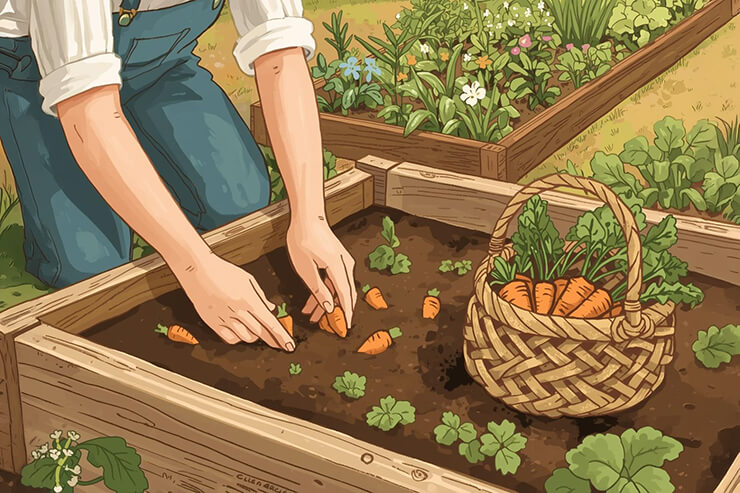
I didn’t discover baby carrots in a seed catalog or at a farmers market. I discovered them in my father’s kitchen—though, as with many lessons from a professional chef, the truth came wrapped in a bit of gentle leg-pulling.
I was probably ten or eleven when I burst into the house, announcing with great authority that I loved baby carrots. My father raised an eyebrow, smiled the way only a chef smiles who knows something you don’t, and said, “Ah yes, baby carrots. Pulled at dawn by very small farmers with very small hands.” He let that hang in the air just long enough for me to believe it.
Then he laughed and explained that most “baby carrots” at the store were actually full-grown carrots whittled down to size. What he did love, he told me, were carrots harvested young—tender, sweet, and still tasting like the garden itself. If I wanted real baby carrots, he said, we’d have to grow them.
That was my introduction to one of the most delightful crops you can grow.
What Makes a Baby Carrot a Baby?
A baby carrot isn’t a special species. It’s about timing and variety.
Baby carrots are harvested early, usually when they’re:
- 3–4 inches long
- Slim, smooth, and vividly colored
- Sweet, crisp, and almost juicy
Because they’re young, they haven’t developed the stronger, earthier flavors—or the woody core—that older carrots sometimes get.
Choosing the Best Varieties for Baby Carrots
Not every carrot wants to be picked young. These varieties shine when harvested early:
Top Picks
- Little Finger – A classic baby carrot variety; sweet, slender, and quick to mature
- Parisian (or Paris Market) – Round, button-style carrots perfect for shallow soil and containers
- Adelaide – Extremely fast-growing and naturally small
- Mokum – Tender and sweet, excellent for early harvest
My rule of thumb:
Look for varieties described as early, mini, baby, or snack-size. They’re bred for tenderness, not patience.
How to Successfully Grow Baby Carrots
Soil Is Everything
Carrots are honest plants—they reflect the soil you give them.
- Loose, stone-free soil is essential.
- Mix in compost, but avoid fresh manure.
- Aim for fine, crumbly texture at least 6–8 inches deep.
If the soil is hard, carrots fork. If it’s rich and loose, they behave beautifully.
In-Ground Gardening
- Rake the soil smooth and level.
- Sow seeds directly. (Carrots hate transplanting.)
- Plant shallow—about ¼ inch deep.
- Keep soil consistently moist until germination.
Thin seedlings early and ruthlessly. This is the hardest part, but also where baby carrots are born.
Raised Beds
Raised beds are baby carrot heaven.
- Soil warms earlier in Spring.
- Drainage is better.
- Texture is easier to control.
Space seeds slightly closer than full-size carrots if you plan to harvest young.
Container Gardening
Yes, baby carrots love containers—especially round varieties.
- Choose containers at least 8 inches deep.
- Use high-quality potting mix.
- Water more frequently than garden beds.
Parisian carrots are my favorite container choice. They grow happily where long carrots sulk.
When and How to Harvest Baby Carrots
This is where the magic happens.
Timing
- Begin checking carrots 45–60 days after planting.
- Gently brush soil away at the crown.
- If they’re finger-length and brightly colored, they’re ready.
Harvesting Tips
- Water the soil first to loosen it.
- Pull gently by the greens.
- Harvest often—every few days—to keep the rest growing evenly.
Baby carrots don’t politely wait. They grow quickly, and if you hesitate, they graduate.
Why Baby Carrots Taste So Different
Here’s the secret my father loved to explain:
- Young carrots contain more natural sugars.
- Less lignin (the compound that makes roots woody)
- Higher water content means crisper texture.
In short, baby carrots taste sweeter because they haven’t had time to get serious about life yet.
Beyond Snacking: How to Use Baby Carrots
Yes, they’re perfect straight from the garden—but they shine in the kitchen, too.
Favorite Preparations
- Quick sautéed with butter and a pinch of salt
- Roasted whole with olive oil and fresh herbs
- Steamed lightly and finished with lemon zest
- Pickled for a bright, crunchy condiment
My father’s favorite? A fast glaze of butter, a splash of water, and a whisper of honey—just enough to let the carrot speak for itself.
Fun Baby Carrot Facts
- Baby carrots grow faster because they’re harvested before peak maturity.
- Cooler soil temperatures increase sweetness.
- The greens are edible and make excellent pesto.
- Growing carrots closely encourages straighter roots.
And yes—real baby carrots are supposed to look a little imperfect. That’s how you know they’re telling the truth.
Why I’ll Always Grow Baby Carrots
Baby carrots remind me that gardening doesn’t always have to wait for a grand finale. Sometimes the joy comes early, pulled gently from the soil, brushed clean on your jeans, and eaten right where you stand.
And every time I harvest them, I still hear my father’s voice—half serious, half smiling—reminding me that the best food stories always start in the garden. ❖