
 Give a Gift
 Previous

Read by Matilda Longbottom
Every March, I become a wildly optimistic gardener.
It happens the same way each year. One warm-ish afternoon slips between the snowstorms, the air smells faintly like wet soil instead of ice, and suddenly I’m convinced this is the year. The year everything thrives. The year I finally master carrots. The year nothing bolts, nothing gets eaten by mysterious night creatures, and I harvest baskets of flawless vegetables while neighbors slow down to admire my garden like it’s a botanical attraction.
Reality, of course, knows better. But March is not interested in reality.
In March, the garden exists in a perfect future version of itself, and planning becomes its own kind of joy.
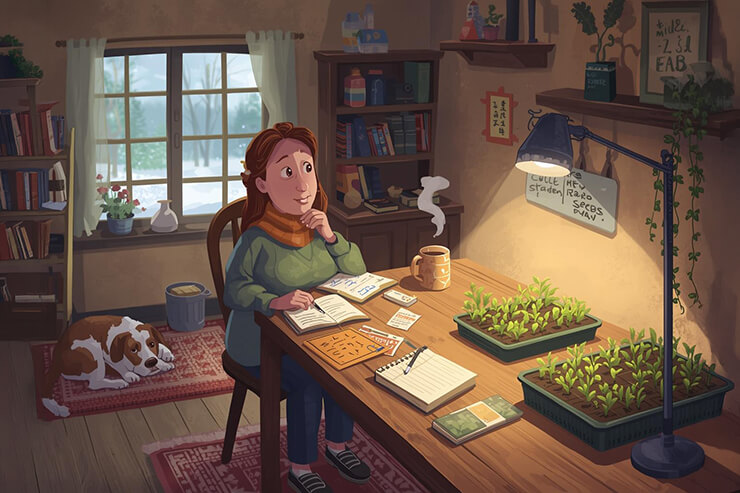
My annual ritual begins at the kitchen table with a stack of seed catalogs, a mug of coffee, and last year’s scribbled garden notes. Outside, the beds are still mostly frozen, but inside, I’m mapping out abundance.
I start sensibly enough. Tomatoes, peppers, lettuce. The staples.
Then optimism creeps in.
This is the year I’ll grow artichokes, I decide, despite living nowhere near artichoke-friendly weather. Why not try celery again? And maybe Brussels sprouts. And ground cherries. And rainbow chard. And three kinds of cucumbers, because last year one variety was amazing and clearly, the solution is to grow more, not less.
Soon my tidy plan looks like it’s feeding a small village.
My dog watches all this from the floor, head tilted, as if wondering why I’m excited about vegetables that don’t yet exist. He has no patience for imaginary tomatoes. He wants snacks now.
By mid-March, seed packets start arriving, and my dining room transforms into a staging area. Envelopes pile up. Tiny labeled packets promise entire Summer meals. I spread them out, rearranging them like puzzle pieces.
Then comes the garden map.
I sketch raised beds on paper, carefully rotating crops like a responsible gardener. Tomatoes move where beans were. Squash shifts to a new corner. Flowers get tucked everywhere because I’ve learned pollinators deserve VIP seating.
I always leave generous space between plants.
And every year, by June, everything is wildly overcrowded because I cannot bear to thin seedlings. Pulling perfectly healthy baby plants feels wrong, so I transplant extras, and then extras of extras, until the garden resembles a vegetable traffic jam.
March me pretends this won’t happen again.
Sometimes I walk outside to inspect the beds, even though nothing has changed since yesterday. Snow still lingers in shady corners, and the soil is cold and damp, but here and there signs of life appear. Garlic tips poke through mulch. The rhubarb is thinking about waking up.
These tiny hints feel like encouragement.
Back inside, I start seeds on every available sunny surface. Windowsills fill with trays. Grow lights hum in corners. The house smells faintly of potting soil, which somehow feels hopeful.
And every year, I forget how quickly seedlings grow.
One moment they’re tiny sprouts. The next, they’re leggy teenagers demanding more space and stronger light. I shuffle trays around like musical chairs, negotiating sunlight between tomatoes and peppers while trying not to knock over anything.
Despite the chaos, March planning feels like permission to dream.
I picture salads made entirely from the backyard. Kids picking cherry tomatoes straight off the vine. Baskets of zucchini shared with neighbors. Even the inevitable surplus feels charming in March, before August arrives and everyone begins hiding from zucchini deliveries.
Gardening teaches patience, but March planning teaches possibility.
By the end of the month, my notebook is full, my seed stash is excessive, and my confidence is sky-high. I know some things will fail. Weather will misbehave. Pests will show up uninvited. And something I carefully planned won’t work at all.
But something always surprises me, too.
A volunteer tomato appears in the wrong place and thrives. Basil grows better than expected. A new variety becomes a favorite. And sometime in July, I’ll stand in the garden at sunset, hands dirty, basket full, remembering these March plans with a smile.
Because no matter how imperfect the season turns out, March always gives us the chance to begin again.
And honestly, that might be my favorite harvest of all. ❖