

 Give a Gift
 Previous
Read by Michael Flamel
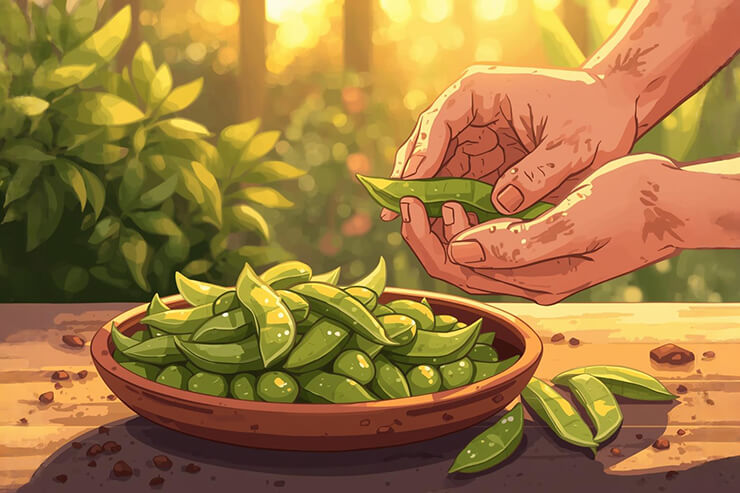
There are moments in the garden when you know—you just know—that something wonderful is about to happen.
For Gail and me, that moment often arrives carrying a colander.
We step into the garden, brush past tomatoes and basil, and make a beeline for the edamame patch. A few minutes later, we’re back inside with plump green pods still cool from the early evening air. Ten minutes in simmering water. A quick drain. A light sprinkle of salt. Done.
No dipping sauces. No fuss. No apologies to the chips, salsa, guacamole, or popcorn waiting patiently on the sidelines.
Because when edamame is on the table, it rules the roost.
It’s the appetizer that somehow manages to feel indulgent and virtuous at the same time—warm, salty, satisfying, and quietly one of the healthiest things in the whole appetizer parade. And as you’ve probably noticed elsewhere in this issue, it’s also one of the most generous plant-based sources of protein you can grow in your own backyard.
That’s why edamame has earned its place as a Plants We Love favorite.
What Exactly Is Edamame?
Edamame is simply soybeans harvested young while the pods are still bright green and the beans inside are tender and sweet. Unlike mature soybeans—which are dried and used for tofu, soy milk, and countless other products—edamame is grown for immediate pleasure.
You harvest it fresh.
You cook it simply.
You eat it with your fingers.
Few garden plants deliver so much joy with so little processing.
A Brief (and Delicious) History
Edamame has been enjoyed in East Asia for centuries, particularly in Japan, China, and Korea, where it has long been served as a snack, street food, or bar accompaniment. In Japan, it’s famously paired with a cold beer—proof that even the healthiest foods can keep excellent company.
Its popularity spread globally as interest in plant-based proteins grew, and today edamame appears everywhere from farmers markets to fine dining menus. But there is a world of difference between store-bought frozen edamame and pods picked minutes before cooking.
Garden-grown edamame is sweeter, nuttier, and far more tender—one of those rare foods that rewards you instantly for growing it yourself.
Choosing the Best Edamame Varieties
The good news: edamame is easy to grow.
The even better news: there’s a variety for every type of gardener.
For In-Ground Gardens
If you’ve got space and decent soil, look for classic, high-yield varieties bred for full-size garden beds.
What to look for:
- Bush-type plants (no trellising required)
- Uniform pod set for easy harvesting
- Varieties labeled specifically as “edamame” rather than field soybeans
These plants thrive when planted in warm soil and allowed to spread their roots. In-ground gardeners often get the biggest harvests—and the most pods per plant.
For Raised Beds
Raised beds are almost perfect for edamame. They warm up quickly in Spring and drain well, which soybeans appreciate.
Tips for raised-bed success:
- Space plants about 6 inches apart
- Plant in blocks rather than rows for better pollination
- Avoid excess nitrogen—edamame fixes its own
Raised beds tend to produce tidy, manageable plants that are easy to harvest without bending too far or losing pods in the weeds.
For Containers
Yes—you can absolutely grow edamame in containers, and it’s a great option if garden space is limited.
Container guidelines:
- Choose pots at least 10–12 inches deep.
- Use a high-quality potting mix.
- Stick with compact or early-maturing varieties.
- Place containers in full sun.
Container-grown edamame may produce slightly fewer pods, but the flavor is just as wonderful—and harvesting is about as convenient as it gets.
Growing Edamame: Simple and Satisfying
Edamame doesn’t ask for much.
- Sun: Full sun (6–8 hours)
- Soil: Well-drained, moderately fertile
- Water: Consistent moisture, especially during flowering and pod set
- Planting time: After all danger of frost, when soil is warm
One of edamame’s quiet superpowers is its ability to fix nitrogen in the soil, improving garden health for future crops. It’s a plant that feeds you and gives back to the garden.
Harvesting: Timing Is Everything
The secret to great edamame is harvesting at just the right moment.
- Pods should be bright green and plump.
- Beans inside should nearly fill the pod.
- Don’t wait too long—overmature pods lose sweetness.
Harvesting often encourages the plant to keep producing, so check your plants regularly once pods begin to form.
Serving Edamame: Beyond the Salt Bowl
While Gail and I are perfectly happy with edamame served warm and lightly salted straight from the garden, this versatile little bean is more than a one-note wonder.
Here are a few other delightful ways to enjoy it:
- Garlic Edamame: Toss warm pods with olive oil and sautéed garlic.
- Chili-Lime Edamame: A squeeze of lime and a pinch of chili flakes
- Edamame Salad: Shelled beans tossed with tomatoes, cucumbers, and herbs
- Edamame Hummus: Swap chickpeas for shelled edamame for a bright green twist.
- Stir-Fries and Grain Bowls: Add shelled edamame for protein and color.
However you serve it, edamame has a way of disappearing quickly—usually accompanied by the sound of happy conversation and a pile of empty pods.
Fun Facts to Share While the Pot’s Boiling
- Edamame is technically a legume, not a vegetable.
- A single serving provides all nine essential amino acids.
- Soybeans have been cultivated for over 3,000 years.
- Fresh edamame tastes sweeter than frozen because sugars haven’t converted to starch.
- The plants are self-pollinating—no bees required.
Perfect trivia for the kitchen… or the garden gate.
Why We Keep Coming Back to Edamame
Every garden has its stars. The plants you look forward to harvesting. The ones that make you plan meals weeks in advance.
For us, edamame is one of those plants.
It’s easy to grow. Easy to cook. Easy to love. And in a world increasingly interested in real food, grown close to home, it quietly proves that protein doesn’t need a factory—or even a fork.
Just a garden.
A pot of water.
And a little salt.