

 Give a Gift
 Previous
Read by Matilda Longbottom
I once believed that plants lived their lives in quiet stillness.
They stood rooted in place, waiting for rain and sunlight, subject to both care and neglect. But I was wrong. Plants do speak. Their language isn’t formed in words but in the colors they turn, the way their leaves unfurl or droop, and the silent signals they send through their growth and movement.
It was my grandmother who first taught me how to listen.
She would kneel beside her tomato vines, gently tracing the curl of a leaf with her fingertips. “Too much heat. She’s thirsty.”
Holding a faded bean leaf up to the light, she’d examine its mottled surface, speaking softly, almost reverently. “We’ll fix that.”
As a child, I was convinced she had a special wisdom that let her understand exactly what plants needed. Only later did I realize the truth—she had simply learned to notice.
Years later, that knowledge surfaced in my own garden. My basil plant stood wilted, its once-perky stems drooping, the edges of its leaves tinged with brown. I knelt, pressing my fingers into the soil—dry as dust.
“Thirsty,” I murmured, just as she had.
I watered, and by morning, the basil stretched toward the sunlight, full of life once more. The plant had spoken, and I had answered.
From that moment, I began to see the signs everywhere. The deep, rich green of a thriving zucchini vine. The lace-like pattern on cabbage leaves, evidence of unseen nibblers. The way squash leaves flipped their silver undersides skyward before a storm.
Even in the wild, the language flourished. Trees, pruned harshly, sent out bursts of fresh growth. Wildflowers folded their petals tight against the rain. A wounded tree bled sap—nature’s bandage against harm.
They had never been silent. I had simply never listened.
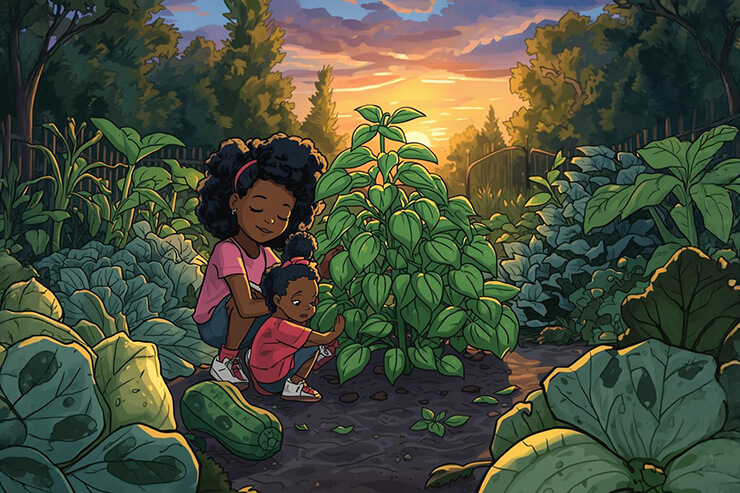
One afternoon, I found my daughter crouched beside a lettuce plant, studying a leaf with a furrowed brow.
“What’s wrong with it?” she asked.
I knelt beside her. The leaf was pale, almost translucent. Scooping up a handful of soil, I let it crumble through my fingers.
“Too much water,” I said. “The roots can’t breathe.”
She frowned. “So, what do we do?”
I smiled. “We wait. The soil will dry, and the plant will tell us when it’s ready.”
She nodded, absorbing the lesson.
That evening, as the sun dipped behind the trees, I stayed in the garden, listening. The plants whispered their needs, their struggles, their triumphs. They spoke of thirst and hunger, of shifting seasons and changing temperatures. Their tendrils curled in spirals, their buds unfurled, their leaves stretched skyward—all part of the conversation.
And as I moved among them, I whispered back, just as my grandmother had before me.
“I hear you.” ❖
About the Author: Faiza Api is a teacher and a passionate storyteller by heart.