
×
  • Home
  • Daily
    • Buyers Guides
    • Composting
    • Container Gardening
    • Easy Healthy Recipes
    • Food Preservation
    • Garden Design
    • Garden Tools
    • Gardening LIfe
      • Animals in the Garden
      • Funny Business
      • Gardening History
      • Gardening Humor
      • Gardening Mishaps
      • Gardening Poems
      • Gardening Romance
      • Gardening Science
      • Gardening with Kids
      • Healing Gardens
      • Joy of Gardening
      • Mystical Gardens
      • Ornamental Gardening
    • Growing Fruits & Berries
    • Indoor Gardening
    • Pests & Diseases
    • Seeds & Seedlings
    • Soil & Fertilizer
    • Spice & Herb Gardening
    • Vegetable Gardening
    • Watering & Irrigation
  • Freebies
  • Videos
  • Libraries
    • Food Gardening Magazine
    • GreenPrints Magazine
    • RecipeLion Magazine
    • GuideBooks
    • Cookbooks
      • Beverages
      • Bakery
      • Breakfast
      • Appetizers
      • Salads & Dressings
      • Soups
      • Entrées
      • Side Dishes & Sauces
      • Desserts
    • Story Collections
    • StoryBooks
    • Recipe Collections
  • Kits
    • Garden Calendars
    • Garden Plans
    • Recipe Cards
    • Greeting Cards
    • ArtPrints
  • Book Club
  • About Us
  • Contact Us
  • Affiliate Program
  • Sponsor Program
  • Give a Gift
  • Privacy Policy & Terms of Use
  • Authors
  • GreenPrints Writer’s Guidelines
  • Keyword Index
  • Join
Crochet, Food Gardening, Knitting, Quilting, Rug Hooking, Sewing
Celebrating 6 Years!

Food Gardening Network

Growing food, fun & more

Give a GiftJoin
Visit Our Amazon Store!
  • Daily
    • Buyers Guides
    • Composting
    • Container Gardening
    • Easy Healthy Recipes
    • Food Preservation
    • Garden Design
    • Garden Tools
    • Gardening Life
      • Animals in the Garden
      • Funny Business
      • Gardening History
      • Gardening Humor
      • Gardening Mishaps
      • Gardening Poems
      • Gardening Romance
      • Gardening Science
      • Gardening with Kids
      • Healing Gardens
      • Joy of Gardening
      • Mystical Gardens
      • Ornamental Gardening
    • Growing Fruits & Berries
    • Indoor Gardening
    • Pests & Diseases
    • Seeds & Seedlings
    • Soil & Fertilizer
    • Spice & Herb Gardening
    • Vegetable Gardening
    • Watering & Irrigation
  • Freebies
  • Videos
  • Libraries
    • Food Gardening Magazine
    • GreenPrints Magazine
    • RecipeLion Magazine
    • GuideBooks
    • Cookbooks
      • Beverages
      • Bakery
      • Breakfast
      • Appetizers
      • Salads & Dressings
      • Soups
      • Entrées
      • Side Dishes & Sauces
      • Desserts
    • Story Collections
    • StoryBooks
    • Recipe Collections
  • Kits
    • Garden Calendars
    • Garden Plans
    • Recipe Cards
    • Greeting Cards
    • ArtPrints
  • Book Club
  • Visit Our Amazon Store!|
  • Sign In
  • Search

The Backyard Protein Boom

March 2026

arrow-left Previous
Next arrow-right
Gardening News
by Don Nicholas

The Backyard Protein Boom

How plant science is helping you grow tastier, higher-protein dinners—one seed packet at a time

By Don Nicholas

Illustrated By Nick Gray

Read by Michael Flamel

Listen Now:
/wp-content/uploads/2026/02/The-Backyard-Protein-Boom.mp3


If you’ve found yourself standing in the grocery store lately, squinting at an ingredient label and thinking, why does this need seven kinds of gum?—you’re not alone.

I’ve noticed a quiet but unmistakable shift happening all around us. We’re backing away from ultra-processed foods and leaning hard toward simpler, naturally grown options. At the same time, protein has become the nutrient everyone’s talking about—how to get more of it, where it comes from, and whether it actually resembles food you recognize.

And that’s where I start smiling and sliding a seed catalog across the table.

Because while the food industry debates labels and additives, your garden is already offering a beautifully old-fashioned solution:

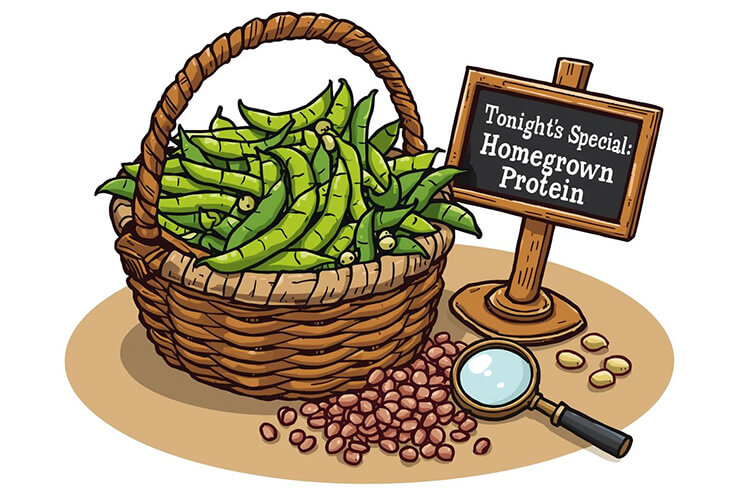
Grow Your Protein

The science part (don’t worry—this is the friendly kind)

For most of gardening history, choosing a variety was a bit like picking a novel by its cover. You knew the general category—bean, pea, soybean—but not the finer details: yield, disease resistance, flavor… or how much protein you were actually growing.

That’s changing fast.

Modern plant breeding has quietly transformed what shows up in seed catalogs, and you’re benefiting from it whether you realize it or not. Today’s varieties are shaped by:

  • Genomics-assisted breeding, which uses DNA information to identify plants with desirable traits—like higher yield, resilience, and improved nutrition—much faster than old trial-and-error methods
  • Focused breeding for plant protein, especially in legumes like beans, peas, favas, and soybeans, which are already nutritional powerhouses
  • Genome-editing research (including CRISPR), which—while not something you’re planting directly—has dramatically accelerated scientists’ understanding of how traits like protein content, productivity, and plant health work
  • Biofortification strategies, a broader push to make crops more nourishing through smarter breeding and growing practices

Here’s the part I care about most as a gardener:

All of this science means fewer surprises and better results for you, even in a small backyard or raised bed.

Let’s translate that into garden reality

If your goal is to get more protein from what you grow, you don’t need a complicated plan or exotic crops. You just need to lean into plants that already do this well—especially legumes, which concentrate protein naturally and help your soil at the same time by fixing nitrogen.

Beans and peas are famous overachievers. They count as vegetables and protein foods, which feels like exactly the kind of multitasking I appreciate in a garden.

What to grow if you want more protein from your backyard

These are reliable, garden-friendly plants—and specific varieties—that make it easy to turn soil, sun, and water into real, satisfying protein.

Edamame (soybeans): the snackable protein champion

If I had to pick one crop that delivers the most protein with the least fuss, edamame would be right at the top. It’s productive, delicious, and deeply satisfying to harvest.

Varieties I recommend you look for:

  • Midori Giant’ — early, productive, and widely loved
  • Envy – especially dependable in northern gardens
  • Beer Friend and Soy Good – real names, real performance

Edamame hugely benefits from modern breeding. Today’s varieties are more uniform, adaptable, and home-garden friendlier than ever—which means you don’t need a commercial farm to succeed.

Fava beans: cool-weather protein with presence

Fava beans are one of my favorite shoulder-season crops. You can plant them early, enjoy them before Summer heat arrives, and feel very smug about growing protein while everyone else is still waiting on tomatoes.

Solid choices for your garden:

  • Aquadulce / Aquadulce Claudia – excellent for cool conditions
  • Broad Windsor – a classic that’s stood the test of time
  • The Sutton – a compact option if space is tight

Favas also happen to be great soil citizens, which makes them a smart strategic crop—not just a tasty one.

Shelling peas: small plants, early rewards

Peas may not beat soybeans in raw protein numbers, but they shine in timing and ease. You can be harvesting protein early in the season, long before most Summer crops wake up.

A dependable variety to try:

  • Green Arrow – productive, reliable, and widely available

Fresh peas are one of those garden foods that instantly remind you why growing your own matters.

Dry beans: the garden that feeds you all Winter

If you love the idea of growing meals you’ll enjoy months from now, dry beans are where the magic happens. They turn a Summer harvest into a Winter pantry staple.

A favorite with history and flavor:

  • Hidatsa Shield Figure – a beautiful, productive pole bean with serious soup credentials

Dry beans are one of the simplest ways to convert garden space into long-lasting, protein-rich food.

A simple protein-garden strategy that actually works

Here’s how I’d suggest you approach this without overthinking it:

  1. Plant a protein ladder, not everything at once.
  • Spring: peas and favas
  • Summer: edamame and other beans
  • Fall (where climate allows): more beans or late peas
  1. Grow for now and for later.
  • Fresh eating: edamame, snap beans, peas
  • Storage: dry beans
  1. Let legumes help your soil.

Rotate them through your beds and let them quietly improve things for the crops that follow.

  1. Use trusted nutrition references if you’re curious about numbers.

The USDA’s FoodData Central is an excellent way to see how much protein different foods actually provide—without marketing hype.

The Quiet Punchline

One of the best high-protein food trends available to you right now doesn’t come in a wrapper, a tub, or a shaker bottle.

It comes in a seed packet.

Thanks to decades of thoughtful plant breeding and recent scientific advances, it’s never been easier to choose varieties that grow well, taste great, and help put more plant protein on your plate—right from your own backyard.

And honestly? That feels like the most satisfying food trend of all. ❖

arrow-left Previous
Next arrow-right

Tags

beans, fresh peas, peas

Comments

Click here to cancel reply.

Leave a Reply Cancel reply

Your email address will not be published. Required fields are marked *

TABLE OF CONTENTS

  • At The Gate
  • Club Notes

  • The Backyard Protein Boom
  • From Garden to Teacup: Growing Your Own Floral Teas
  • Size Matters
  • Snowed Peas
  • How Asparagus Got Its Reputation
  • Daughter of Beauty, Lover of Flies
  • Playing With Frost
  • March Makes Gardeners Dream Big
  • PLANTS WE LOVE

  • Edamame, Please
  • Tiny Roots, Big Joy
  • Buckets, Brambles, and Purple-Stained Smiles
  • STORIES FROM THE GARDEN

  • The Lady Leprechaun and the Farmer
  • Smuggling a Piece of Ireland
  • The Silent Language of Plants
  • The Biggest Soybean Farm Inside City Limits
  • Piecie’s Potatoes
  • A Stick in the Mud Finds its Bloom
  • Beginner’s Guide to Gardening
  • Shotweed: A Love Story
  • GARDEN TO TABLE JOURNEYS

  • A Warm Irish Welcome to Our New Recipe Collection!
  • Salmon Serendipity: A Smoky Dublin Adventure
  • Irish Roots and American Traditions: A Saint Patrick’s Day Feast to Remember
  • Potatoes and Possibilities: From the Emerald Isle to Your Table
  • Irish Soda Bread: A Baker’s Bond with the Past
  • Shepherd’s Pie: A Tale of Layers and Love
  • Sticky Toffee Pudding: A Sweet Irish Legacy
  • Irish Cream Cheesecake: A Luxurious Slice of Ireland

Enter Your Log In Credentials

This setting should only be used on your home or work computer.

  • Lost your password? Create New Password
  • No account? Sign up

Need Assistance?

Call Food Gardening Network Customer Service at
(800) 777-2658

Food Gardening Network is an active member of the following industry associations:

  • American Horticultural Society
  • GardenComm Logo
  • GardenComm Laurel Media Award
  • MCMA logo
  • Join Now
  • Learn More
  • About Food Gardening Network
  • Contact Us
  • Affiliate Program
  • Sponsor Program
  • Give a Gift
  • Privacy Policy & Terms of Use
  • Food Gardener’s Book Club FAQ

Food Gardening Network
99 Derby Street, Suite 200
Hingham, MA 02043
support@foodgardening.mequoda.com

To learn more about our Email Marketing and Broadcasting Services, Exchange Program, or to become a marketing partner with any of our publications, click here to contact us at Mequoda Publishing Network.

FREE E-Newsletter for You!

Discover how to grow, harvest, and eat good food from your own garden—with our FREE e-newsletter, delivered directly to your email inbox.

  • Facebook
  • Twitter
  • Instagram
  • Pinterest

Powered by
Mequoda Publishing Network
copyright © 2026 Mequoda Systems, LLC

Food Gardening Network®, Food Gardening Magazine® and GreenPrints® are registered trademarks of Mequoda Systems, LLC.