

 Give a Gift
 Previous
Read by Michael Flamel
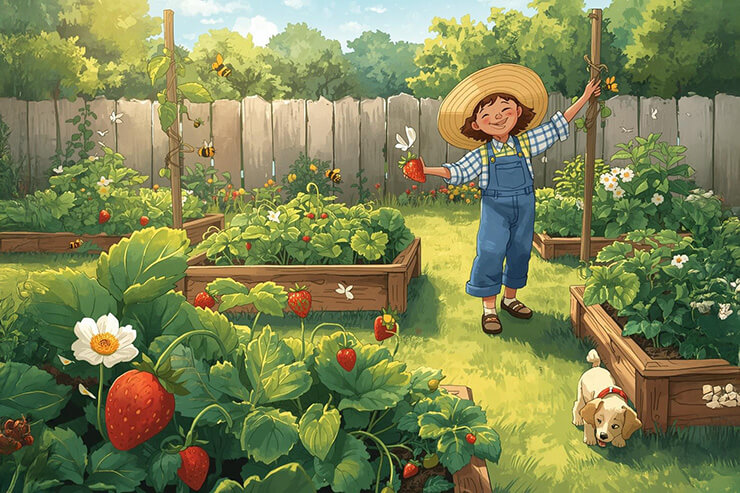
Spring is in the air, and you know what that means—it’s time to dust off the gardening gloves and make way for the real MVP of backyard treats: strawberries! Few things in life compare to plucking a sun-warmed berry straight from the vine and popping it into your mouth. It’s a little burst of sweet-tart magic that reminds me why I bother with weeding in the first place.
Sure, I could just buy strawberries at the store, but where’s the fun in that? Nothing beats homegrown berries—fresher, sweeter, and let’s be honest, way more satisfying. Plus, when you grow your own, you get to skip the mystery of why store-bought strawberries always seem to have that one mushy one hiding at the bottom of the container.
The Perfect Spot for Strawberries (Hint: Not Your Neighbor’s Yard)
Like any picky plant (or person), strawberries have strong preferences. They love sunshine—at least six hours a day. If you’ve ever tried growing strawberries in the shade, you probably ended up with a sad little plant giving you a single, sour berry and a look of disappointment. They also hate soggy feet, so well-draining soil is key.
And here’s an important tip: Avoid planting them where you previously grew tomatoes, peppers, or eggplants. Strawberries aren’t interested in their leftovers and prefer fresh ground. They’re a bit high-maintenance like that.
Choosing the Right Strawberry Variety (Decisions, Decisions!)
There are three types of strawberries, and each has its own personality:
- June-bearing: The overachievers. They produce one big, glorious harvest in early Summer—perfect if you dream of strawberry jam or homemade shortcake.
- Everbearing: The steady workers. They give you two smaller harvests—one in late Spring and another in early Fall.
- Day-neutral: The marathon runners. They don’t care what month it is; they’ll keep producing berries from Spring through Fall, as long as they’re happy.
I like to mix things up by planting all three. That way, I get an early-season jackpot and a steady supply of berries throughout Summer. Win-win
Getting the Soil Ready (AKA: The Dirt on Dirt)
Before planting, I like to give my strawberries a VIP welcome by prepping the soil just right. This means removing weeds, loosening the dirt, and adding a generous helping of compost. Strawberries thrive in soil with a slightly acidic pH (between 5.5 and 6.5) so I test my soil and adjust as needed. Too alkaline? A bit of sulfur helps. Too acidic? A sprinkle of lime does the trick.
When and How to Plant (Timing is Everything!)
Strawberries like to go in the ground as soon as Spring temperatures hover around 50 degrees Fahrenheit. If you plant too early, they sulk in the cold. Too late, and they bake in the Summer sun.
Planting is pretty straightforward—dig a hole, set the plant so the crown (where the roots meet the stem) is just above the soil, and space them properly (12–18 inches apart). Crowding them is a rookie mistake—they need room to spread out, send runners, and take over your garden (which they will do if given the chance).
Caring for Your Strawberry Patch (Or: Keeping the Neighborhood Critters Away from Your Berries)
Strawberries need about an inch of water per week, but not too much—they hate soggy roots. Mulch is your best friend here, keeping weeds at bay and holding in moisture. Plus, a good layer of straw or pine needles stops your precious berries from resting on bare dirt (because nobody likes a gritty strawberry).
Pests and diseases love strawberries almost as much as we do. Slugs, aphids, and fungal diseases can all crash the party. I’ve found that planting marigolds nearby helps keep bugs away, and regular weeding keeps the air flowing around the plants to prevent mildew. And if all else fails? A few well-placed nettings can deter birds who think my garden is their personal snack bar.
The Best Part: Harvest Time!
After all that effort, the moment of truth arrives. The trick is patience—strawberries don’t ripen after picking, so you have to wait until they’re deep red and juicy. Then, with the skill of a surgeon (or just a pair of eager hands), gently twist them off the plant.
Pro tip: Eat at least one right there in the garden. Trust me, it’s part of the experience.
Storing and Enjoying Your Bounty
If (and that’s a big if) you don’t eat them all right away, store strawberries in a shallow container lined with paper towels in the fridge. They’re best eaten within a couple of days, but if you want to stretch out the joy, you can freeze them for smoothies, jams, or—let’s be honest—midwinter cravings.
Ready to Grow Your Own Strawberries?
Whether you’re dreaming of a backyard berry bonanza or just want a few fresh strawberries for your morning yogurt, growing your own is incredibly rewarding (and delicious). If you’re ready to get started, check out the complete strawberry gardening guide for all the details on planting, care, and harvesting.
Happy growing, and may your berries be sweet, your plants be plentiful, and your garden critter-free! ❖
About the Author: Oglah Morogo is a passionate gardener, backyard berry enthusiast, and self-proclaimed strawberry taste tester. When not tending to her plants, she enjoys experimenting with homemade jam recipes and convincing her family that fresh strawberries are a perfectly acceptable dinner.