

 Give a Gift
 Previous
Read by Michael Flamel
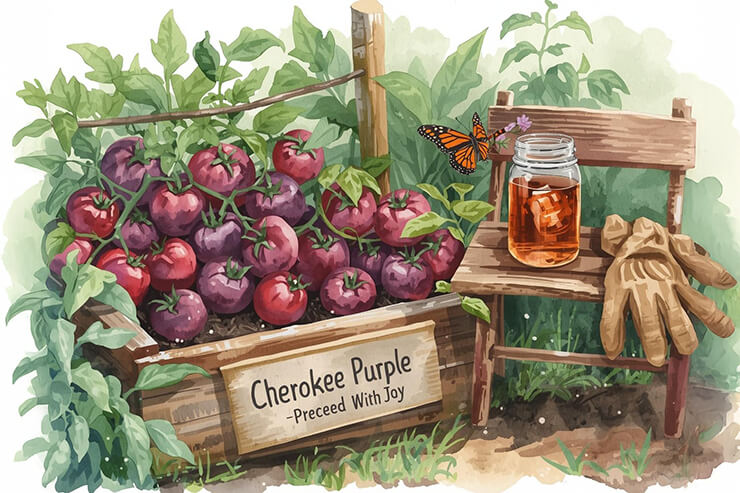
A Tomato with a Story Older Than Your Garden Hat
Every gardener has that one plant they fall head-over-trowel for. For some it’s basil. For others, dahlias. But for me—and for a passionate legion of GreenPrints readers—it’s the inimitable, irresistible Cherokee Purple tomato.
This heirloom beauty traces its roots back more than 100 years and is believed to have originated with the Cherokee people, who cultivated it long before “heirloom” became a fashionable farmers market buzzword. Cherokee Purple seeds were first shared beyond the community in the late 1800s, and when the tomato re-emerged in seed catalogs decades later, gardeners were immediately captivated by its deep wine-rose flesh, smoky flavor, and dusky shoulders the color of sunset shadows.
If you’ve never tasted one, imagine this:
Take the sweetest Summer tomato you’ve ever sliced…
Add a hint of plum…
Layer in the subtle smokiness of a wood-fired grill…
Then finish with a whisper—just a whisper—of wine.
That is a perfectly ripe Cherokee Purple. Cut into wedges, they look like little stained-glass windows. Place a platter on the table and watch your family hover like bees at a hibiscus blossom.
Growing Cherokee Purple Tomatoes: A Step-by-Step Journey
Cherokee Purples aren’t difficult, but they do appreciate a gardener who pays attention. They reward you in flavor. They punish you in guilt if you forget to water them. They are, after all, tomatoes—dramatic by nature.
Let’s walk through the full process.
Step 1: Seeds vs. Seedlings—Which Way to Begin?
Grow from Seed if:
- You enjoy nurturing plants from the earliest whisper of green.
- You want maximum bragging rights. (“I raised these from seed.”)
- You want more variety—many heirloom strains are only available as seeds.
Choose Seedlings if:
- You’re already behind schedule. (A gardener’s confession we all share by June.)
- You want a strong head start without the fuss of grow lights.
- You prefer choosing your tomato by eye—checking stem thickness, leaf color, and general vigor.
GreenPrints Community Advice: “If you buy seedlings, look for plants that are short and stocky. A lanky seedling may grow tall fast, but it won’t grow fruit fast.” – Pat, Zone 5B
Step 2: Planting—Container, Raised Bed, or In-Ground?
Cherokee Purples are not shy. They need space, fresh air, sunshine, and something sturdy to lean on—like teenagers or climbing beans.
Containers (Minimum 15-20 gallons):
- Use a stout pot—Cherokee Purples produce big vines.
- Fill with a high-quality potting mix, not garden soil.
- Add compost and a slow-release organic fertilizer before planting.
- Water daily in Summer; twice daily in heat waves.
Raised Beds:
- The sweet spot for these tomatoes.
- Soil warms quickly, drains well, and roots stretch comfortably.
- Add two kinds of support: strong stakes and a cage.
- Mulch with straw to keep soil moisture even.
In-Ground Gardens:
- Amend soil deeply with compost—deeper than you think.
- Plant deeply, burying two-thirds of the stem.
- Space plants generously—these vines spread like rumor.
GreenPrints Community Wisdom: “Cherokee Purples are like border collies—smart, enthusiastic, and in constant need of supervision. Tie them up early, or you’ll lose them.” – Elise, Zone 7A
Step 3: Sunlight, Water, and Feeding
Sunlight:
6–8 hours minimum, but more sunshine equals more tomatoes.
Water:
- Water at the base, not from overhead.
- Provide long, deep drinks rather than shallow sips.
- Consistent moisture prevents cracking.
Feeding:
- Use a balanced organic fertilizer every 2–3 weeks.
- Once fruit sets, switch to a formula slightly higher in potassium.
Tip from the GreenPrints Mailbag: “When your tomato is being moody, give it Epsom salt—1 tablespoon per gallon once a month. It perks them up like a spa day.” – Howard, Zone 6A
Step 4: Pruning and Training
Cherokee Purples are indeterminate tomatoes, which means they grow and grow until frost taps them on the shoulder.
- Prune the little suckers that form between stem and branch.
- Leave a few if you want a jungle.
- Tie vines gently to stakes or trellis.
- Airflow reduces blight—and reduces arguments with the plant.
Step 5: Harvesting
The color is your guide, but Cherokee Purples are tricksters:
They’re ripe before they look fully purple.
Look for:
- A deep rose or dusky wine shade
- A slight softening at the touch
- A warm fragrance you can smell without lifting the fruit
Pick with two hands. These tomatoes have thin skins and big hearts.
GreenPrints Community: Wisdom from Fellow Tomato Whisperers
Here are the insights our gardeners swear by:
- “Mulch like your life depends on it.”
Moisture is everything to Cherokee Purples.
- “Start strong and bury deeper than your instincts tell you.”
Those buried stems will sprout new roots.
- “Don’t plant in the same place two years in a row.”
Tomatoes appreciate rotation—and a change of scenery.
- “If you see a hornworm, talk to it. Ask it nicely to leave.”
If that fails, relocate it to a sacrificial tomato plant.
- “Pick one tomato early every season and eat it with salt—standing in the garden.”
This step is ritual, not optional.
Fun Facts to Share at Your Next Garden Party
- Cherokee Purples consistently win taste tests across the country.
- Their unusual color comes from anthocyanins—the same pigments in blueberries.
- The fruits can weigh over a pound, but individual gardeners claim far larger (Fisherman rules apply.)
- Cherokee Purple tomatoes are so juicy they’ve been described as “edible soup bowls.”
- Many gardeners say this is the tomato that turned their kids into tomato-eaters.
Final Thoughts from the Garden Bench
Growing Cherokee Purple tomatoes feels like entering a guild of passionate growers—somewhere between a horticultural society and a fan club. They are beloved because they connect us to history, reward us with unforgettable flavor, and challenge us just enough to keep things interesting.
If you grow only one heirloom tomato this year, make it this one. And when you taste that first sun-warmed slice, sprinkled with salt and shared with someone you love, you’ll understand exactly why the world is smitten with this purple beauty. ❖