

 Give a Gift
 Previous
Read by Michael Flamel
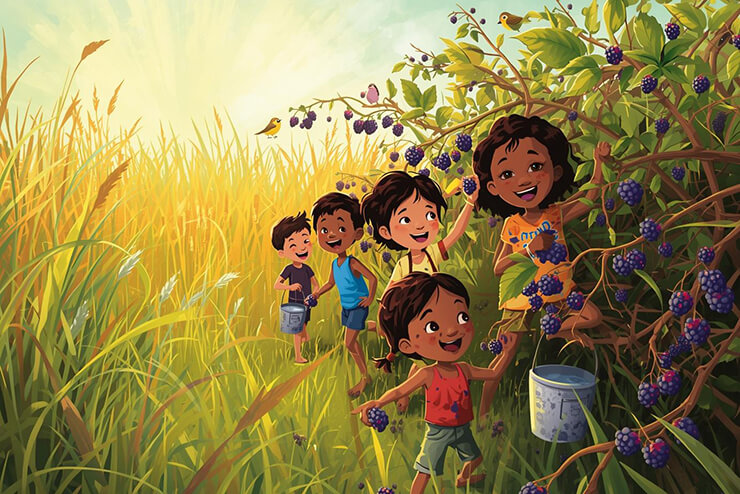
When I was about 5-years old, Summer had a very specific soundtrack: cicadas buzzing, sneakers crunching gravel and a gaggle of kids loudly debating who had found the biggest blackberry.
At the end of our block there was a field—wild, unruly, and absolutely magical to us. It was the kind of place parents vaguely knew about but didn’t closely supervise, which meant it felt like ours. On blackberry days, we’d head out in a loose pack, each of us armed with a small bucket of water and the unshakable confidence that we knew exactly what we were doing.
The blackberries grew in thick, thorny tangles, and we picked them with the seriousness of professionals. Before eating them—immediately, of course—we’d dunk the berries into our buckets of water. This wasn’t about cleanliness in the modern sense. It was about survival. Any tiny creatures hiding among the berries would float to the top, gently evicted from their hiding places. We watched carefully, nodded solemnly, and agreed that wild berries were delicious.
Then we ate the berries—standing in the field, juice running down our hands, lips stained purple, utterly convinced that nothing tasted better in the world. And honestly, we were probably right.
Blackberries for the Rest of Us (No Field Required)
Not everyone has a wild blackberry patch waiting at the end of their block—and that’s probably for the best if you’ve ever tried to tame one. The good news is that blackberries are incredibly adaptable, and there are plenty of ways to bring them into your life and your diet:
- Farmers markets and roadside stands often sell freshly picked berries that rival anything from the wild.
- Pick-your-own farms offer the joy of harvesting without the surprise thorns.
- Grocery stores can be a reliable option, especially in peak Summer.
- And best of all… you can grow your own, even in surprisingly small spaces.
Choosing the Right Blackberry for Where You Live
Blackberries aren’t a one-size-fits-all plant. Choosing the right type makes all the difference.
- Erect varieties grow upright and tend to be hardier in colder climates. They’re a good choice for gardeners who don’t want to fuss with trellises.
- Trailing varieties produce long, flexible canes that benefit from support and thrive in milder regions. These often have exceptionally sweet fruit.
- Semi-erect varieties split the difference, offering high yields with moderate support.
For gardeners with limited space, container-friendly blackberries are a revelation. Dwarf or compact varieties can grow happily in large pots on patios or decks, delivering fresh berries without taking over the yard—or the neighborhood.
In-Ground vs. Containers: A Friendly Comparison
- In-ground planting gives blackberries room to stretch out, develop deep roots, and produce generous harvests. It’s ideal if you have space and don’t mind keeping an eye on spreading canes.
- Raised beds offer better control, excellent drainage, and easier harvesting.
- Containers are perfect for balconies, patios, or gardeners who like their plants to stay exactly where they’re told.
No matter the method, blackberries love sun, well-drained soil, and a little pruning attention to keep them productive and polite.
Fun Facts to Share While You Snack
- Blackberries aren’t actually berries in the botanical sense—they’re clusters of tiny drupelets.
- Wild blackberry patches can be decades old, quietly producing fruit year after year.
- Birds adore blackberries almost as much as humans do—and will absolutely help themselves if you let them.
- Those thorns? Nature’s way of making sure you really want the fruit.
Beyond Snacking: Delicious Ways to Use Blackberries
As much as I love eating blackberries straight off the plant, they shine in so many other ways:
- Fold them into yogurt or oatmeal for a burst of Summer flavor.
- Bake them into pies, cobblers, and crisps that taste like childhood.
- Simmer them into jams or sauces for pancakes, ice cream, or even savory dishes.
- Toss them into salads with goat cheese and nuts for a sweet-tart contrast.
- Freeze them for smoothies that bring a little sunshine to Winter mornings.