

 Give a Gift

Lemon tree flower
Everyone always says, “When life gives you lemons, make lemonade.” But what if your lemon tree gives you blossoms…and then just stops there? No fruit, no lemonade—just a whole lot of unmet expectations.
I don’t live in a warm climate, so my experience with lemon trees happens indoors. Supposedly that makes things easier, but let me tell you—it’s not exactly a carefree stroll through a lemon grove. I’ve spent more than a few seasons practically negotiating with my tree, hoping those pretty flowers would actually turn into fruit. Most of the time, my pleas went unanswered—but eventually, I started to figure out what was going on.
Like you, I did some digging and learned why my tree kept making me wait another year for that first real harvest. If your lemon tree is all bloom and no follow-through, don’t worry—there are a few common reasons behind it, and some simple ways to turn things around.
For me, over the course of a few trees, it turned out to be:
- Overwatering + too big of a pot
- Spider mites (jerks!)
- Temperature
The temperature thing was the worst of all. I set up a whole small room for the winter and swallowed the electric bill that kept the lemon tree at a steady 73 degrees plus a warm humidifier. Well, you’ll soon learn in the advice below that lemon trees need the chill of the winter to produce fruit. So let’s get into it and hopefully I can save you some time making that lemonade! Explore the easiest fruit to grow at home—indoors or out! Read our FREEBIE 15 Easiest Fruits to Grow at Home, right now!

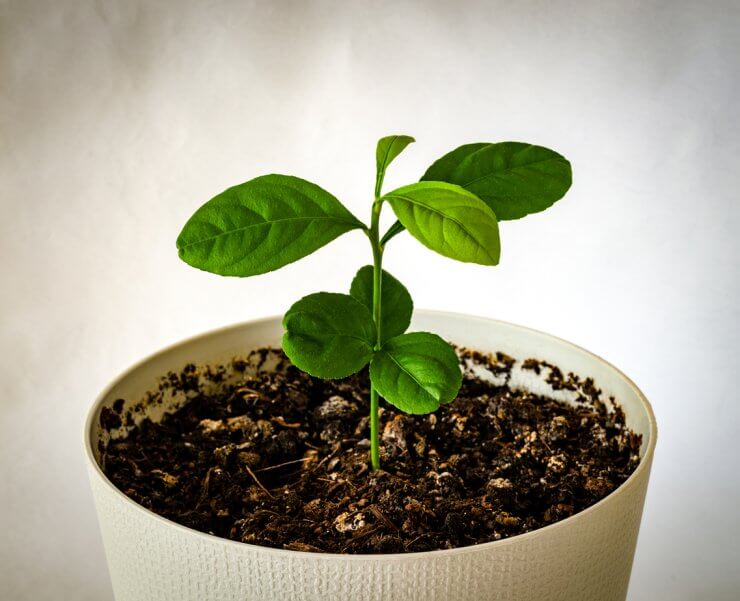
1. Think of your tree’s beginnings.
When your lemon tree flowers but no fruit grows, you haven’t necessarily lost your green thumb! Lemon trees grown from seed hardly ever produce fruit with any kind of quickness, and sometimes not at all. Planting lemons indoors or outdoors using a seed might be a fun experiment, but don’t expect to whip up meringue pies with fruit from your garden anytime soon.
If you want to enjoy home-grown lemons, it’s best to buy older, more established trees to grow or plant. You’ll pay a premium for them, but you’ll have less time to wait and you know you have a plant that can grow lemons.
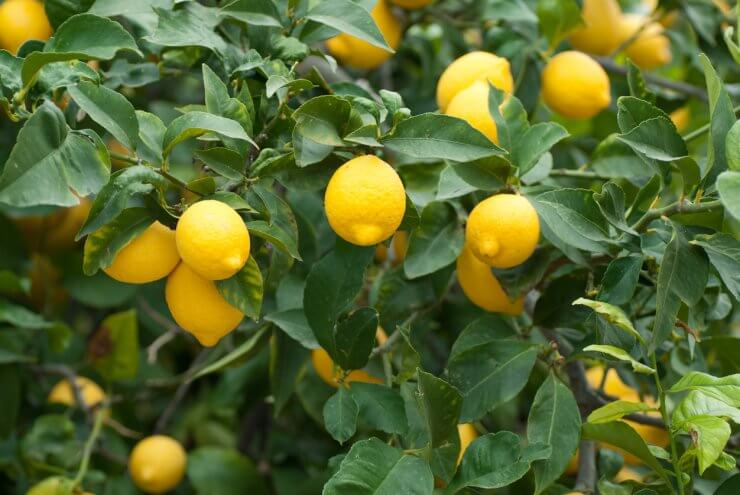
2. Consider the plant’s age.
In most cases, lemon trees need anywhere between one to three years to grow out of their juvenile phase into fully matured plants. So, if your tree is only one year old, it won’t have fruit-bearing capabilities just yet. Here’s a guide to help you check your plant’s progress:
- One to two years: None or very few low-quality fruits
- Three years: 20 to 40 pounds of fruit (possibly but not necessarily)
- Four to five years: 40 to 100 pounds and above
- Ten years: 100 to 300 pounds and more
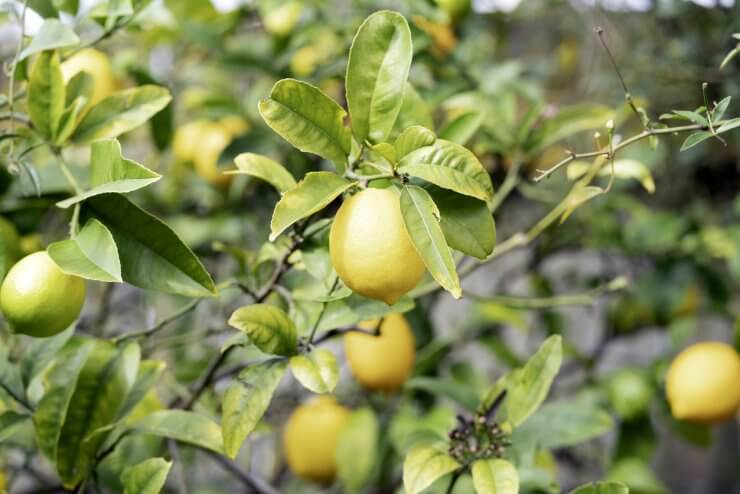
3. Check water levels.
If you grew a lemon tree from an older, more established plant and you’re sure it’s old enough to bear fruit, it’s time to check the water levels. Like other plants, it’s best to avoid underwatering or overwatering them.
But how do you know? First of all, lemon trees can go long periods without water, they are very drought-resistant.
Overwatered lemon trees and underwatered lemon trees may both show up with yellow, dropping leaves.
However, overwatered lemon trees may also have black stems.
Underwatered lemon trees may have leaves that look drier and curled.
Generally, err on the side that the tree is overwatered. If it’s planted outside, you may need to move it to higher ground if it’s in a valley collecting water. In a pot, you can try and let it dry out on its own. I find terracotta pots great for lemon trees because they aerate a little better than plastic, which holds moisture.
If you’re up for a more eco-friendly way of planting, recycle rainwater for garden use. Also, avoid getting the soil too dry for too long since dried-up lemon trees will produce smaller fruit, turn dull green, and curl inward.
On the flip side, with overwatered plants, oxygen cannot reach the roots which will eventually start to decay.
Here’s a pro tip: Water your tree deeply and often during fall, spring, and summer. In the winter, let it dry out a bit more, because in fact, the tree prefers this to produce fruit as well.
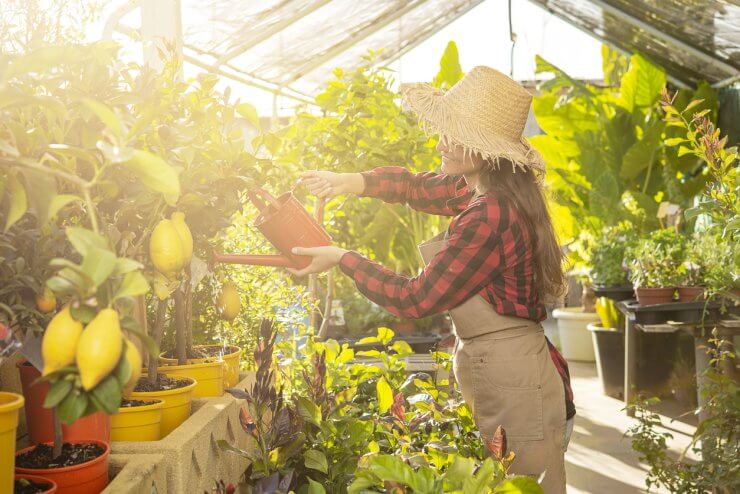
4. Fertilize.
If you have good soil, I don’t recommend making compost and mulch for lemon trees. Lemon trees like loose, rocky, rough soil similar to succulents. However, you can still use fertilizers as a supplement to provide your soil with additional nutrients. When in doubt, run a soil test to determine whether you need fertilizer or not.
If you need fertilizer, use a low-concentration one without much nitrogen. Using too much of this nutrient can prevent lemon trees from producing fruit.
5. Watch the temperature.
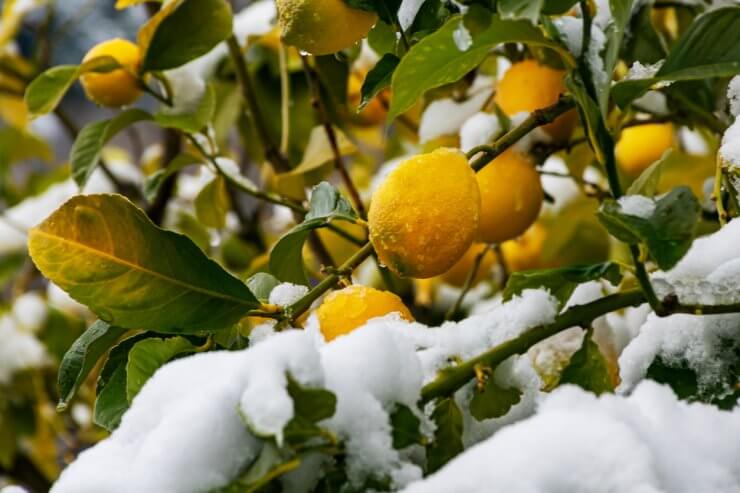
All citrus requires a cool period to produce fruit, but that doesn’t mean they will bloom and produce fruit in a harsh snowy winter. Adult trees will survive a rare snow, though and there are ways to winterize your lemon trees.
Lemon trees like warm humid temperatures when outdoors. Outdoors, these citrus fruits like full sun and grow best in the U.S. Department of Agriculture (USDA) zones 9 to 11. If you are growing lemons outdoors in these zones, there’s not much you can do to control temperature.
But, if you plan to grow these plants in colder temperatures and want them to produce fruit, you need to be a little more crafty. You might think you need to put your lemon tree in a hot room, and lemon trees do enjoy humidity, but container trees, like Meyer lemons, like it to be about 65F degrees in the growing season if you want their blossoms to turn into lemons. If you live in a cold house like I do, I suggest a humidifier and heater set to 65F in a sunny room.
If you plan to move them outdoors when it gets warm, try acclimating them slowly, and certainly, keep them indoors until it’s at least 60 degrees Fahrenheit at night.
6. Inspect your plant for pests.
Pests probably love your lemon tree for the same reasons you do. Its fragrant blossoms and delicious fruit make them irresistible. Bugs, spider mites, and aphids are avid lemon fans. And if this is your first year, and you’re buying an indoor lemon tree from a greenhouse, inspect the heck out of it for bugs, they’re practically unavoidable when buying from a greenhouse.
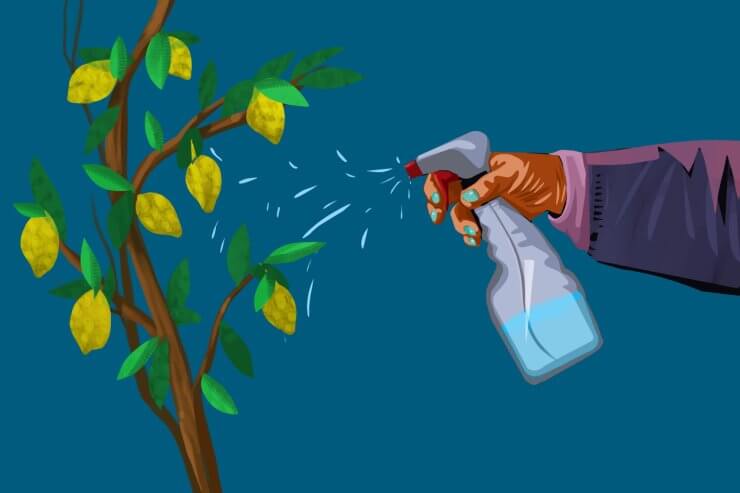
If you see them, spray your plant with a solution of dishsoap, water, and oil (olive oil and/or neem oil work). I find this particularly helpful with spider mites, though I don’t use neem oil indoors because the smell is too strong. Later in the spring and during the summer season, destroy adult bugs as you see them, and continue to spray as needed.
Be careful when using chemicals. Improper use can be just as harmful as the pests themselves. Applying too much can lead to poor fruit development, leaf discoloration, and residue you might not like on your food.

When your lemon tree flowers but no fruit grows, don’t panic.
So, when your lemon tree flowers but no fruit grows, stay calm and trace back your steps.
If you raised your plant from seed, there’s always the chance you grew a sterile seed, but also, your tree should be mature enough before you can enjoy fresh lemons which is at least three years old. In my experience these are usually the culprits:
- More often than not, I find that pests are the issue, sucking nectar from your blossoms so they don’t grow.
- Lemon trees are self-pollinating, but I do give them a gentle jiggle here and there to move pollen around or use a small fan here and there.
- Most citrus trees also need a little suffering to produce fruit. You want to water and fertilize well with an acidic fertilizer in the spring and summer, but in the winter, they prefer cool weather and drought.
- If your lemon tree is indoors, the pot may also be too big. That’s the mistake I made with my first lemon tree. Lemon trees prefer compact roots, so whatever pot it came in, it can likely stay in until the entire container is filled with roots.
If you follow this advice for when your lemon tree flowers but no fruit appears, I think you’ll have better luck next time. Hopefully, as winter fades next year, you can start enjoying your hard-earned lemons! Check out our Tart & Tangy Lemon Guide, too!
Do you have other tips for growing these delicious citrus fruits? Does your lemon tree flower but no fruit is growing? Let me know in the comments section below!
Explore the easiest fruit to grow at home—indoors or out! Read our FREEBIE 15 Easiest Fruits to Grow at Home, right now!




My “lemon tree” was in my small plant house in the driveway and thrived alongside it’s companion lemon tree. 2 side by side. In spring both flowered and the scent was Heavenly. I had no problem with either and planted one in front and one out back next to the grapefruit. One other went close by in my garden. Well as Aunt Clara from Bewitched does, my lemon trees were all oranges! I had planted them from seeds thinking I had saved lemon seeds! Front tree was full of oranges in due time. Back yard ones didn’t bear fruit, only the grapefruit bore many Ruby Red fruit, these also from a seed I planted. They took 20 years to bear fruit. I was too stubborn to buy trees from the nursery and also at that time just starting a new life in Louisiana, I couldn’t afford them. Eventually old man Winter killed them all but we did realize a lot of oranges and grapefruit. I doubt any of you will gain insight from my crazy doings but I guess I just had 20 years of patience and pure dumb luck. This is how I came to write Aunt Clara’s Lemon Tree in one of Green Prints issues online. I do think citrus does better when you get them in pairs though and I wouldn’t want to just get one by itself. Good luck with citrus, they can be lovely when you and conditions are right!
My lemon tree is 2 years old ,did bloom but no flower wat can I do ? Also I’m new in gardining
It really depends heavily on how your tree was propagated. If you have a grafted tree: (grafted onto rootstock) then it can begin flowering and producing fruit around 2 to 3 years of age. However, trees grown from seed go through a long juvenile phase. These trees generally take 4 to 8 years (and sometimes up to a decade) before they are mature enough to flower and fruit.
I live in Greece in an area where lemons are common. My 3 trees are 35 years old and gave fruit only after 20 years. Suddenly, last year 1 of them gave mandarin like fruits.
My Meyer lemon tree has gotten many blooms this summer. I am in zone six. It has been a hot summer. It also seems to get a lot of fruit, but most of them drop off quickly. Others turn yellow and drop off.. I also have black ants, which I thought were helping to pollinate. Do they damage the lemons in some way? It’s very frustrating to see lots of blooms and lots of prospective lemons and not have any.
Overwatering and improper fertilization (either too much or too little) can result in early fruit drop. While ants are typically harmful to meyer lemon trees, their presence could indicate you have a problem with aphids (or some other pest) that produces a sweet residue that ants like.
Last year my lemon tree produced 2 full sized lemons. During the winter I was unable to bring it indoors ( it’s in a large heavy pot) and I had to keep it covered up so it wouldn’t freeze. All the leaves died but now the tree is full of leaves. Just no flowers. What can I do?
My lemon tree is still in its sack pot ,waiting on moving into new home .
when I first got it 18 months ago it had large lemons in it
Since the flowers come then a tiny lemon. Appear but then falls off no lemons at all
Mine has two lemons on it then there was a bunch of blooms and no more lemons came of those blossoms what am I doing wrong
It sounds like you might be having a pollination issue – when the flowers bloom try jiggling the plant to help the process
4 year old meyer lemon tree. In doors with artificial grow lights. Absolutely full of blooms. Many have no stigma and fall off. Few white Flys well controlled with Neem oil spray. Is this usual? Tree had good crop last year. Thank you
I got my lemon tree as a gift for Mothers’ Day last year. I have no idea how old it is, but it’s coming along nicely with a fair amount of flowers ready to pop. Is there a way to tell how old it is? It is about 18” tall.