
 Give a Gift
 Previous
Read by Matilda Longbottom
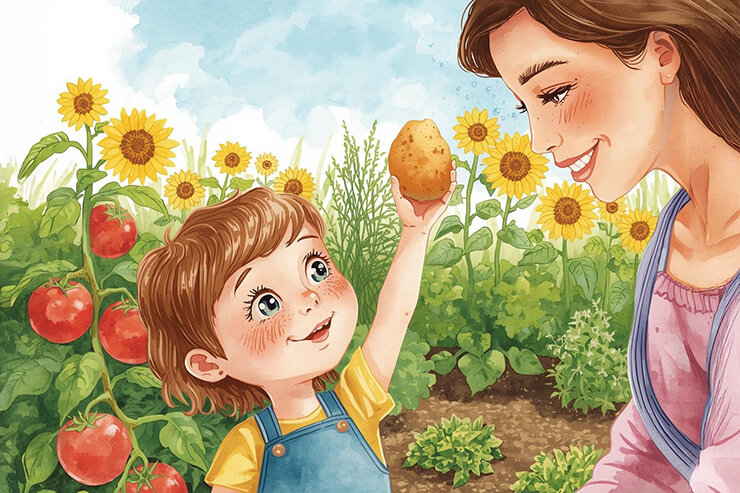
He opened his chubby fist and showed me what he had found: a tiny, grubby potato no bigger than a cherry. I smiled and told him what it was, promising to cook it just for him. Normally, he turned up his nose at “tatoes,” but when dinnertime arrived and that same boiled potato appeared on his plate, he ate it without hesitation.
We hadn’t even been growing potatoes. The little plant that sprouted that year must have been a survivor from two seasons past, left behind by the previous owners of the house. But while potatoes weren’t part of our plans, our garden was filled with tomatoes, herbs, sunflowers, and soft fruits.
My children grew so accustomed to eating homegrown food that one of them once got reprimanded at school for picking and eating blackberries from the edge of the school field. According to the teacher, that wasn’t “real” food. Real food, they insisted, came from the supermarket, wrapped in plastic and already past its prime.
We never saved much money growing our own fruit and vegetables—our garden was small, and our gardening skills smaller. But the rewards came in other ways: fresh air, family time, and the invaluable lesson that food doesn’t just appear on store shelves. My children eagerly ate whatever they had helped to grow—even when it was suspiciously healthy. The pride of bringing something from the soil to the kitchen was usually enough to overcome any fussiness at the dinner table.
Years later, my eldest son joined a community gardening group at his church. One evening, he walked through the door with a grin, holding out his latest harvest—a big bucket of potatoes, all shapes and sizes, each one a little miracle of the earth. They were larger than cherries, fresher than anything from a store, and tastier than I ever imagined potatoes could be. ❖
About the Author: Fiona M. Jones writes short, dark-themed fiction, nature-inspired nonfiction, and poetry. Her monthly opinion column on nature, nurture, and education appears on Vine Leaves Press (Climbing Out of the Box). Explore more of her work at fionamjones.wordpress.com.