

 Give a Gift
 Previous
Read by Michael Flamel
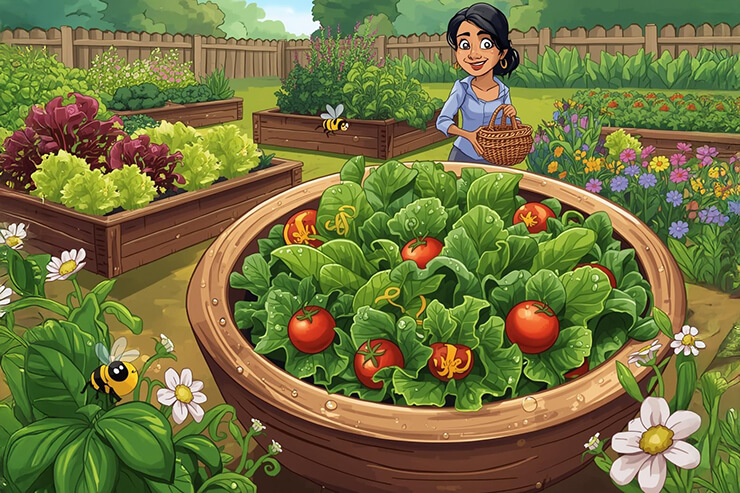
If there is one piece of wisdom that has guided both my gardening and my cooking, it’s this: begin with the end in mind. It’s the same advice I’ve heard from the gardeners who supply the great French and Italian restaurants I’ve visited from New England to California. These quiet geniuses grow the greens and herbs that land on Michelin-starred plates, and when you ask how they do it, their answer—said with a shrug and a twinkle—is usually something like:
“Well, you can’t make a great salad unless you grow a great garden.”
You and I might chuckle, but they’re right.
A salad harvested minutes before it hits the bowl is the best salad you will ever eat.
There’s no contest, no debate, no store-bought tomato that stands a chance.
So, if we want magnificent Summer salads—those jewel-toned bowls we dream about—we must grow the ingredients now, long before the heat of July invites us to dine outside with a bowl big enough to feed the neighborhood.
What follows is my GreenPrints-style guide—not just to growing a salad, but to growing your favorite salad. Feel free to modify the ingredients to match your palate. If you love arugula but hate cucumbers, perfect. If you want peaches in yours, I salute you. Your salad, your rules.
But for today, I’ll share the one I am planting for myself, my friends, and my family: a sun-bright, herb-kissed, garden-fresh salad that has never once failed to dazzle everyone lucky enough to meet it.
Begin with the Bowl: How to Plan a Salad Garden
Step 1: Picture Your Dream Salad
Close your eyes and imagine that big wooden bowl on your Summer table. What’s in it?
For me:
- A mix of tender lettuces
- A handful of peppery arugula
- Juicy cherry tomatoes
- Sliced cucumbers
- Fresh basil
- A little parsley
- A sprinkle of edible flowers for color
Whatever you see—that’s what you plant.
Gardening moral: A salad garden is simply edible dreaming with a dirt-under-the-fingernails follow-through.
Step 2: Choose the Right Greens
A great salad begins with its base. Plant a mix of:
- Looseleaf lettuces: Green Star, Red Sails, Buttercrunch
- Arugula: Cut-and-come-again superstar
- Spinach: Early Spring and Fall
- Romaine: For crunch and structure
- Mesclun blends: Instant sophistication
Pro tip: Plant greens in partial sun during the heat of Summer to avoid bitter leaves. And stagger plantings every 2 weeks.
Step 3: Add the Essential Salad Stars
These are the ingredients that turn “bowl of leaves” into “glorious food experience.”
Tomatoes: Grow cherry or grape types for reliability
- Sungold (the candy of tomatoes)
- Sweet 100
- Black Cherry
Cucumbers: Choose one or two dependable slicers
- Marketmore 76
- Lemon cucumber (the conversation starter!)
- Persian cucumbers for tender skins
Herbs: Herbs make salads sing. Plant
- Basil (Genovese and Thai)
- Parsley
- Chives
- Dill
Edible Flowers (optional but fabulous)
- Nasturtiums (peppery)
- Calendula (citrusy)
- Viola (sweet)
Step 4: Grow for Freshness
A salad is only as fresh as the garden it came from.
Soil Prep
Mix in:
- Compost
- A sprinkle of organic fertilizer
- A promise to water regularly
Spacing: Greens like company. Tomatoes and cucumbers appreciate elbow room. Herbs just want to be admired.
Watering: Consistent, deep watering keeps greens tender and cucumbers crisp.
Harvesting: Harvest early in the morning when leaves are cool and full of moisture. If the tomatoes call your name at noon, answer them—but gently.
Fun Facts to Share While You Serve Your Salad
- A head of lettuce is 95 percent water, which makes salad the most hydrating meal you can grow.
- Arugula is a member of the Brassica family, which means your “leafy green” has a rebellious cabbage streak.
- Cucumbers were once used to polish shoes in ancient Rome. Please don’t try this before serving your bowl.
- Cherry tomatoes are often sweeter when grown in raised beds because warmer soil boosts their sugar content.
- Nasturtiums were considered “the poor man’s capers” for centuries—pickled seeds taste delightfully similar.
The Garden-Fresh Salad: My Complete Recipe
Ingredients
(Use freshly harvested ingredients whenever possible.)
For the Salad:
- 4 cups mixed garden lettuces (Green Star, Red Sails, Buttercrunch)
- 1 cup arugula
- 1 heaping cup cherry tomatoes, halved
- 1–2 garden cucumbers, thinly sliced
- ¼ cup fresh basil leaves, torn
- 2 tablespoons chopped parsley
- 1 tablespoon minced chives
- ¼ cup edible flowers (optional but photogenic)
For the Dressing:
- 3 tablespoons good extra-virgin olive oil
- 1 tablespoon red-wine vinegar or fresh lemon juice
- 1 teaspoon Dijon mustard
- 1 small clove garlic, minced
- ½ teaspoon honey or maple syrup
- Kosher salt and cracked pepper to taste
Instructions:
- Wash and Dry the Greens: Rinse gently in cool water, pat dry, or send them spinning in the salad spinner like an amusement-park ride for leaves.
- Combine the Vegetables: Lettuce first, then arugula, then tomatoes and cucumbers. Toss softly—tender leaves deserve tender hands.
- Add the Herbs and Flowers: Scatter basil, parsley, chives, and edible flowers over the top like confetti at a Summer wedding.
- Mix the Dressing: In a small bowl or mason jar, whisk or shake oil, vinegar/lemon juice, mustard, garlic, honey, salt, and pepper.
- Dress Lightly: Pour just enough dressing to kiss the greens—never drown them. Toss gently.
- Serve Immediately: Garden salads wait for no one. Their peak flavor lasts minutes, not hours.
- Feta or mozzarella pearls
- Toasted sunflower seeds
- Grilled chicken or shrimp
- Sliced peaches or strawberries
Optional Add-Ons (If the Crowd is Hungry):
Closing Thoughts
Growing a salad may sound overly simple—but in truth, it’s one of the most satisfying garden-to-table journeys you’ll ever take. You begin with a dream of a meal and end with a bowl full of sunlight, soil, rainwater, and love.
Grow what you want to eat. Eat what you grow.
And when your friends and neighbors gasp at how delicious it is, smile and share the secret:
“This is what happens when you begin with the bowl in mind.” ❖




At least some scallions, please?