×
  • Home
  • Daily
    • Buyers Guides
    • Composting
    • Container Gardening
    • Easy Healthy Recipes
    • Food Preservation
    • Garden Design
    • Garden Tools
    • Gardening LIfe
      • Animals in the Garden
      • Funny Business
      • Gardening History
      • Gardening Humor
      • Gardening Mishaps
      • Gardening Poems
      • Gardening Romance
      • Gardening Science
      • Gardening with Kids
      • Healing Gardens
      • Joy of Gardening
      • Mystical Gardens
      • Ornamental Gardening
    • Growing Fruits & Berries
    • Indoor Gardening
    • Pests & Diseases
    • Seeds & Seedlings
    • Soil & Fertilizer
    • Spice & Herb Gardening
    • Vegetable Gardening
    • Watering & Irrigation
  • Freebies
  • Videos
  • Libraries
    • Food Gardening Magazine
    • GreenPrints Magazine
    • RecipeLion Magazine
    • GuideBooks
    • Cookbooks
      • Beverages
      • Bakery
      • Breakfast
      • Appetizers
      • Salads & Dressings
      • Soups
      • Entrées
      • Side Dishes & Sauces
      • Desserts
    • Story Collections
    • StoryBooks
    • Recipe Collections
  • Kits
    • Garden Calendars
    • Garden Plans
    • Recipe Cards
    • Greeting Cards
    • ArtPrints
  • Book Club
  • About Us
  • Contact Us
  • Affiliate Program
  • Sponsor Program
  • Give a Gift
  • Privacy Policy & Terms of Use
  • Authors
  • GreenPrints Writer’s Guidelines
  • Keyword Index
  • Join
Crochet, Food Gardening, Knitting, Quilting, Rug Hooking, Sewing

Food Gardener's Book Club

Give a GiftJoin
Visit Our Amazon Store!
  • Daily
    • Buyers Guides
    • Composting
    • Container Gardening
    • Easy Healthy Recipes
    • Food Preservation
    • Garden Design
    • Garden Tools
    • Gardening Life
      • Animals in the Garden
      • Funny Business
      • Gardening History
      • Gardening Humor
      • Gardening Mishaps
      • Gardening Poems
      • Gardening Romance
      • Gardening Science
      • Gardening with Kids
      • Healing Gardens
      • Joy of Gardening
      • Mystical Gardens
      • Ornamental Gardening
    • Growing Fruits & Berries
    • Indoor Gardening
    • Pests & Diseases
    • Seeds & Seedlings
    • Soil & Fertilizer
    • Spice & Herb Gardening
    • Vegetable Gardening
    • Watering & Irrigation
  • Freebies
  • Videos
  • Libraries
    • Food Gardening Magazine
    • GreenPrints Magazine
    • RecipeLion Magazine
    • GuideBooks
    • Cookbooks
      • Beverages
      • Bakery
      • Breakfast
      • Appetizers
      • Salads & Dressings
      • Soups
      • Entrées
      • Side Dishes & Sauces
      • Desserts
    • Story Collections
    • StoryBooks
    • Recipe Collections
  • Kits
    • Garden Calendars
    • Garden Plans
    • Recipe Cards
    • Greeting Cards
    • ArtPrints
  • Book Club
  • Visit Our Amazon Store!|
  • Sign In
  • Search

Watering Tomatoes Without Worry

Watering Tomatoes Without Worry

Including How to Win Against Wind

By Don Nicholas

If there’s one part of tomato growing that causes more second-guessing than any other, it’s watering.

Am I watering too much?
Not enough?
Too often?
Not often enough?

And if you garden in a windy location, you get an extra layer of confusion—because wind quietly steals moisture from soil and leaves long before you notice anything is wrong.

This chapter is about understanding how tomatoes actually use water, how to deliver it consistently, and how to adjust when wind becomes part of the equation.

Because tomatoes don’t want constant attention. They want predictable hydration.
Why Watering Matters More Than Almost Anything Else

Water is how tomatoes:

  • Move nutrients from roots to leaves and fruit
  • Regulate temperature
  • Build cells
  • Transport calcium (hello, blossom end rot)

Inconsistent watering leads to:

  • Cracked fruit
  • Blossom end rot
  • Dropped flowers
  • Bland flavor
  • Stressed plants that attract pests

Tomatoes forgive many mistakes. Erratic watering isn’t one of them.

“Most of my tomato problems disappeared when I stopped guessing and started watering deliberately.”
— Karen, Zone 6a, Iowa

How Tomato Roots Actually Use Water

Tomato roots prefer:

  • Deep moisture
  • Access over time
  • Oxygen in the soil

They do not like:

  • Shallow, frequent watering
  • Soggy soil
  • Long dry spells followed by floods

Deep watering encourages roots to grow downward, creating plants that:

  • Handle heat better
  • Resist drought
  • Produce more consistent fruit

How Often Should You Water Tomatoes?

There’s no universal schedule—but there is a reliable pattern.

Most tomatoes thrive with:

  • Deep watering once or twice per week
  • Adjustments based on heat, soil type, and wind

Hot weather, sandy soil, containers, and wind all increase water needs.

The best test is simple:

  • Stick your finger 2–3 inches into the soil
  • If it’s dry, water
  • If it’s moist, wait

Soil—not the calendar—should decide.

Watering by Growing Method

In-Ground Tomatoes

  • Deep, infrequent watering
  • Mulch heavily
  • Water at the base of plants

Raised Beds

  • Drain faster than in-ground
  • Require more frequent checks
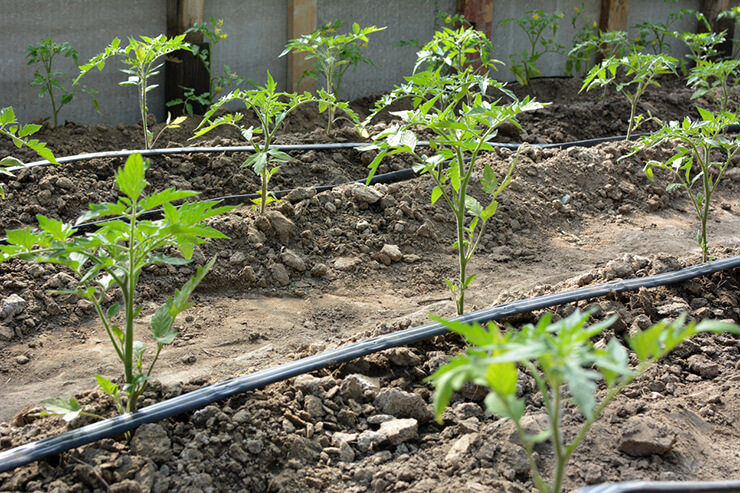
  • Benefit greatly from drip irrigation

Containers

  • Dry out quickly
  • Often need daily watering in summer
  • Larger containers dry more slowly

Indoor Soil Growing

  • Water lightly and consistently
  • Avoid soggy conditions

Greenhouses

  • Total control—but total responsibility
  • Consistent schedules matter

Each system changes how water moves. Adjust accordingly.

Why Wind Changes Everything

Wind is an invisible thief.

It:

  • Pulls moisture from soil surface
  • Increases evaporation from leaves
  • Stresses plants mechanically
  • Dries containers and raised beds faster than expected

In windy gardens, tomatoes often show stress before the soil looks dry.

“I used to blame the sun—turns out the wind was the real culprit.”
— Mark, Zone 5b, Wyoming

Watering Tips for Windy Environments

Water More Deeply, Not More Often
Wind dries the surface quickly. Deep watering ensures moisture reaches the root zone, where it matters.

Mulch Like You Mean It
Use thicker mulch layers:

  • 3–4 inches instead of 2
  • Straw, shredded leaves, or bark mulch

Mulch acts as a windbreak for soil.

Water Earlier in the Day

Morning watering:

  • Reduces evaporation
  • Allows plants to hydrate before wind peaks
  • Lowers stress during the hottest part of the day

Avoid late evening watering in windy, cool climates—it can increase disease risk.

Focus Water at the Soil, Not the Leaves

Overhead watering in wind:

  • Misses the roots
  • Increases evaporation
  • Encourages disease

Drip irrigation or soaker hoses shine here.

Increase Container Size in Windy Areas

Wind accelerates container drying.

  • Choose larger containers
  • Use heavier pots that resist tipping
  • Group containers to reduce airflow

Small pots in wind are a recipe for daily stress.

Use Windbreaks When Possible

Temporary or permanent wind protection helps tremendously.

  • Fences
  • Trellises with plants
  • Hedges
  • Strategic placement near walls or structures

Reducing wind speed even slightly improves water efficiency.

Signs of Water Stress (Especially in Wind)

Watch for:

  • Midday wilting that doesn’t recover by evening
  • Curling or drooping leaves
  • Blossom drop
  • Small or misshapen fruit

In windy gardens, these signs can appear suddenly.

Avoiding the Overwatering Trap

Windy conditions tempt gardeners to water too often.

Overwatering leads to:

  • Root suffocation
  • Disease
  • Weak growth

The goal is consistent moisture, not constantly wet soil.

Mulch and deep watering solve more problems than extra irrigation cycles.

Special Notes for Windy Raised Beds and Containers

Raised beds and containers feel wind stress first.

Extra tips:

  • Check moisture daily during hot, windy spells
  • Consider automated drip systems
  • Add organic matter to improve moisture retention

Wind plus sun plus shallow soil equals rapid drying.

Water Quality Still Matters

Whenever possible:

  • Use clean water
  • Avoid cold shock (especially in greenhouses)
  • Water gently

Sudden temperature changes stress roots as much as drought.

Why Good Watering Improves Flavor

Consistent watering:

  • Prevents cracking
  • Reduces stress
  • Allows sugars to develop evenly

Ironically, tomatoes with steady water often taste better than those pushed through cycles of stress and recovery.

The Big Takeaway

Watering tomatoes well isn’t about frequency—it’s about consistency.

And if wind is part of your garden’s personality, acknowledge it and adjust:

  • Deeper watering
  • Heavier mulch
  • Better timing
  • Smarter placement

When tomatoes trust that water will be there when they need it, they reward you with healthier plants, better fruit, and far fewer problems to troubleshoot.

Coming Up Next

Once watering is under control, it’s time to talk about shaping your plants for airflow, light, and productivity.

Up next: Pruning, Staking, and Support Systems—where structure turns tomato chaos into tomato success.

Let’s Keep Growing

« Soil Health and Tomato Nutrition
Pruning, Staking, and Support Systems »

Tags

overwatering, tomato roots, tomatoes, watering tomatoes

Comments

Click here to cancel reply.

Leave a Reply Cancel reply

Your email address will not be published. Required fields are marked *

Give a Gift

FREEBIE!

With your FREEBIE, you’ll also receive regular email messages from the Food Gardening Network. You can unsubscribe at any time.

Your email address is private. We promise never to sell, rent or disclose your email address to third parties.

Freebies

  • Worst Best Gardening Jokes Calendar
  • 5 Easy Healthy Carrot Recipes
  • 5 Easy Healthy Lemon Recipes
  • 5 Easy Healthy Salsa Recipes
  • 5 Easy Healthy Apple Recipes
  • 5 Easy Healthy Chicken Breast Recipes
  • Top 11 Food Gardening Tools You Need to Succeed
  • A Printable Companion Planting Chart
  • Plants for Bug Control Chart
  • Printable Seed Germination Temperature Chart
  • Printable Tomato Garden-to-Table Chart
  • Planning Your Perfect Food Garden
  • Printable Butterfly Garden Planting Chart
  • The Best Way to Grow Tomatoes
  • Printable Composting 101 Charts
  • How to Master Spice and Herb Gardening at Home
  • 10 Best Garden Poems of All Time
  • Vegetable Garden Planting Chart Freebie
  • Printable Flower Garden Companion Planting Chart
  • 10 Things You Can Grow That Your Pet Will LOVE To Eat!
  • Rose Garden Planting Chart Freebie
  • Printable Kitchen Garden Planting Charts
  • Sunflower Garden Planting Chart Freebie
  • Seasonal ArtPrints Collection Kit Sampler
  • Sampler: Gardening Humor
  • Sampler: Wit, Wisdom, & Learning
  • Gardening in Every Season
  • How to Start a Freedom Garden
  • Recipes from Your Garden
  • Sampler: Animals in the Garden
  • Sampler: Healing Gardens
  • Sampler: Joy of Gardening
  • Growing Vegetables Indoors for Beginners
  • 15 Easiest Fruits to Grow at Home
  • How to Grow a Vegetable Garden

Browse Topics

  • Buyers Guides
  • Composting
  • Container Gardening
  • Easy Healthy Recipes
  • Food Preservation
  • Garden Design
  • Garden Tools
  • Gardening Life
  • Growing Fruits & Berries
  • Indoor Gardening
  • Ornamental Gardening
  • Pests & Diseases
  • Seeds & Seedlings
  • Soil & Fertilizer
  • Spice & Herb Gardening
  • Uncategorized
  • Vegetable Gardening
  • Watering & Irrigation

Buyers Guides:

  • 9 Automated Garden Tools for Effortless Growing
  • 12 Cool Gardening Tools and Gifts for the Plant Lover in Your Life
  • Choosing the Best Shovel for Your Gardening Needs
  • 10 Gardening Tools for Seniors That Actually Make a Difference
  • This Countertop Compost Machine Turns Scraps into Compost in a Few Hours
  • 10+ Food Gardening Gadgets We Love
  • 15 Adaptive and Accessible Gardening Tools and Raised Beds
  • 13 Canning Tools, Supplies & Equipment You Need
  • The 3 Best Gardening Shoes
  • 5+ Best Bird Deterrents for Gardens
  • Shop Our Amazon Store

Authors:

  • Bill Dugan
  • Amanda MacArthur
  • Mike McGrath
  • Don Nicholas
  • Norann Oleson
  • Christy Page
  • Becky Rupp
  • Beth Rush
  • Pat Stone
  • Diana Wells

Enter Your Log In Credentials

This setting should only be used on your home or work computer.

  • Lost your password? Create New Password
  • No account? Sign up

Need Assistance?

Call Food Gardening Network Customer Service at
(800) 777-2658

Food Gardening Network is an active member of the following industry associations:

  • American Horticultural Society
  • GardenComm Logo
  • GardenComm Laurel Media Award
  • MCMA logo
  • Join Now
  • Learn More
  • About Food Gardening Network
  • Contact Us
  • Affiliate Program
  • Sponsor Program
  • Give a Gift
  • Privacy Policy & Terms of Use
  • Food Gardener’s Book Club FAQ

Food Gardening Network
99 Derby Street, Suite 200
Hingham, MA 02043
support@foodgardening.mequoda.com

To learn more about our Email Marketing and Broadcasting Services, Exchange Program, or to become a marketing partner with any of our publications, click here to contact us at Mequoda Publishing Network.

FREE E-Newsletter for You!

Discover how to grow, harvest, and eat good food from your own garden—with our FREE e-newsletter, delivered directly to your email inbox.

  • Facebook
  • Twitter
  • Instagram
  • Pinterest

Powered by
Mequoda Publishing Network
copyright © 2026 Mequoda Systems, LLC

Food Gardening Network®, Food Gardening Magazine® and GreenPrints® are registered trademarks of Mequoda Systems, LLC.