×
  • Home
  • Daily
    • Buyers Guides
    • Composting
    • Container Gardening
    • Easy Healthy Recipes
    • Food Preservation
    • Garden Design
    • Garden Tools
    • Gardening LIfe
      • Animals in the Garden
      • Funny Business
      • Gardening History
      • Gardening Humor
      • Gardening Mishaps
      • Gardening Poems
      • Gardening Romance
      • Gardening Science
      • Gardening with Kids
      • Healing Gardens
      • Joy of Gardening
      • Mystical Gardens
      • Ornamental Gardening
    • Growing Fruits & Berries
    • Indoor Gardening
    • Pests & Diseases
    • Seeds & Seedlings
    • Soil & Fertilizer
    • Spice & Herb Gardening
    • Vegetable Gardening
    • Watering & Irrigation
  • Freebies
  • Videos
  • Libraries
    • Food Gardening Magazine
    • GreenPrints Magazine
    • RecipeLion Magazine
    • GuideBooks
    • Cookbooks
      • Beverages
      • Bakery
      • Breakfast
      • Appetizers
      • Salads & Dressings
      • Soups
      • Entrées
      • Side Dishes & Sauces
      • Desserts
    • Story Collections
    • StoryBooks
    • Recipe Collections
  • Kits
    • Garden Calendars
    • Garden Plans
    • Recipe Cards
    • Greeting Cards
    • ArtPrints
  • Book Club
  • About Us
  • Contact Us
  • Affiliate Program
  • Sponsor Program
  • Give a Gift
  • Privacy Policy & Terms of Use
  • Authors
  • GreenPrints Writer’s Guidelines
  • Keyword Index
  • Join
Crochet, Food Gardening, Knitting, Quilting, Rug Hooking, Sewing

Food Gardener's Book Club

Give a GiftJoin
Visit Our Amazon Store!
  • Daily
    • Buyers Guides
    • Composting
    • Container Gardening
    • Easy Healthy Recipes
    • Food Preservation
    • Garden Design
    • Garden Tools
    • Gardening Life
      • Animals in the Garden
      • Funny Business
      • Gardening History
      • Gardening Humor
      • Gardening Mishaps
      • Gardening Poems
      • Gardening Romance
      • Gardening Science
      • Gardening with Kids
      • Healing Gardens
      • Joy of Gardening
      • Mystical Gardens
      • Ornamental Gardening
    • Growing Fruits & Berries
    • Indoor Gardening
    • Pests & Diseases
    • Seeds & Seedlings
    • Soil & Fertilizer
    • Spice & Herb Gardening
    • Vegetable Gardening
    • Watering & Irrigation
  • Freebies
  • Videos
  • Libraries
    • Food Gardening Magazine
    • GreenPrints Magazine
    • RecipeLion Magazine
    • GuideBooks
    • Cookbooks
      • Beverages
      • Bakery
      • Breakfast
      • Appetizers
      • Salads & Dressings
      • Soups
      • Entrées
      • Side Dishes & Sauces
      • Desserts
    • Story Collections
    • StoryBooks
    • Recipe Collections
  • Kits
    • Garden Calendars
    • Garden Plans
    • Recipe Cards
    • Greeting Cards
    • ArtPrints
  • Book Club
  • Visit Our Amazon Store!|
  • Sign In
  • Search

Tomato Diseases and Disorders

Tomato Diseases and Disorders

Reading the Signals Before They Become a Crisis

By Don Nicholas

If pests feel like uninvited guests, diseases and disorders feel more personal.

They show up quietly.
They look alarming.
And they often send gardeners spiraling toward worst-case conclusions.

Here’s the reassuring truth:

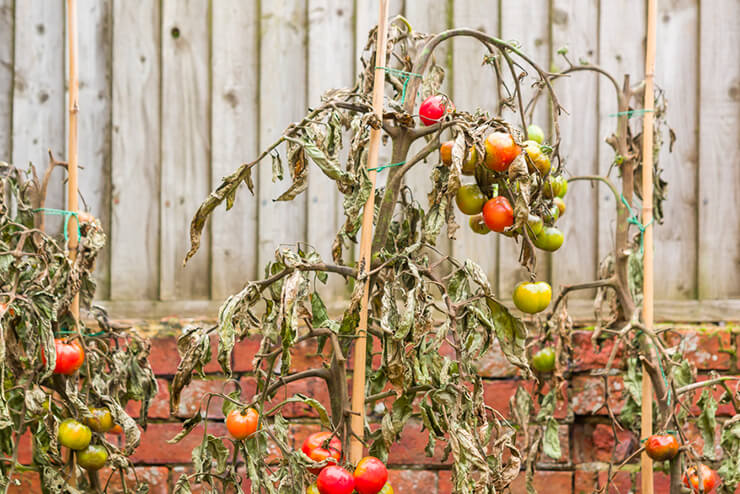
Most tomato “diseases” aren’t sudden disasters. They’re signals—the plant’s way of telling you that something in its environment, nutrition, or routine is out of balance.

This chapter is about learning to read those signals correctly, understanding what you can fix (and what you can’t), and responding calmly—because panic is rarely part of the cure.
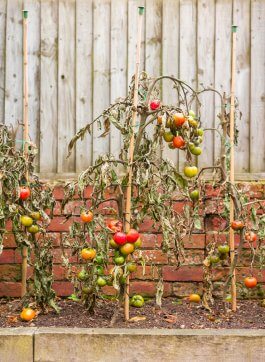
Disease vs. Disorder: A Critical Distinction

Before we name names, let’s clear up a common confusion.

  • Diseases are caused by pathogens (fungi, bacteria, viruses).
  • Disorders are caused by environmental or cultural issues (water, nutrients, temperature, stress).

They can look similar.
They are treated very differently.

Misdiagnosis leads to wasted effort—and sometimes worse outcomes.

“Once I learned the difference between disease and disorder, I stopped fighting ghosts.”
— Martin, Zone 6a, Ohio

The Big Three: Tomato Diseases You’ll Hear About Most

You don’t need to become a plant pathologist. You just need to recognize patterns.
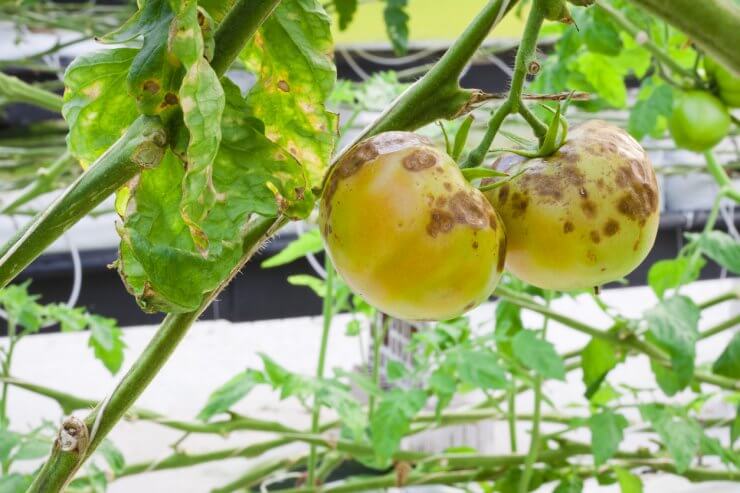
Early Blight: The Familiar Fungal Trouble

What it looks like:

  • Brown spots with concentric rings
  • Starts on lower leaves
  • Gradually moves upward

Why it happens:

  • Soil splash
  • Poor airflow
  • Wet leaves

What to do:

  • Remove affected leaves
  • Mulch to prevent soil splash
  • Improve spacing and airflow
  • Water at soil level

Early blight is common—and manageable. Many gardens live with it and still harvest well.
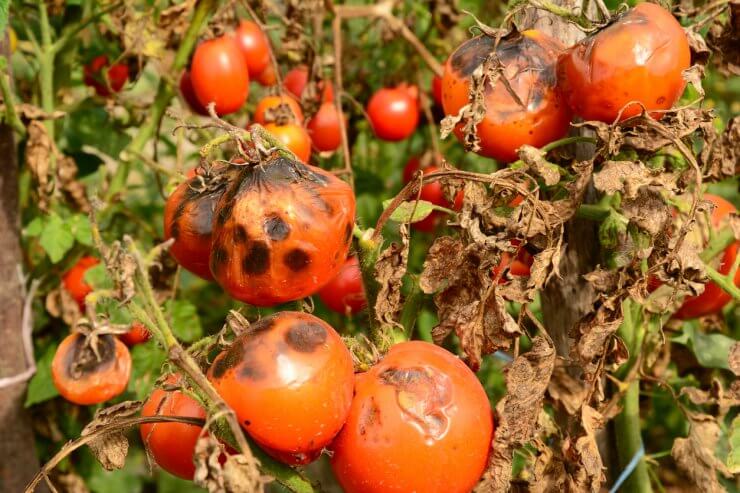
vegetable diseases

Late Blight: Rare, Serious, and Weather-Driven

What it looks like:

  • Rapid leaf collapse
  • Dark, greasy-looking lesions
  • Spreads quickly in cool, wet weather

Why it happens:

  • Specific weather conditions
  • Regional outbreaks

What to do:

  • Remove and destroy infected plants
  • Do not compost
  • Monitor local alerts

Late blight isn’t your fault—and it isn’t fixable once established. Fortunately, it’s uncommon in home gardens.
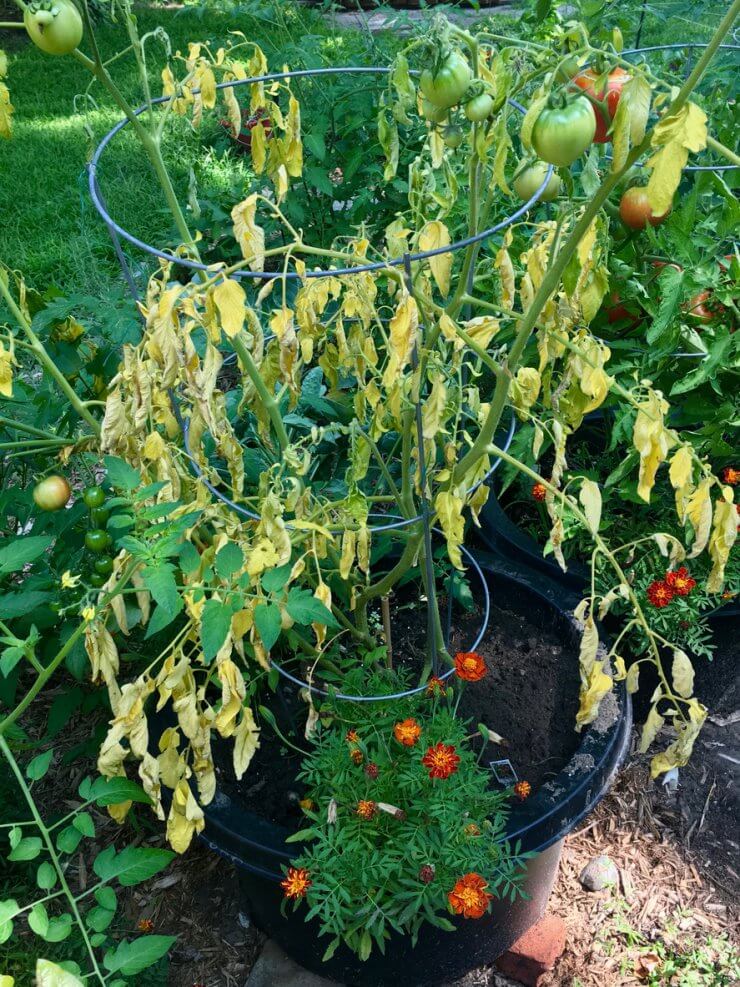
Fusarium and Verticillium Wilt: Soil-Borne and Sneaky

What they look like:

  • Yellowing leaves
  • Wilting despite adequate water
  • One-sided plant decline

Why they happen:

  • Pathogens living in soil
  • Long-term presence

What to do:

  • Rotate crops
  • Choose resistant varieties
  • Avoid planting tomatoes in the same spot year after year

Once present, these diseases are managed—not cured.

Common Tomato Disorders (Much More Fixable)

These problems look scary—but most are correctable.
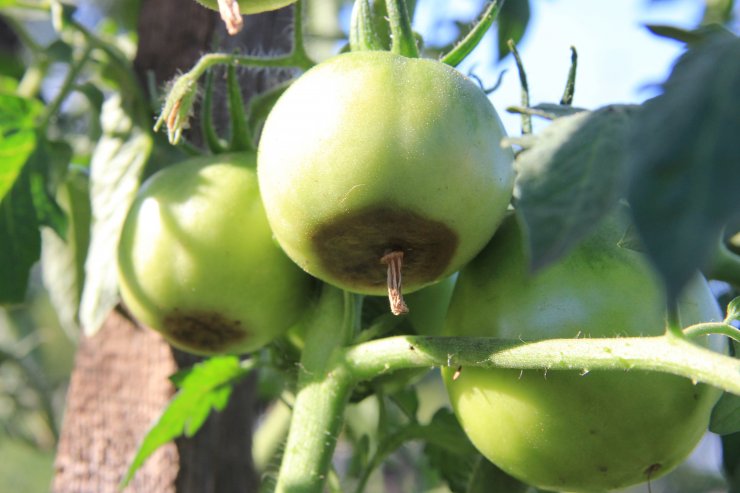
A tomato suffering from Blossom End Rot, or BER

Blossom End Rot: The Most Misunderstood Problem

What it looks like:

  • Dark, sunken spots on the bottom of fruit

What causes it:

  • Inconsistent watering
  • Root stress
  • Rapid growth

What it is not:

  • A lack of calcium in the soil (usually)

What to do:

  • Water consistently
  • Mulch heavily
  • Avoid excess nitrogen

Fix the conditions, and new fruit will be fine.
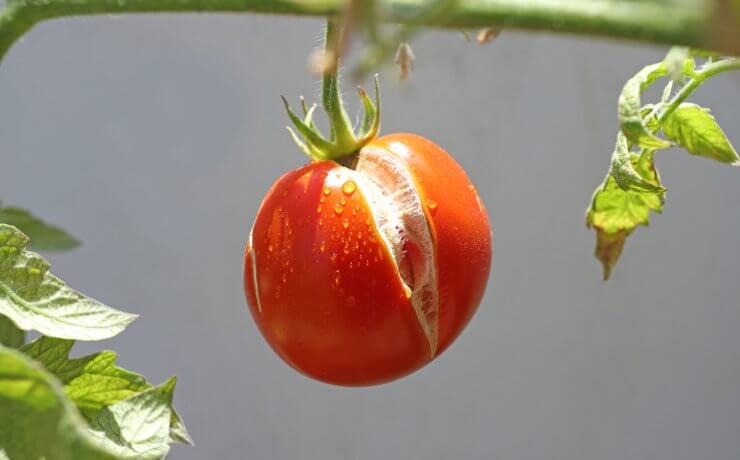
Ripe tomato with a spli
Cracked Fruit: A Watering Clue

What it looks like:

  • Radial or circular cracks near the stem

Why it happens:

  • Sudden water uptake after dry periods

What to do:

  • Water more consistently
  • Mulch to regulate moisture
  • Harvest promptly when ripe

Cracked tomatoes are still edible—just don’t store them long.
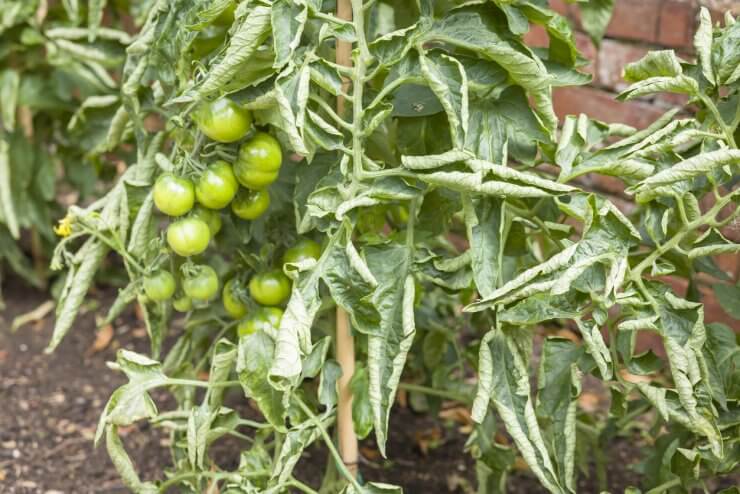
Leaf Curl: Stress, Not Sickness

What it looks like:

  • Upward-rolling leaves
  • Thickened texture

Why it happens:

  • Heat
  • Wind
  • Pruning stress
  • Rapid growth

What to do:

  • Improve watering consistency
  • Provide wind protection
  • Don’t overprune

Physiological leaf curl rarely affects yield.
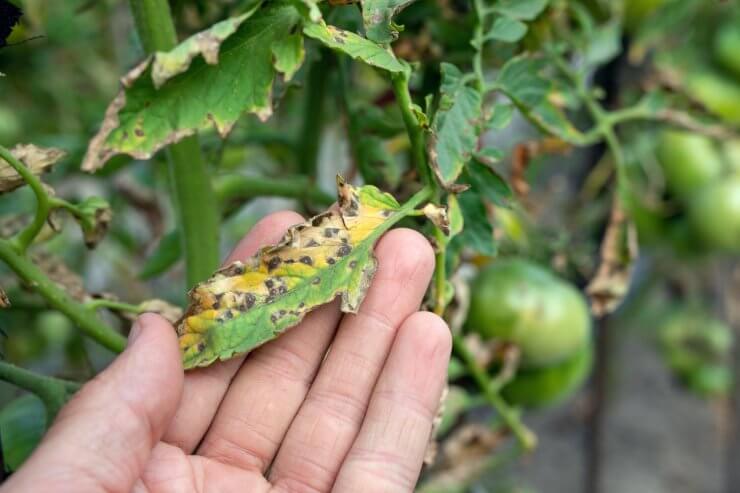
Yellow Leaves: The Tomato’s All-Purpose Complaint

Yellowing can mean many things:

  • Natural aging of lower leaves
  • Nitrogen deficiency
  • Overwatering
  • Poor drainage

What to do:

  • Look at the pattern
  • Check soil moisture
  • Adjust feeding gently

Not every yellow leaf needs intervention.

Viruses: When Removal Is the Best Option

Viral diseases are less common—but serious.

Signs may include:

  • Mottled leaves
  • Distorted growth
  • Stunted plants

What to do:

  • Remove affected plants
  • Control insect vectors
  • Avoid handling healthy plants after infected ones

Viruses don’t respond to sprays or treatments.

Prevention: The Real Cure

Most tomato disease problems are prevented long before symptoms appear.

Best Preventive Practices

  • Rotate crops
  • Space plants generously
  • Mulch to prevent soil splash
  • Water at the base
  • Choose disease-resistant varieties
  • Keep tools clean

Healthy plants resist problems better than any product ever will.

“Prevention feels boring—until you compare harvests.”
— Elaine, Zone 5b, Vermont

When to Intervene—and When to Let Go

Intervene when:

  • Disease is spreading rapidly
  • Young plants are affected
  • Conditions favor escalation

Let go when:

  • Damage is limited
  • Plants are producing well
  • The season is nearly over

Sometimes the smartest move is harvesting what you can and planning better next year.

The Big Takeaway

Tomato diseases and disorders aren’t moral judgments.

They’re information.

When you learn to:

  • Read patterns
  • Understand causes
  • Respond thoughtfully

…tomato growing becomes far less stressful—and far more predictable.

You won’t prevent every issue. No one does. But you can keep most from ruining your season.

Coming Up Next

Now that we’ve covered pests, diseases, and disorders, it’s time to shift toward one of the most satisfying topics of all.

Up next: Growing Tomatoes for Flavor (Not Just Size)—where we focus on taste, texture, and why the best tomatoes are often not the biggest ones.

Let’s Keep Growing

« Common Tomato Pests
Growing Tomatoes for Flavor »

Tags

best tomatoes, growing tomatoes, overwatering, the best tomatoes, tomato disease, tomato diseases, tomatoes

Comments

Click here to cancel reply.

Leave a Reply Cancel reply

Your email address will not be published. Required fields are marked *

Give a Gift

FREEBIE!

With your FREEBIE, you’ll also receive regular email messages from the Food Gardening Network. You can unsubscribe at any time.

Your email address is private. We promise never to sell, rent or disclose your email address to third parties.

Freebies

  • Worst Best Gardening Jokes Calendar
  • 5 Easy Healthy Carrot Recipes
  • 5 Easy Healthy Lemon Recipes
  • 5 Easy Healthy Salsa Recipes
  • 5 Easy Healthy Apple Recipes
  • 5 Easy Healthy Chicken Breast Recipes
  • Top 11 Food Gardening Tools You Need to Succeed
  • A Printable Companion Planting Chart
  • Plants for Bug Control Chart
  • Printable Seed Germination Temperature Chart
  • Printable Tomato Garden-to-Table Chart
  • Planning Your Perfect Food Garden
  • Printable Butterfly Garden Planting Chart
  • The Best Way to Grow Tomatoes
  • Printable Composting 101 Charts
  • How to Master Spice and Herb Gardening at Home
  • 10 Best Garden Poems of All Time
  • Vegetable Garden Planting Chart Freebie
  • Printable Flower Garden Companion Planting Chart
  • 10 Things You Can Grow That Your Pet Will LOVE To Eat!
  • Rose Garden Planting Chart Freebie
  • Printable Kitchen Garden Planting Charts
  • Sunflower Garden Planting Chart Freebie
  • Seasonal ArtPrints Collection Kit Sampler
  • Sampler: Gardening Humor
  • Sampler: Wit, Wisdom, & Learning
  • Gardening in Every Season
  • How to Start a Freedom Garden
  • Recipes from Your Garden
  • Sampler: Animals in the Garden
  • Sampler: Healing Gardens
  • Sampler: Joy of Gardening
  • Growing Vegetables Indoors for Beginners
  • 15 Easiest Fruits to Grow at Home
  • How to Grow a Vegetable Garden

Browse Topics

  • Buyers Guides
  • Composting
  • Container Gardening
  • Easy Healthy Recipes
  • Food Preservation
  • Garden Design
  • Garden Tools
  • Gardening Life
  • Growing Fruits & Berries
  • Indoor Gardening
  • Ornamental Gardening
  • Pests & Diseases
  • Seeds & Seedlings
  • Soil & Fertilizer
  • Spice & Herb Gardening
  • Uncategorized
  • Vegetable Gardening
  • Watering & Irrigation

Buyers Guides:

  • 9 Automated Garden Tools for Effortless Growing
  • 12 Cool Gardening Tools and Gifts for the Plant Lover in Your Life
  • Choosing the Best Shovel for Your Gardening Needs
  • 10 Gardening Tools for Seniors That Actually Make a Difference
  • This Countertop Compost Machine Turns Scraps into Compost in a Few Hours
  • 10+ Food Gardening Gadgets We Love
  • 15 Adaptive and Accessible Gardening Tools and Raised Beds
  • 13 Canning Tools, Supplies & Equipment You Need
  • The 3 Best Gardening Shoes
  • 5+ Best Bird Deterrents for Gardens
  • Shop Our Amazon Store

Authors:

  • Bill Dugan
  • Amanda MacArthur
  • Mike McGrath
  • Don Nicholas
  • Norann Oleson
  • Christy Page
  • Becky Rupp
  • Beth Rush
  • Pat Stone
  • Diana Wells

Enter Your Log In Credentials

This setting should only be used on your home or work computer.

  • Lost your password? Create New Password
  • No account? Sign up

Need Assistance?

Call Food Gardening Network Customer Service at
(800) 777-2658

Food Gardening Network is an active member of the following industry associations:

  • American Horticultural Society
  • GardenComm Logo
  • GardenComm Laurel Media Award
  • MCMA logo
  • Join Now
  • Learn More
  • About Food Gardening Network
  • Contact Us
  • Affiliate Program
  • Sponsor Program
  • Give a Gift
  • Privacy Policy & Terms of Use
  • Food Gardener’s Book Club FAQ

Food Gardening Network
99 Derby Street, Suite 200
Hingham, MA 02043
support@foodgardening.mequoda.com

To learn more about our Email Marketing and Broadcasting Services, Exchange Program, or to become a marketing partner with any of our publications, click here to contact us at Mequoda Publishing Network.

FREE E-Newsletter for You!

Discover how to grow, harvest, and eat good food from your own garden—with our FREE e-newsletter, delivered directly to your email inbox.

  • Facebook
  • Twitter
  • Instagram
  • Pinterest

Powered by
Mequoda Publishing Network
copyright © 2026 Mequoda Systems, LLC

Food Gardening Network®, Food Gardening Magazine® and GreenPrints® are registered trademarks of Mequoda Systems, LLC.