

 Give a Gift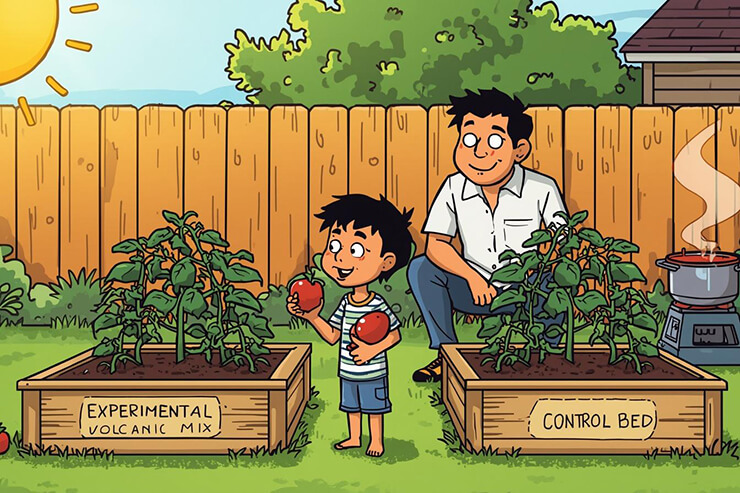
Read by Brian Lupin
There are many ways a professional chef parents a child.
Some teach knife skills.
Some teach patience.
Mine taught me that if a tomato didn’t taste right, the soil was probably to blame.
The whole episode began when my father finished reading a book on traditional Italian cooking—one of those thick, reverent volumes that spoke of food as if it were a religious experience. The author insisted that true San Marzano tomatoes, the legendary sauce tomatoes of southern Italy, owed their greatness not just to the seed, but to the volcanic soils around Mount Vesuvius.
This posed a problem.
Because while we had excellent tomatoes in the Sacramento Valley, we did not—last I checked—have an active volcano in the backyard.
My father saw this not as an obstacle, but as a research opportunity.
Building Mount Vesuvius (4 by 8 Feet at a Time)
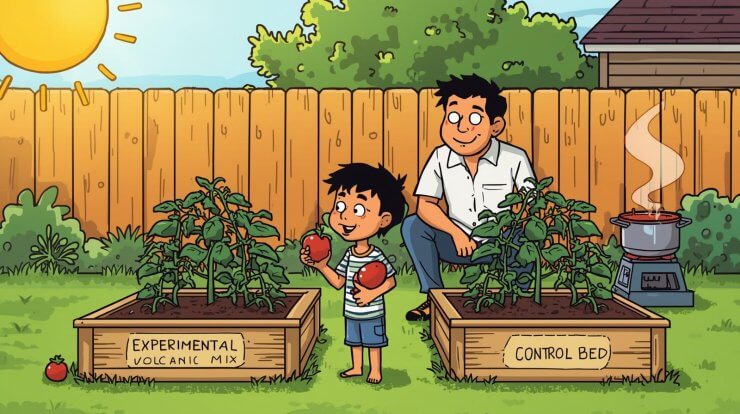
Within weeks, a substantial 4 by 8 raised bed appeared, engineered with the seriousness of a NASA launch pad.
His goal: recreate Italian volcanic soil as best as a determined gardener with a pickup truck could manage.
If someone wanted to try this experiment today, here’s how my father approached it — and how a modern gardener might replicate it:
A “Volcanic-Inspired” Tomato Soil Mix
To simulate mineral-rich volcanic soil, he focused on drainage, minerals, and structure rather than literal lava.
A modern approximation might include:
- 40% high-quality loam or garden soil
- 25% compost (well-aged, not overly rich)
- 15% coarse sand or decomposed granite for drainage
- 10% crushed lava rock or pumice (now easy to buy at garden centers)
- 5% wood ash or basalt rock dust for minerals
- 5% leaf mold or aged bark for texture
The key principles:
- Excellent drainage
- Moderate fertility (not overly lush soil)
- High mineral content
- Warm soil that holds heat
Right next to it, my father built a second raised bed using our usual tomato mix — good compost, garden soil, and a dash of optimism.
This became the control bed, though at the time I only understood it as “the normal tomatoes.”
The Tomato Trials
Both beds received identical treatment:
- Same San Marzano seed stock
- Same watering schedule
- Same sunlight
- Same dad hovering over them with culinary expectations
And then we waited.
By midsummer, the plants looked similar. Healthy. Vigorous. Promising.
But when the first tomatoes ripened, my father staged what I now realize was a blind taste test.
I still remember standing in the garden, juice on my chin, squinting thoughtfully like a tiny food critic.
And I told him:
“These taste… richer.”
He didn’t smile. He nodded. Scientists do not prematurely celebrate.
But later that evening, I heard him tell my mother, “The soil matters.”
The Sauce That Proved the Point
The real verdict came when the tomatoes went into one of his signature pasta sauces — a slow-simmered, herb-filled masterpiece that perfumed the house for hours.
Here is a close reconstruction of that legendary sauce:
Nick’s San Marzano Sunday Sauce
Ingredients
- 3 pounds San Marzano tomatoes (fresh or canned whole)
- 4 tablespoons olive oil
- 1 medium onion, finely diced
- 4 cloves garlic, thinly sliced
- 1 teaspoon salt (to taste)
- ½ teaspoon black pepper
- 1 teaspoon dried oregano
- 1 teaspoon dried basil (or a fresh handful)
- 1 pinch crushed red pepper flakes
- 1 teaspoon sugar (optional, depending on acidity)
- A small handful fresh parsley, chopped
Instructions
- Heat olive oil gently in a heavy pot.
- Cook onion slowly until soft and translucent — never browned.
- Add garlic and stir for 30 seconds until fragrant.
- Add tomatoes, crushing by hand as they go in.
- Add herbs, salt, pepper, and pepper flakes.
- Simmer uncovered on low heat for 60–90 minutes.
- Adjust seasoning, add parsley at the end, and serve over pasta.
He insisted that the secret wasn’t technique.
It was the tomatoes.
Where San Marzano Tomatoes Come From
San Marzano tomatoes originate in the Campania region of Italy, particularly around Naples. The variety is prized for:
- Low acidity
- Sweet, balanced flavor
- Thick flesh with few seeds
- Naturally low water content (ideal for sauce)
The famous “DOP” San Marzano designation protects tomatoes grown in that specific Italian region.
But gardeners across America grow excellent versions — even if Mount Vesuvius refuses to relocate.
Growing San Marzanos in American Gardens
They perform beautifully in:
In-Ground Gardens
Best in warm climates with long Summers. Soil should drain well and not be overly rich.
Raised Beds
Excellent choice. Raised beds allow you to control soil minerals and drainage — perfect for experimenting like my father.
Containers
Surprisingly successful in large containers (10–15 gallons)
Use a mineral-rich mix and keep watering consistent.
Across zones 5–9, gardeners regularly produce outstanding San Marzano harvests.
The lesson my father proved:
You don’t need Italy.
But you do need thoughtful soil.
Fun San Marzano Facts
- They’re sometimes called “the king of sauce tomatoes.”
- They were introduced to Italy from Peru in the 1700s.
- Many canned San Marzanos still list the specific Italian farms they came from.
- They often taste bland when over-fertilized — they prefer restraint.
- They’re one of the few tomatoes chefs debate like wine vintages.
What I Learned from the Experiment
I didn’t realize it then, but that raised bed taught me something lasting.
Flavor isn’t just in the seed.
It’s in the soil, the care, the patience… and the curiosity to try something slightly ridiculous.
My father never claimed he recreated Italy.
But for one Sacramento Summer, our backyard pasta sauce came awfully close.
And that, in gardening terms, counts as a triumph. ❖