Give a Gift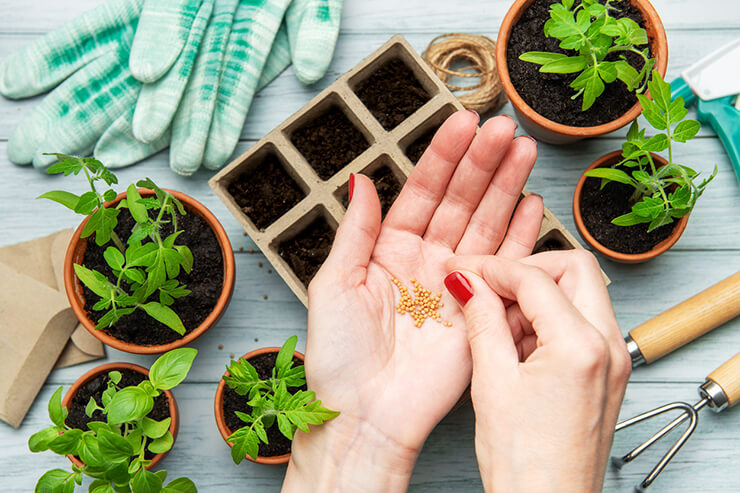
I’ve started tomatoes every possible way, sometimes wisely, sometimes experimentally, and occasionally a little too early.
Every tomato season begins with a decision that feels small at the time—but echoes all the way to harvest:
How are you going to start your tomatoes?
From seed?
From seedlings?
From sturdy starts already showing flowers at the nursery?
There’s no single right answer. There is a right answer for you, your garden, your schedule, and your appetite for tinkering.
This chapter is about choosing the best beginning—not the most impressive one.

Why the Starting Method Matters
The way you start tomatoes affects:
- Plant health
- Root development
- Disease resistance
- Harvest timing
- How much control (and responsibility) you take on
Starting strong doesn’t guarantee success—but it dramatically improves the odds.
And more importantly, it makes the season feel calmer.
Starting Tomatoes from Seed: Maximum Control, Maximum Commitment
Starting tomatoes from seed is deeply satisfying. It’s also the most hands-on option.
Why Gardeners Love Starting from Seed
- Huge variety selection (far beyond what nurseries offer)
- Control over timing and conditions
- Stronger root systems when done well
- Lower cost per plant
What It Requires
- Time
- Patience
- Light (real light, not wishful thinking)
- Attention during the first critical weeks
Seeds don’t forgive neglect—but they reward consistency.
“Starting from seed feels like raising a plant from infancy. It’s work—but it’s worth it.”
— Hannah, Zone 5a, Wisconsin
Seed-Starting Basics (Without the Overwhelm)
Tomato seeds need:
- Warmth (70–80°F is ideal)
- Moist—but not soggy—soil
- Bright light immediately after sprouting
A few non-negotiables:
- Use a sterile seed-starting mix
- Provide 12–16 hours of light once seedlings emerge
- Keep lights close to prevent leggy growth
If seedlings stretch, they’re telling you something—and it’s not subtle.
Buying Seedlings: Convenience with Caveats
Seedlings—young tomato plants sold at nurseries and garden centers—are the most popular option for home gardeners.
And for good reason.
Why Seedlings Make Sense
- Save time
- No indoor setup required
- Faster path to harvest
- Ideal for busy gardeners or beginners
But not all seedlings are created equal.
How to Choose Healthy Tomato Seedlings
When standing in front of a tray of seedlings, look for:
- Thick, sturdy stems
- Deep green leaves
- Compact growth
- No flowers (yet)
Be cautious of plants that are:
- Tall and floppy
- Yellowing
- Already flowering heavily
- Rootbound in tiny pots
Those plants may look eager—but they’re often stressed.
“I stopped buying the biggest seedlings—and my success rate skyrocketed.”
— Tom, Zone 6a, Missouri
Tomato Starts: The Temptation of Instant Gratification
“Starts” are larger, more mature tomato plants—sometimes already flowering or fruiting.
They’re tempting.
They feel like a shortcut.
And sometimes… they are.
When Starts Make Sense
- Short growing seasons
- Late planting due to weather
- Greenhouses and protected environments
- Gardeners who want early tomatoes
When They Don’t
- Outdoor gardens prone to cold snaps
- Stressful transplant conditions
- Rootbound plants that can’t recover
A stressed start rarely catches up to a happy seedling planted at the right time.
Matching Starting Method to Growing Environment
Where you plan to grow tomatoes should influence how you start them.
In-Ground and Raised Beds
- Seedlings or home-started plants work best
- Avoid rushing planting dates
- Harden off properly
Containers
- Compact seedlings
- Determinate or patio varieties
- Avoid oversized starts
Indoor Growing with Soil and Grow Lights
- Start from seed whenever possible
- Choose compact varieties
- Control timing completely
Hydroponics
- Seeds or young seedlings preferred
- Clean starts reduce disease risk
- Smaller plants adapt better
Greenhouses
- Seeds, seedlings, or starts can all work
- Earlier planting possible
- Monitor temperature carefully
Hardening Off: The Step People Skip (and Regret)
Hardening off is the process of gradually introducing indoor-grown plants to outdoor conditions.
This step is not optional.
Tomatoes need time to adjust to:
- Sun
- Wind
- Temperature swings
Start with:
- Short outdoor exposure
- Partial shade
- Increasing time and sun each day
Skipping this step can undo weeks of careful growing in a single afternoon.
“Hardening off feels slow—but losing plants feels slower.”
— Rachel, Zone 7b, Virginia
Timing Is Everything
No matter how you start tomatoes, planting too early causes more problems than it solves.
Tomatoes want:
- Warm soil
- Stable nighttime temperatures
- Frost-free conditions
Cold soil leads to:
- Stunted growth
- Yellowing leaves
- Delayed fruiting
A tomato planted a little later—but into warm soil—often outperforms one rushed into the garden.
My Rule of Thumb
Over the years, I’ve settled into this approach:
- Start some tomatoes from seed to explore new varieties
- Buy healthy seedlings for dependable favorites
- Avoid oversized starts unless conditions are perfect
This gives me:
- Variety
- Reliability
- A little room for experimentation
And it keeps the season fun.
The Big Takeaway
How you start tomatoes sets the tone for the entire season.
There’s no prize for:
- Starting earliest
- Growing the biggest seedlings indoors
- Showing off the tallest plant at planting time
The real reward comes from:
- Healthy roots
- Calm transitions
- Plants that settle in and grow with confidence
Choose the beginning that fits your life—not just your ambition.
Coming Up Next
Now that your tomatoes are off to a good start, it’s time to decide where they’ll live—and how you’ll prepare that space for success.
Up next: Growing Tomatoes In-Ground—where soil, spacing, and patience set the stage for everything that follows.
Let’s Keep Growing