Give a Gift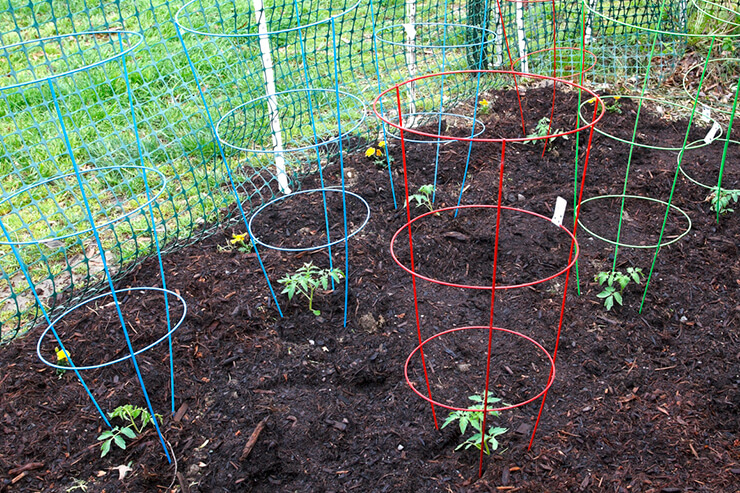
At some point every tomato gardener has stood in the garden, looked at a plant that seems to be doing everything at once, and thought:
“Should I be cutting this?”
Pruning and supporting tomatoes can feel intimidating, controversial, and deeply personal—because everyone seems to have a strong opinion. The truth is reassuring:
There is no single “right” way to prune or support tomatoes.
There are smarter ways, depending on what you’re growing and where.
This chapter is about understanding options, making intentional choices, and giving tomato plants the structure they need to thrive—without overthinking every snip.
Why Pruning and Support Matter
Left completely alone, tomato plants will:
- Sprawl
- Trap moisture
- Reduce airflow
- Increase disease risk
- Make harvesting harder
Pruning and support help:
- Improve air circulation
- Direct energy toward fruit
- Prevent broken stems
- Keep fruit off the ground
- Make plants easier to manage
The goal isn’t control—it’s cooperation.
“Once I started supporting my tomatoes properly, everything else got easier.”
— Mike, Zone 6b, Kentucky
First Things First: Determinate vs. Indeterminate
Before you pick up the pruners, know what you’re growing.
- Determinate tomatoes: Compact, bushy, fruit all at once
- Indeterminate tomatoes: Vining, continuous growth, fruit all season
This distinction shapes everything.
Pruning Determinate Tomatoes: Less Is More
Determinate tomatoes already have a built-in plan.
They:
- Reach a set size
- Set fruit over a short window
- Redirect energy naturally
Best pruning approach:
- Remove only damaged, diseased, or soil-touching branches
- Avoid heavy pruning
- Focus on airflow near the base
Over-pruning determinates reduces yield. Let them be who they are.
Pruning Indeterminate Tomatoes: You Have Choices
Indeterminate tomatoes will grow until stopped by frost—or exhaustion.
Pruning helps you decide:
- How big they get
- How dense they become
- How manageable they feel
Understanding Suckers
Suckers are shoots that form at the junction of a leaf branch and the main stem.
Left alone, suckers:
- Become full branches
- Flower and fruit
Removed strategically, they:
- Improve airflow
- Simplify plant structure
- Can increase fruit size
Neither choice is wrong—it’s about preference.
Common Indeterminate Pruning Styles
Single-stem pruning
- Removes most suckers
- Produces larger fruit
- Requires strong support
Two- or three-stem pruning
- Balanced approach
- Good yields and airflow
- Popular in greenhouses and raised beds
Minimal pruning
- Natural growth
- Higher total fruit count
- More foliage and shade
Try one method per season to see what suits your garden.
When (and When Not) to Prune
Best times to prune:
- Early morning
- Dry weather
- When plants are actively growing
Avoid pruning:
- During extreme heat
- When plants are stressed
- Right before heavy rain
Clean tools matter. Tomatoes don’t need extra invitations to disease.
Support Systems: The Backbone of Tomato Success
A healthy tomato plant loaded with fruit is heavy.
Support is not optional.
Install supports at planting time to:
- Avoid root damage later
- Train growth early
- Reduce breakage
Common Tomato Support Options
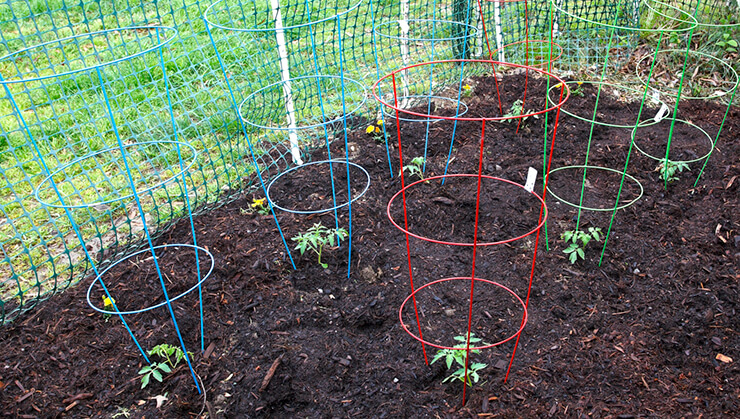
Cages
- Simple and familiar
- Best for determinate or semi-determinate varieties
- Must be tall and sturdy
Flimsy cages fail spectacularly.
Stakes
- Flexible and inexpensive
- Work well for pruned indeterminates
- Require regular tying
Use soft ties that won’t cut into stems.
Trellises
- Excellent airflow
- Easy harvesting
- Ideal for rows and raised beds
Trellises shine where space is tight but height is available.
String and Clip Systems (Greenhouses)
- Vertical growth
- Adjustable throughout the season
- Highly efficient
Once you try this in a greenhouse, it’s hard to go back.
Supporting Tomatoes in Windy Gardens
Wind adds another challenge.
Extra tips:
- Choose heavier supports
- Anchor cages and stakes deeply
- Tie plants loosely to allow movement
- Avoid rigid systems that snap under stress
Some movement strengthens stems. Too much breaks them.
Tying Tomatoes Without Hurting Them
Tomato stems thicken quickly.
Use:
- Soft garden ties
- Fabric strips
- Tomato clips
Tie loosely and check ties regularly.
What fit last week may strangle this week.
Common Pruning and Support Mistakes
- Over-pruning determinates
- Waiting too long to install support
- Using weak cages
- Tying stems too tightly
- Trying to “fix” problems too late
Most tomato disasters are structural—not nutritional.
The Big Takeaway
Pruning and support aren’t about forcing tomatoes into submission.
They’re about:
- Giving plants room to breathe
- Helping them carry their own weight
- Making your job easier
When tomatoes have structure, they grow with confidence.
And confident tomatoes are productive tomatoes.
Coming Up Next
With structure in place, it’s time to talk about what happens when things go wrong—especially when pests and diseases show up uninvited.
Up next: Common Tomato Pests and How to Outsmart Them, where vigilance beats panic every time.
Let’s Keep Growing