Give a Gift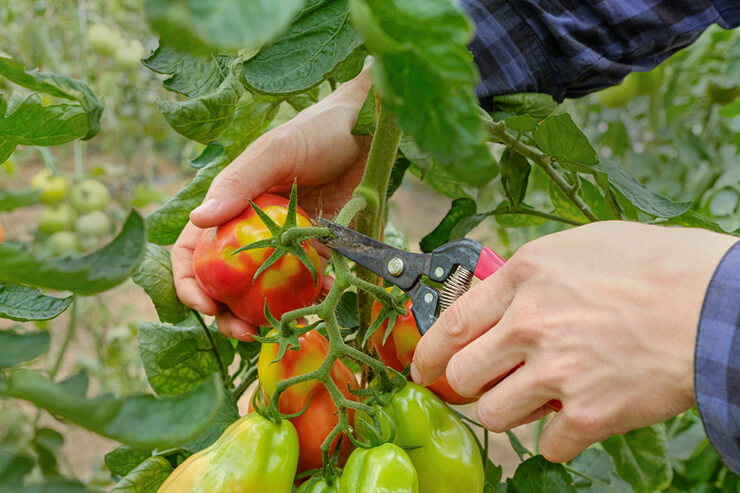
Harvesting tomatoes looks simple—until you’ve grown them yourself.
That’s when you realize there’s a narrow window between:
- Too early
- Too late
- Just right
And that window moves depending on variety, weather, and how you plan to use the tomato.
This chapter is about learning to read tomatoes with your eyes, hands, and nose—because no chart ever replaces experience, but a little guidance can shorten the learning curve considerably.

Why Harvest Timing Matters So Much
Tomatoes don’t stop changing once they turn red.
Harvest timing affects:
- Flavor
- Texture
- Shelf life
- Cracking
- Pest damage
Pick too early, and flavor hasn’t fully developed.
Pick too late, and fruit may split, soften, or attract unwanted attention.
The goal is peak ripeness, not maximum redness.
“I used to wait until tomatoes were perfect-looking. Now I pick them perfect-tasting.”
— Diane, Zone 6b, Michigan
Understanding Tomato Ripeness Stages
Tomatoes ripen in stages, even if it all looks like “red” from a distance.
- Green: Mature but unripe
- Breaker: First hint of color
- Turning: 10–30% color change
- Pink: More color, softer texture
- Red (or full color): Peak flavor and aroma
Flavor continues to develop after the breaker stage—but vine time matters.
Vine-Ripened vs. Counter-Ripened
Vine-ripened tomatoes:
- Develop deeper flavor
- Have better texture
- Are more aromatic
Counter-ripened tomatoes:
- Can still taste good
- Reduce cracking and pest risk
- Allow harvest before storms or heat
Both are valid. The decision depends on weather, pests, and your schedule.
How to Tell When a Tomato Is Ready
Forget calendars. Use your senses.
Look for:
- Deep, even color
- No green at the shoulders (unless variety-specific)
Feel for:
- Slight softness
- Gentle give under pressure
Smell for:
- That unmistakable tomato aroma
If it smells like a tomato, it probably tastes like one.
Harvesting by Tomato Type
Different tomatoes prefer different timing.
Cherry and Grape Tomatoes
- Fully colored
- Slightly soft
- Pick often to encourage continued production
Slicing Tomatoes
- Full color
- Slight give
- Harvest before over-softening
Paste Tomatoes
- Deep color
- Firm but yielding
- Slightly drier feel
These ripen more evenly and are forgiving of timing.
Harvesting in Hot or Wet Weather
Weather changes the rules.
- Heat: Tomatoes may ripen internally before showing full color
- Rain: Sudden water uptake increases cracking risk
In these conditions:
- Harvest slightly earlier
- Finish ripening indoors
- Protect quality over perfection
“I’d rather ripen indoors than lose tomatoes to cracks after a storm.”
— Mark, Zone 7a, Tennessee
How to Harvest Without Damaging Plants
Use:
- Clean hands for small fruit
- Pruners or scissors for larger fruit
Avoid:
- Pulling hard
- Twisting thick stems aggressively
Damaged vines heal slowly late in the season.
Handling Tomatoes After Harvest
Tomatoes are living fruit.
Handle them gently:
- Don’t stack too deeply
- Avoid refrigeration (it dulls flavor)
- Store at room temperature, stem side down
Eat within a few days for best flavor.
What About Green Tomatoes?
Green tomatoes aren’t failures.
They’re:
- An insurance policy
- A seasonal reality
- A culinary opportunity
Harvest green tomatoes before frost and:
- Ripen indoors
- Use in cooking
- Preserve for later
Some of the best end-of-season dishes start with green fruit.
End-of-Season Harvest Strategy
As the season winds down:
- Harvest mature green fruit before frost
- Remove declining plants
- Focus energy on what remains
Late-season tomatoes may not be perfect—but they’re still yours.
Common Harvesting Mistakes
- Waiting for perfect color
- Ignoring smell and feel
- Leaving ripe fruit on stressed plants
- Refrigerating fresh tomatoes
Tomatoes are forgiving—but not immune to neglect.
The Big Takeaway
Harvesting tomatoes is a skill built over time.
When you:
- Watch closely
- Touch gently
- Trust your senses
…you stop guessing and start harvesting with confidence.
The reward is tomatoes that taste exactly the way you hoped they would when you planted them months ago.
Coming Up Next
Once the harvest starts rolling in, the next question becomes unavoidable:
What on earth am I going to do with all these tomatoes?
Up next: Tomatoes for Sauces, Canning, and Preserving, where abundance turns into long-term satisfaction.
Let’s Keep Growing