Give a Gift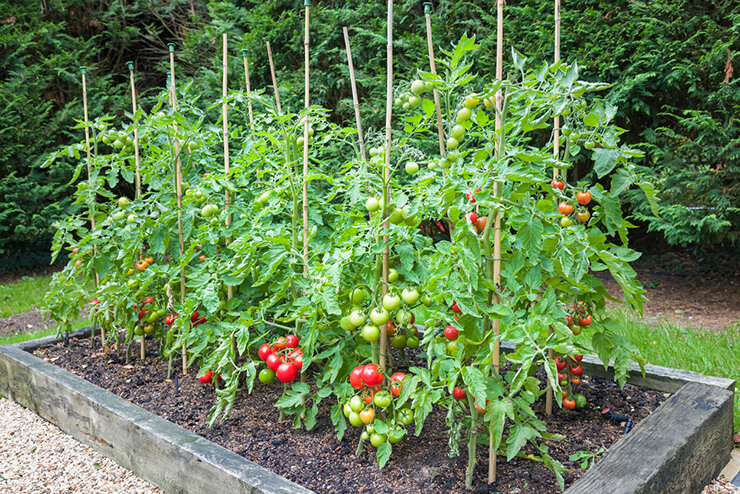
Raised beds are where many gardeners fall in love with tomato growing all over again.
They’re tidy.
They’re efficient.
They warm up early.
They drain beautifully.
And perhaps most importantly, they give you more control—over soil, spacing, water, and sanity.
If in-ground gardening is a long conversation with the land, raised beds are a focused, productive meeting with clear goals and good outcomes.
Let’s make the most of them.

Why Tomatoes Thrive in Raised Beds
Tomatoes adore raised beds for reasons that become obvious by midseason:
- Soil warms faster in spring
- Drainage is excellent
- Roots grow easily in loose soil
- Weed pressure is reduced
- Soil quality is entirely under your control
For gardeners dealing with heavy clay, poor drainage, rocky soil, or limited space, raised beds aren’t a compromise—they’re an upgrade.
“My raised bed tomatoes outperform everything else in my garden.”
— Nina, Zone 6a, Massachusetts
Choosing the Right Raised Bed for Tomatoes
Tomatoes don’t need fancy beds—but they do need depth.
Ideal bed dimensions:
- Depth: Minimum 12 inches (18–24 inches is better)
- Width: 3–4 feet (so you can reach the center)
- Length: Whatever fits your space
Deeper beds allow stronger root systems, better drought tolerance, and larger, more productive plants. If you’re building or buying beds specifically for tomatoes, depth matters more than width.
Soil Mix: Where Raised Beds Really Shine
This is where raised beds pull ahead of every other method.
You’re not stuck with native soil.
You get to create tomato paradise.
A reliable raised-bed soil blend includes:
- Quality topsoil or garden soil
- Generous compost (about 30–40%)
- Organic matter for structure and moisture retention
The goal is soil that drains well, holds moisture evenly, and feels crumbly in your hands.
Avoid straight bagged potting mix (too light) or straight garden soil (often too heavy).
“Once I invested in good soil, everything else got easier.”
— Matt, Zone 5b, Colorado
Spacing in Raised Beds: Resist the Urge to Overplant
Raised beds make it tempting to squeeze in extra plants.
Tomatoes will punish that enthusiasm.
Spacing guidelines:
- Determinate varieties: 18–24 inches apart
- Indeterminate varieties: 24–30 inches apart
Adequate spacing improves airflow, reduces disease pressure, and makes harvesting easier. In raised beds, less really is more.
Planting Techniques for Raised Beds
Plant tomatoes deeply to take full advantage of their rooting ability.
- Remove lower leaves
- Bury the stem
- Leave only the top leaves above soil
Raised bed soil is loose and warm, so tomatoes establish quickly and grow aggressively. Water thoroughly after planting to settle soil around the roots.
Watering Raised Bed Tomatoes
Excellent drainage is a blessing—but it also means raised beds dry out faster.
Tomatoes prefer deep, consistent watering rather than frequent shallow drinks.
Best practices:
- Water early in the day
- Water at soil level
- Use drip irrigation or soaker hoses when possible
Mulch is essential to maintain even moisture.
Mulching: Mandatory, Not Optional
Mulch transforms raised bed tomatoes from good to exceptional.
It:
- Reduces evaporation
- Moderates soil temperature
- Prevents soil splash and disease
- Suppresses weeds
Good mulch options include straw, shredded leaves, or untreated grass clippings applied in thin layers. Mulch after the soil has warmed and plants are established.
Supporting Tomatoes in Raised Beds
Raised bed tomatoes often grow better than expected, which makes sturdy support essential.
Install supports at planting time:
- Tall cages
- Strong stakes
- Trellises
Because raised bed soil is loose, supports must be anchored deeply. A flimsy cage in a raised bed is an invitation to midseason chaos.
Choosing Varieties for Raised Beds
Raised beds are remarkably versatile and support a wide range of tomatoes, including:
- Salad tomatoes
- Slicing tomatoes
- Compact indeterminate varieties
- Determinate sauce tomatoes
Short-season gardeners benefit from early-maturing varieties, while long-season gardeners can indulge in heirlooms and extended-harvest types.
Common Raised Bed Mistakes (and How to Avoid Them)
- Overcrowding: Space plants properly
- Underwatering: Monitor moisture closely
- Skipping mulch: Don’t
- Ignoring soil replenishment: Add compost annually
Raised beds give generously—but they do require ongoing care.
Why Raised Beds Win So Many Gardeners Over
Raised beds offer predictability, efficiency, and consistently strong results.
They’re forgiving enough for beginners and precise enough for experienced gardeners who want to fine-tune both yield and flavor. For many gardeners, raised beds become the sweet spot where tomatoes finally feel easy.
Coming Up Next
Not every tomato thrives best in a raised bed—and not every gardener has room for one.
Next up, we’ll explore Growing Tomatoes in Containers, where size, variety selection, and watering discipline make all the difference.
Let’s Keep Growing