Give a Gift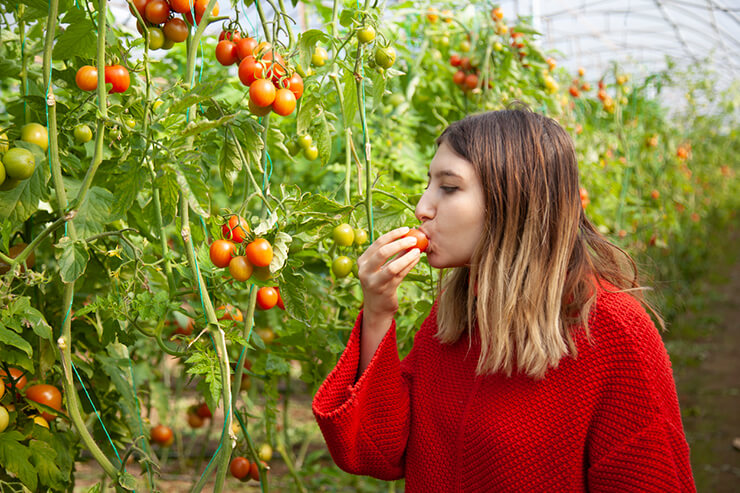
If you ask gardeners why they grow tomatoes, they’ll say things like freshness, abundance, or self-reliance. But if you listen carefully—really carefully—you’ll hear the truth underneath it all:
They’re chasing flavor.
Not just any flavor, but that moment when a tomato stops you mid-bite. The kind that makes you close your eyes, reach for the salt, and wonder why you ever bought tomatoes at the grocery store in the first place.
Flavor isn’t an accident. It’s the result of a thousand small decisions—many of them happening long before the fruit ever turns red.
This chapter is about making those decisions intentionally.

What Tomato Flavor Really Is
Flavor isn’t just sweetness.
It’s a balance of:
- Sugars
- Acids
- Aromatic compounds
- Texture and juiciness
Tomatoes that grow too fast often taste flat. Tomatoes grown under gentle, consistent conditions develop depth and complexity.
Stress—the right kind—plays a role.
“My best tomatoes aren’t the biggest. They’re the ones that make me stop talking.”
— Andrea, Zone 7a, North Carolina
Variety Choice: Flavor Starts Before Planting
If flavor matters most, variety choice matters more than anything else.
Some tomatoes are bred for:
- Shipping
- Shelf life
- Uniformity
Others are bred for:
- Taste
- Texture
- Aroma
Choose varieties known for eating quality, not just productivity.
General flavor tendencies:
- Heirlooms often excel in complexity
- Cherry tomatoes pack intense sweetness
- Paste tomatoes concentrate flavor naturally
Start with good genetics, and you’re halfway there.
Sunlight: Flavor’s Energy Source
Tomatoes convert sunlight into sugar.
More sun equals:
- Higher sugar content
- Better acid balance
- More intense flavor
Aim for:
- At least 6 hours of direct sun
- Ideally 8 or more
In hot climates, light afternoon shade can protect plants without sacrificing flavor.
Watering for Flavor (Consistency Beats Abundance)
Tomatoes grown with wildly fluctuating water:
- Crack
- Taste diluted
- Develop uneven texture
Tomatoes grown with steady moisture:
- Accumulate sugars
- Maintain firm texture
- Taste balanced
Once fruit begins to ripen, avoid heavy watering that causes sudden swelling.
This is not about stressing plants—it’s about predictability.
Soil and Nutrition: Less Nitrogen, More Taste
Overfed tomatoes grow beautiful leaves—and bland fruit.
For better flavor:
- Avoid excess nitrogen after flowering
- Focus on soil health, not fertilizer strength
- Feed gently and consistently
Healthy soil releases nutrients slowly, which supports steady flavor development.
“When I stopped pushing growth, my tomatoes started tasting like tomatoes again.”
— Kevin, Zone 6b, Indiana
The Role of Mild Stress (Yes, Really)
Tomatoes grown in perfect comfort often taste ordinary.
Mild, controlled stress:
- Slightly reduced watering late in ripening
- Moderate nutrient availability
- Warm days and cool nights
…encourages plants to concentrate flavor compounds.
This is a fine line. Cross it, and plants suffer. Stay on it, and flavor shines.
Temperature Matters More Than You Think
Flavor develops best when:
- Days are warm (70–85°F)
- Nights are cooler
Extended heat above 90°F:
- Slows sugar production
- Reduces aroma
In hot climates, choosing heat-tolerant varieties and providing afternoon shade helps preserve flavor.
Ripening on the Vine (When Possible)
Tomatoes continue to develop flavor as they ripen.
Vine-ripened tomatoes:
- Taste richer
- Have better texture
- Smell like tomatoes
That said, picking slightly early and ripening indoors is sometimes necessary—especially to avoid cracking, pests, or splitting.
Flavor doesn’t vanish when you pick early, but it improves with patience.
Harvest Timing: A Flavor Decision
Harvest tomatoes when:
- Color is deep and even
- Fruit yields slightly to gentle pressure
- Aroma is noticeable
Harvesting too early sacrifices flavor. Harvesting too late risks cracking and pests.
This is where experience pays off.
Growing Method and Flavor
Different growing systems influence taste.
- In-ground: Deep, complex flavor
- Raised beds: Excellent balance and consistency
- Containers: Intense flavor when managed carefully
- Hydroponics: Clean, bright flavor when not overfed
- Greenhouses: Exceptional control—and exceptional taste when done right
No system guarantees flavor. Management does.
Why Smaller Tomatoes Often Taste Better
Smaller fruit:
- Concentrate sugars
- Develop thicker skins
- Ripen evenly
This is why cherry tomatoes often taste sweeter than large slicers.
Big tomatoes can be flavorful—but they require excellent conditions and restraint.
What Not to Chase
Avoid chasing:
- Maximum size
- Maximum yield
- Perfect appearance
Flavor lives in the middle ground—where plants are healthy, not pampered.
The Big Takeaway
Growing tomatoes for flavor is about restraint.
- Enough water, not too much
- Enough nutrients, not too many
- Enough stress to focus flavor, not enough to harm
When you stop forcing tomatoes to perform and start letting them mature at their own pace, flavor follows.
And once you taste the difference, there’s no going back.
Coming Up Next
Flavor is only half the story. Timing is the other half.
Up next: Harvesting Tomatoes at the Perfect Moment, where we’ll talk about when to pick, how to handle fruit, and how to capture flavor at its peak.
Let’s Keep Growing