
×
  • Home
  • Daily
    • Buyers Guides
    • Composting
    • Container Gardening
    • Easy Healthy Recipes
    • Food Preservation
    • Garden Design
    • Garden Tools
    • Gardening LIfe
      • Animals in the Garden
      • Funny Business
      • Gardening History
      • Gardening Humor
      • Gardening Mishaps
      • Gardening Poems
      • Gardening Romance
      • Gardening Science
      • Gardening with Kids
      • Healing Gardens
      • Joy of Gardening
      • Mystical Gardens
      • Ornamental Gardening
    • Growing Fruits & Berries
    • Indoor Gardening
    • Pests & Diseases
    • Seeds & Seedlings
    • Soil & Fertilizer
    • Spice & Herb Gardening
    • Vegetable Gardening
    • Watering & Irrigation
  • Freebies
  • Videos
  • Libraries
    • Food Gardening Magazine
    • GreenPrints Magazine
    • RecipeLion Magazine
    • GuideBooks
    • Cookbooks
      • Beverages
      • Bakery
      • Breakfast
      • Appetizers
      • Salads & Dressings
      • Soups
      • Entrées
      • Side Dishes & Sauces
      • Desserts
    • Story Collections
    • StoryBooks
    • Recipe Collections
  • Kits
    • Garden Calendars
    • Garden Plans
    • Recipe Cards
    • Greeting Cards
    • ArtPrints
  • Book Club
  • About Us
  • Contact Us
  • Affiliate Program
  • Sponsor Program
  • Give a Gift
  • Privacy Policy & Terms of Use
  • Authors
  • GreenPrints Writer’s Guidelines
  • Keyword Index
  • Join
Crochet, Food Gardening, Knitting, Quilting, Rug Hooking, Sewing
Celebrating 6 Years!

Food Gardening Network

Growing food, fun & more

Give a GiftJoin
Visit Our Amazon Store!
  • Daily
    • Buyers Guides
    • Composting
    • Container Gardening
    • Easy Healthy Recipes
    • Food Preservation
    • Garden Design
    • Garden Tools
    • Gardening Life
      • Animals in the Garden
      • Funny Business
      • Gardening History
      • Gardening Humor
      • Gardening Mishaps
      • Gardening Poems
      • Gardening Romance
      • Gardening Science
      • Gardening with Kids
      • Healing Gardens
      • Joy of Gardening
      • Mystical Gardens
      • Ornamental Gardening
    • Growing Fruits & Berries
    • Indoor Gardening
    • Pests & Diseases
    • Seeds & Seedlings
    • Soil & Fertilizer
    • Spice & Herb Gardening
    • Vegetable Gardening
    • Watering & Irrigation
  • Freebies
  • Videos
  • Libraries
    • Food Gardening Magazine
    • GreenPrints Magazine
    • RecipeLion Magazine
    • GuideBooks
    • Cookbooks
      • Beverages
      • Bakery
      • Breakfast
      • Appetizers
      • Salads & Dressings
      • Soups
      • Entrées
      • Side Dishes & Sauces
      • Desserts
    • Story Collections
    • StoryBooks
    • Recipe Collections
  • Kits
    • Garden Calendars
    • Garden Plans
    • Recipe Cards
    • Greeting Cards
    • ArtPrints
  • Book Club
  • Visit Our Amazon Store!|
  • Sign In
  • Search

Figs, Faith, and Fig Newtons

Figs, Faith, and Fig Newtons

How one mysterious fruit opened a lifelong appreciation for history, horticulture, and a certain cookie aisle favorite

By Don Nicholas

Read by Brian Lupin

Listen Now:
/wp-content/uploads/2026/04/Figs-faith-and-fig-newtons.mp3


My introduction to figs did not happen in a garden, a market, or even in my father’s kitchen.

It happened in Sunday school.

Most Sunday mornings in those days involved snacks that would now earn the label ultra-processed—graham crackers, Oreos, and the occasional sugary mystery that came in a crinkly wrapper. So, when our teacher arrived one morning with a small container of soft, dusky fruits I had never seen before, it felt almost… biblical.

They were figs.

I bit into one and discovered something rich, honeyed, and slightly mysterious. It tasted ancient. It tasted important. It tasted like something that should probably have a story behind it.

Naturally, I asked if I could take one home to show my dad.

My father—professional chef, backyard gardener, and patient interpreter of my culinary curiosity—listened as I enthusiastically proposed planting a fig tree in our Sacramento Valley yard. For reasons I never fully understood (perhaps he was picturing fig roots invading the plumbing or a wasp lecture he wasn’t ready to deliver), he gently steered me in another direction.

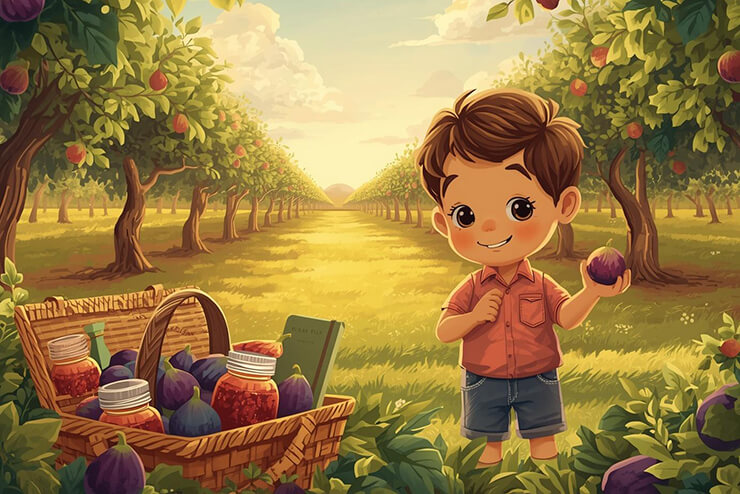
That very afternoon, he took me to visit a fig orchard in the valley.

And it was enormous.

Rows upon rows of trees stretched across the sun-washed fields, heavy with fruit. The air smelled warm and sweet. The orchard owners sold fresh figs, dried figs, fig jam, fig paste, and things I’m fairly sure were fig-adjacent even if I couldn’t pronounce them at the time.

We left with a basket overflowing with fig joy — more than enough to distract me from my backyard planting ambitions.

Where Figs Come From (Hint: Very Far Away)

Figs are one of humanity’s oldest cultivated fruits. Archaeological evidence suggests they were grown in the Middle East more than 11,000 years ago — possibly even before wheat. Ancient Egyptians revered them, Greeks celebrated them, and Romans carried them throughout their empire.

From the Mediterranean, figs traveled west with explorers and missionaries. Spanish settlers brought fig trees to Mexico and then north into California during the 1700s. The famous Mission fig—still widely grown today—earned its name from those early California missions.

Once established in the warm, dry climate of California’s Central Valley, figs thrived. The Sacramento Valley, with its long Summers and mild Winters, proved nearly perfect for them. No wonder that orchard I visited seemed so endless.

Where Figs Grow Best in the U.S.

Figs love warmth, sun, and relatively dry conditions. They perform best outdoors in:

  • California’s Central Valley and coastal zones
  • Texas and the Gulf Coast
  • Arizona and New Mexico
  • The Southeast (Georgia, Alabama, South Carolina)
  • Warmer parts of the Mid-Atlantic

In colder regions — including much of New England — figs can still be grown:

  • In containers moved indoors for Winter
  • Against south-facing walls for warmth
  • With Winter protection wraps
  • Or in greenhouses, where they actually do quite well thanks to their tolerance for dry air and limited root space

In other words, figs are surprisingly adaptable — especially if gardeners are willing to give them a little help.

A Few Fig Varieties Worth Knowing

Not all figs taste the same, and their uses vary wonderfully:

Mission Fig

Deep purple skin, strawberry-colored interior

Great fresh, dried, or in baking

Brown Turkey

Mild, sweet, reliable producer

Excellent for fresh eating and preserves

Kadota

Greenish-yellow skin, honeyed flavor

Wonderful for drying and canning

Black Madeira

Rich, complex flavor often described as “berry-like”

Highly prized by fig enthusiasts

Celeste (Sugar Fig)

Small, very sweet figs

Perfect for snacking straight off the tree


Fresh figs are luxurious on their own, but they also shine:

  • With goat cheese and honey
  • Wrapped in prosciutto
  • Roasted with balsamic glaze
  • Chopped into salads
  • Or simmered into jam

Fun Fig Facts

  • Figs are technically not fruit, but inverted flowers called syconia.
  • They are one of the few plants pollinated by a single specialized wasp species. (Don’t worry — the process is natural and harmless to eaters.)
  • The fig tree is mentioned repeatedly in ancient texts, from the Bible to classical literature.
  • Dried figs were once carried by Roman soldiers as energy rations — essentially the original power snack.
  • Fig leaves became humanity’s first recorded wardrobe accessory.

Full Circle: The Newton Returns

Weeks—or maybe months—after my Sunday school fig epiphany, our teacher arrived again with a snack surprise.

This time it wasn’t fresh fruit.

It was Fig Newtons.

Specifically, the ones made by Nabisco, which in my young mind represented the perfect merger of history, sweetness, and convenience. I rushed home that afternoon to report my discovery and asked my dad if we could pick up some on our next shopping trip.

We did.

And to this day, I remain a loyal Fig Newton fan.

I still enjoy fresh figs when I can get them, still admire fig trees whenever I encounter one, and still remember that Sunday morning when a small, wrinkled fruit opened the door to thousands of years of agricultural history.

Not bad for a snack that had to compete with Oreos. ❖

« Regrowing Green Onions, Carrot Greens and Celery in Water
The Great San Marzano Experiment »

Tags

a fig tree, fig tree, where figs grow

Comments

Click here to cancel reply.

Leave a Reply Cancel reply

Your email address will not be published. Required fields are marked *

Give a Gift

FREEBIE!

With your FREEBIE, you’ll also receive regular email messages from the Food Gardening Network. You can unsubscribe at any time.

Your email address is private. We promise never to sell, rent or disclose your email address to third parties.

Freebies

  • Worst Best Gardening Jokes Calendar
  • 5 Easy Healthy Carrot Recipes
  • 5 Easy Healthy Lemon Recipes
  • 5 Easy Healthy Salsa Recipes
  • 5 Easy Healthy Apple Recipes
  • 5 Easy Healthy Chicken Breast Recipes
  • Top 11 Food Gardening Tools You Need to Succeed
  • A Printable Companion Planting Chart
  • Plants for Bug Control Chart
  • Printable Seed Germination Temperature Chart
  • Printable Tomato Garden-to-Table Chart
  • Planning Your Perfect Food Garden
  • Printable Butterfly Garden Planting Chart
  • The Best Way to Grow Tomatoes
  • Printable Composting 101 Charts
  • How to Master Spice and Herb Gardening at Home
  • Printable Monthly Gardening Calendar
  • 10 Best Garden Poems of All Time
  • Vegetable Garden Planting Chart Freebie
  • Printable Flower Garden Companion Planting Chart
  • 10 Things You Can Grow That Your Pet Will LOVE To Eat!
  • Rose Garden Planting Chart Freebie
  • Printable Kitchen Garden Planting Charts
  • Sunflower Garden Planting Chart Freebie
  • Seasonal ArtPrints Collection Kit Sampler
  • Sampler: Gardening Humor
  • Sampler: Wit, Wisdom, & Learning
  • Gardening in Every Season
  • How to Start a Freedom Garden
  • Recipes from Your Garden
  • Sampler: Animals in the Garden
  • Sampler: Healing Gardens
  • Sampler: Joy of Gardening
  • Growing Vegetables Indoors for Beginners
  • 15 Easiest Fruits to Grow at Home
  • How to Grow a Vegetable Garden

Browse Topics

  • Buyers Guides
  • Composting
  • Container Gardening
  • Easy Healthy Recipes
  • Food Preservation
  • Garden Design
  • Garden Tools
  • Gardening Life
  • Growing Fruits & Berries
  • Indoor Gardening
  • Ornamental Gardening
  • Pests & Diseases
  • Seeds & Seedlings
  • Soil & Fertilizer
  • Spice & Herb Gardening
  • Uncategorized
  • Vegetable Gardening
  • Watering & Irrigation

Buyers Guides:

  • 9 Automated Garden Tools for Effortless Growing
  • 12 Cool Gardening Tools and Gifts for the Plant Lover in Your Life
  • Choosing the Best Shovel for Your Gardening Needs
  • 10 Gardening Tools for Seniors That Actually Make a Difference
  • This Countertop Compost Machine Turns Scraps into Compost in a Few Hours
  • 10+ Food Gardening Gadgets We Love
  • 15 Adaptive and Accessible Gardening Tools and Raised Beds
  • 13 Canning Tools, Supplies & Equipment You Need
  • The 3 Best Gardening Shoes
  • 5+ Best Bird Deterrents for Gardens
  • Shop Our Amazon Store

Authors:

  • Bill Dugan
  • Amanda MacArthur
  • Mike McGrath
  • Don Nicholas
  • Norann Oleson
  • Christy Page
  • Becky Rupp
  • Beth Rush
  • Pat Stone
  • Diana Wells

Enter Your Log In Credentials

This setting should only be used on your home or work computer.

  • Lost your password? Create New Password
  • No account? Sign up

Need Assistance?

Call Food Gardening Network Customer Service at
(800) 777-2658

Food Gardening Network is an active member of the following industry associations:

  • American Horticultural Society
  • GardenComm Logo
  • GardenComm Laurel Media Award
  • MCMA logo
  • Join Now
  • Learn More
  • About Food Gardening Network
  • Contact Us
  • Affiliate Program
  • Sponsor Program
  • Give a Gift
  • Privacy Policy & Terms of Use
  • Food Gardener’s Book Club FAQ

Food Gardening Network
99 Derby Street, Suite 200
Hingham, MA 02043
support@foodgardening.mequoda.com

To learn more about our Email Marketing and Broadcasting Services, Exchange Program, or to become a marketing partner with any of our publications, click here to contact us at Mequoda Publishing Network.

FREE E-Newsletter for You!

Discover how to grow, harvest, and eat good food from your own garden—with our FREE e-newsletter, delivered directly to your email inbox.

  • Facebook
  • Twitter
  • Instagram
  • Pinterest

Powered by
Mequoda Publishing Network
copyright © 2026 Mequoda Systems, LLC

Food Gardening Network®, Food Gardening Magazine® and GreenPrints® are registered trademarks of Mequoda Systems, LLC.