×
  • Home
  • Daily
    • Buyers Guides
    • Composting
    • Container Gardening
    • Easy Healthy Recipes
    • Food Preservation
    • Garden Design
    • Garden Tools
    • Gardening LIfe
      • Animals in the Garden
      • Funny Business
      • Gardening History
      • Gardening Humor
      • Gardening Mishaps
      • Gardening Poems
      • Gardening Romance
      • Gardening Science
      • Gardening with Kids
      • Healing Gardens
      • Joy of Gardening
      • Mystical Gardens
      • Ornamental Gardening
    • Growing Fruits & Berries
    • Indoor Gardening
    • Pests & Diseases
    • Seeds & Seedlings
    • Soil & Fertilizer
    • Spice & Herb Gardening
    • Vegetable Gardening
    • Watering & Irrigation
  • Freebies
  • Videos
  • Libraries
    • Food Gardening Magazine
    • GreenPrints Magazine
    • RecipeLion Magazine
    • GuideBooks
    • Cookbooks
      • Beverages
      • Bakery
      • Breakfast
      • Appetizers
      • Salads & Dressings
      • Soups
      • Entrées
      • Side Dishes & Sauces
      • Desserts
    • Story Collections
    • StoryBooks
    • Recipe Collections
  • Kits
    • Garden Calendars
    • Garden Plans
    • Recipe Cards
    • Greeting Cards
    • ArtPrints
  • Book Club
  • About Us
  • Contact Us
  • Affiliate Program
  • Sponsor Program
  • Give a Gift
  • Privacy Policy & Terms of Use
  • Authors
  • GreenPrints Writer’s Guidelines
  • Keyword Index
  • Join
Crochet, Food Gardening, Knitting, Quilting, Rug Hooking, Sewing

Food Gardener's Book Club

Give a GiftJoin
Visit Our Amazon Store!
  • Daily
    • Buyers Guides
    • Composting
    • Container Gardening
    • Easy Healthy Recipes
    • Food Preservation
    • Garden Design
    • Garden Tools
    • Gardening Life
      • Animals in the Garden
      • Funny Business
      • Gardening History
      • Gardening Humor
      • Gardening Mishaps
      • Gardening Poems
      • Gardening Romance
      • Gardening Science
      • Gardening with Kids
      • Healing Gardens
      • Joy of Gardening
      • Mystical Gardens
      • Ornamental Gardening
    • Growing Fruits & Berries
    • Indoor Gardening
    • Pests & Diseases
    • Seeds & Seedlings
    • Soil & Fertilizer
    • Spice & Herb Gardening
    • Vegetable Gardening
    • Watering & Irrigation
  • Freebies
  • Videos
  • Libraries
    • Food Gardening Magazine
    • GreenPrints Magazine
    • RecipeLion Magazine
    • GuideBooks
    • Cookbooks
      • Beverages
      • Bakery
      • Breakfast
      • Appetizers
      • Salads & Dressings
      • Soups
      • Entrées
      • Side Dishes & Sauces
      • Desserts
    • Story Collections
    • StoryBooks
    • Recipe Collections
  • Kits
    • Garden Calendars
    • Garden Plans
    • Recipe Cards
    • Greeting Cards
    • ArtPrints
  • Book Club
  • Visit Our Amazon Store!|
  • Sign In
  • Search

Anatomy of a Tomato Plant

Anatomy of a Tomato Plant

Getting to Know the Creature You’re Growing

By Don Nicholas

I’ve long been convinced that tomatoes behave much better once you understand how they’re put together.

Before we talk about varieties, fertilizers, pruning strategies, or heroic harvest stories, we need to pause and meet the tomato plant itself.

Because once you understand how a tomato plant is built—how it eats, drinks, breathes, flowers, and fruits—you stop guessing and start cooperating.

And tomatoes, for all their drama, respond beautifully to cooperation.
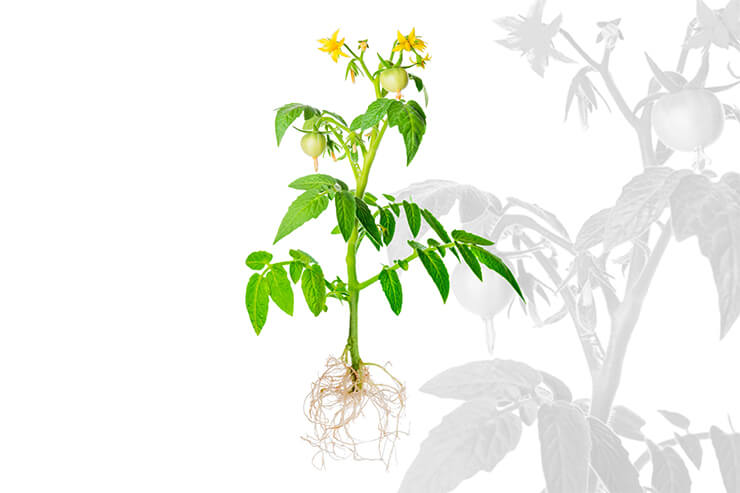
blossoming young seedling of fresh green tomatoes fruit with exposed roots is isolated on white background, close up

Why Tomato Anatomy Matters More Than You Think

Many tomato problems aren’t really problems at all.

They’re misunderstandings.

  • Leaves curling?
  • Flowers dropping?
  • Fruit cracking?
  • Plants growing like jungle vines but producing nothing edible?

In most cases, the plant is doing exactly what it was designed to do. It’s just reacting to conditions we accidentally created.

When you understand what each part of the tomato plant does—and what it needs—you gain the ability to:

  • Diagnose issues early
  • Adjust care with confidence
  • Improve flavor, yield, and plant health
  • Stop blaming yourself for things that aren’t actually your fault

Let’s take the plant apart—piece by piece.

The Roots: The Hidden Half of the Story

If tomatoes could talk, they’d tell you this first:

“What you see above ground is only half of me.”

Tomato roots:

  • Anchor the plant
  • Absorb water and nutrients
  • Store energy
  • Respond immediately to soil conditions

They are surprisingly adventurous. In loose, healthy soil, tomato roots will:

  • Spread wide
  • Grow deep
  • Actively explore for nutrients

Which is why root space matters so much.

What Roots Need

  • Loose, well-aerated soil
  • Consistent moisture (not floods, not droughts)
  • Warmth—cold soil slows everything down

This is why:

  • Raised beds warm faster
  • Containers dry out faster
  • Compacted soil limits growth no matter how much fertilizer you add

“Once I stopped crowding tomatoes and gave them deeper soil, everything improved.”
— Mark, Zone 6b, Indiana

The Stem: The Tomato’s Highway System

The main stem of a tomato plant is both:

  • A structural support
  • A transportation system

Water and nutrients move upward from the roots. Sugars produced in the leaves move downward and outward to fuel growth and fruit.

A healthy stem should be:

  • Thick
  • Firm
  • Green (or slightly fuzzy)

That fuzz? Completely normal—and useful. Tomato stems can grow additional roots if buried, which is why deep planting works so well.

Why This Matters

  • Weak stems = weak plants
  • Deep planting = stronger root systems
  • Proper support reduces stress and disease

Tomatoes want to climb. If you don’t help them, they’ll try anyway—often unsuccessfully.

Leaves: The Solar Panels

Leaves are where the real magic happens.

They:

  • Capture sunlight
  • Convert it into energy
  • Power every flower and fruit on the plant

No leaves, no tomatoes.
Damaged leaves, compromised harvest.

Healthy Tomato Leaves

  • Medium to dark green
  • Slightly fuzzy
  • Open and reaching toward light

What Leaves Are Telling You

  • Pale leaves often mean nutrient deficiency
  • Curling can indicate heat, water stress, or pruning shock
  • Spotted leaves may signal disease—or simply old age

Not every imperfect leaf needs intervention. Sometimes the plant is just reallocating resources to fruit.

“I used to panic over every leaf. Now I watch patterns instead.”
— Sandra, Zone 7a, Virginia

Flowers: The Promise Stage

Tomato flowers are modest little things—yellow, star-shaped, and easy to overlook.

But each flower is a promise.

Every tomato you eat started as a flower that:

  • Was successfully pollinated
  • Stayed attached long enough
  • Had enough energy to develop into fruit

Tomatoes are mostly self-pollinating, meaning:

  • Wind
  • Vibration
  • Insects
  • Or even a gentle shake

…can do the job.

Why Flowers Drop

  • High heat
  • Cold nights
  • Stress from drought or overwatering
  • Excess nitrogen

Flower drop doesn’t mean failure. It means conditions weren’t quite right that day.

Tomatoes are persistent. They’ll try again.

Fruit: The Reward (and the Responsibility)

Once pollination succeeds, the plant shifts gears.

Energy moves toward:

  • Fruit development
  • Seed production
  • Ripening

This is when the plant becomes especially sensitive to:

  • Water consistency
  • Nutrient balance
  • Temperature swings

Cracked fruit, blossom end rot, and bland flavor often trace back to stress during this stage.

Tomatoes want:

  • Steady conditions
  • Predictable care
  • No surprises

Of course, gardens are full of surprises—but the closer you get to consistency, the better your harvest.

Suckers: Villains, Heroes, or Misunderstood Sidekicks?

Ah yes—the great sucker debate.

Suckers are the shoots that grow at the junction between:

  • The main stem
  • A leaf branch

Left alone, they become full branches capable of:

  • Flowering
  • Fruiting
  • Producing tomatoes

Pruned aggressively, they:

  • Redirect energy
  • Improve airflow
  • Simplify plant structure

Neither approach is universally right.

The Truth About Suckers

  • Determinate tomatoes need fewer decisions
  • Indeterminate tomatoes offer flexibility
  • Your space, support system, and goals matter

We’ll go deeper into this later, but for now, know this:
Suckers aren’t mistakes. They’re options.

How Growing Method Changes Plant Behavior

The same tomato variety behaves differently depending on where it grows.

  • In-ground: Deep roots, stable moisture, larger plants
  • Raised beds: Faster growth, warmer soil, excellent drainage
  • Containers: Compact roots, frequent watering, earlier fruiting
  • Indoor soil & grow lights: Slower growth, tighter structure, total control
  • Hydroponics: Rapid growth, high yields, precise nutrition
  • Greenhouses: Extended seasons, tall vines, incredible flavor potential

Understanding anatomy helps you adapt care—not fight the plant.

What the Tomato Plant Wants From You

If I had to sum it up, tomato plants want:

  • Room for roots
  • Light for leaves
  • Support for stems
  • Balance for flowers
  • Consistency for fruit

They don’t ask for perfection.
They ask for attention.

Once you understand how the plant is built, every future decision—from pruning to feeding to variety choice—becomes clearer.

And when something goes wrong?
You’ll know where to look first.

Coming Up Next

Now that we know how a tomato plant works, it’s time to make one of the most important decisions you’ll make all season:

Which tomato should you grow—and why?

Up next, we’ll talk about choosing the right tomato for the right job, because the best tomato in the world is useless if it doesn’t match your garden—or your dinner plate.

Let’s keep going.

« How to Use This Book
Choosing the Right Tomato for the Right Job »

Tags

determinate tomatoes, fertilizer, indeterminate tomatoes, overwatering, tomato flowers, tomato roots, tomatoes

Comments

Click here to cancel reply.

Leave a Reply Cancel reply

Your email address will not be published. Required fields are marked *

Give a Gift

FREEBIE!

With your FREEBIE, you’ll also receive regular email messages from the Food Gardening Network. You can unsubscribe at any time.

Your email address is private. We promise never to sell, rent or disclose your email address to third parties.

Freebies

  • Worst Best Gardening Jokes Calendar
  • 5 Easy Healthy Carrot Recipes
  • 5 Easy Healthy Lemon Recipes
  • 5 Easy Healthy Salsa Recipes
  • 5 Easy Healthy Apple Recipes
  • 5 Easy Healthy Chicken Breast Recipes
  • Top 11 Food Gardening Tools You Need to Succeed
  • A Printable Companion Planting Chart
  • Plants for Bug Control Chart
  • Printable Seed Germination Temperature Chart
  • Printable Tomato Garden-to-Table Chart
  • Planning Your Perfect Food Garden
  • Printable Butterfly Garden Planting Chart
  • The Best Way to Grow Tomatoes
  • Printable Composting 101 Charts
  • How to Master Spice and Herb Gardening at Home
  • 10 Best Garden Poems of All Time
  • Vegetable Garden Planting Chart Freebie
  • Printable Flower Garden Companion Planting Chart
  • 10 Things You Can Grow That Your Pet Will LOVE To Eat!
  • Rose Garden Planting Chart Freebie
  • Printable Kitchen Garden Planting Charts
  • Sunflower Garden Planting Chart Freebie
  • Seasonal ArtPrints Collection Kit Sampler
  • Sampler: Gardening Humor
  • Sampler: Wit, Wisdom, & Learning
  • Gardening in Every Season
  • How to Start a Freedom Garden
  • Recipes from Your Garden
  • Sampler: Animals in the Garden
  • Sampler: Healing Gardens
  • Sampler: Joy of Gardening
  • Growing Vegetables Indoors for Beginners
  • 15 Easiest Fruits to Grow at Home
  • How to Grow a Vegetable Garden

Browse Topics

  • Buyers Guides
  • Composting
  • Container Gardening
  • Easy Healthy Recipes
  • Food Preservation
  • Garden Design
  • Garden Tools
  • Gardening Life
  • Growing Fruits & Berries
  • Indoor Gardening
  • Ornamental Gardening
  • Pests & Diseases
  • Seeds & Seedlings
  • Soil & Fertilizer
  • Spice & Herb Gardening
  • Uncategorized
  • Vegetable Gardening
  • Watering & Irrigation

Buyers Guides:

  • 9 Automated Garden Tools for Effortless Growing
  • 12 Cool Gardening Tools and Gifts for the Plant Lover in Your Life
  • Choosing the Best Shovel for Your Gardening Needs
  • 10 Gardening Tools for Seniors That Actually Make a Difference
  • This Countertop Compost Machine Turns Scraps into Compost in a Few Hours
  • 10+ Food Gardening Gadgets We Love
  • 15 Adaptive and Accessible Gardening Tools and Raised Beds
  • 13 Canning Tools, Supplies & Equipment You Need
  • The 3 Best Gardening Shoes
  • 5+ Best Bird Deterrents for Gardens
  • Shop Our Amazon Store

Authors:

  • Bill Dugan
  • Amanda MacArthur
  • Mike McGrath
  • Don Nicholas
  • Norann Oleson
  • Christy Page
  • Becky Rupp
  • Beth Rush
  • Pat Stone
  • Diana Wells

Enter Your Log In Credentials

This setting should only be used on your home or work computer.

  • Lost your password? Create New Password
  • No account? Sign up

Need Assistance?

Call Food Gardening Network Customer Service at
(800) 777-2658

Food Gardening Network is an active member of the following industry associations:

  • American Horticultural Society
  • GardenComm Logo
  • GardenComm Laurel Media Award
  • MCMA logo
  • Join Now
  • Learn More
  • About Food Gardening Network
  • Contact Us
  • Affiliate Program
  • Sponsor Program
  • Give a Gift
  • Privacy Policy & Terms of Use
  • Food Gardener’s Book Club FAQ

Food Gardening Network
99 Derby Street, Suite 200
Hingham, MA 02043
support@foodgardening.mequoda.com

To learn more about our Email Marketing and Broadcasting Services, Exchange Program, or to become a marketing partner with any of our publications, click here to contact us at Mequoda Publishing Network.

FREE E-Newsletter for You!

Discover how to grow, harvest, and eat good food from your own garden—with our FREE e-newsletter, delivered directly to your email inbox.

  • Facebook
  • Twitter
  • Instagram
  • Pinterest

Powered by
Mequoda Publishing Network
copyright © 2026 Mequoda Systems, LLC

Food Gardening Network®, Food Gardening Magazine® and GreenPrints® are registered trademarks of Mequoda Systems, LLC.