

 Give a Gift
 Previous
Read by Matilda Longbottom
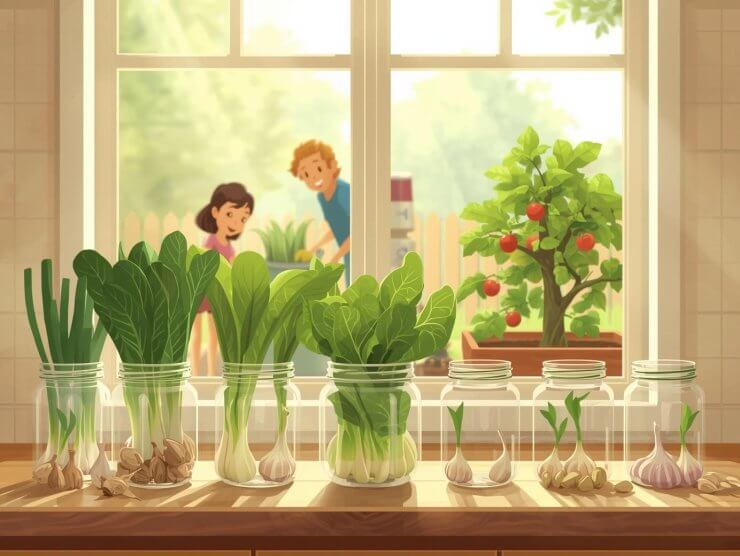
“Don’t toss that onion bottom!” I hollered just as my daughter Maya prepared to fling it into the compost bucket.
She froze, onion in midair. “What? It’s garbage, Mom.”
I swooped in like a superhero of scraps, rinsed the base under the faucet, and held it up triumphantly. “This little guy can grow us a whole new onion. Come on, I’ll show you.”
And just like that, our zero-waste gardening adventure began—with a rescued onion and a spark of curiosity.
Regrowing Scraps, Regrowing Connection
That onion bottom got a seat of honor in a shallow dish of water on the kitchen windowsill. Within a few days, green antennae shot up. Maya leaned in, eyebrows raised.
“Okay… that’s kind of cool.”
Soon our windowsill became a living lab of food scraps and scientific wonder. Romaine hearts, scallion roots, garlic cloves, carrot tops—some flourished, others fizzled. But each attempt taught us something new.
We learned patience. We learned to pay attention. And most of all, we learned that even the humblest leftovers could become something vibrant and new.
The Compost Corner
Next came our compost bucket.
At first, I approached it like a biohazard. “What if it smells?” I asked my husband Dan, holding a coffee filter like it might bite.
“It won’t,” he said with a grin. “As long as we balance the greens and browns.”
Greens: veggie peels, coffee grounds, fruit scraps.
Browns: dry leaves, paper towels, cardboard bits.
We stirred the pile with reverence, like apprentice witches over a bubbling cauldron. And lo, after weeks of patient tending, we harvested dark, crumbly compost.
Dan held it in his hands like treasure. “We could sell this stuff.”
“No way,” I laughed. “This is black gold for our tomatoes!”
Fertilizer Tea: A Brew for the Brave
Then we ventured into… compost tea.
“Wait,” Maya said, nose wrinkling. “You’re making weed stew?”
“Technically, yes.” I stirred the bucket like a potion master. Nettles, comfrey, dandelions—steeped in water for a week, stirred daily.
“It smells like a swamp,” she declared.
“Swampy but strong,” I countered. And sure enough, our kale stood taller, the basil gleamed greener, and the cucumbers turned into Olympic athletes of the vine.
Mulch Magic
Our final frontier: mulch.
We chopped up old stems, vines, and dried stalks, layering them across our garden beds. The mulch locked in moisture, kept weeds in check, and blanketed the soil in a cozy, nutrient-rich hug.
One evening, as the setting sun painted our backyard gold, Maya knelt beside me and looked around.
From the compost bin to the tea buckets to the now-legendary onion windowsill, she saw the full circle.
“No waste,” she said.
“Not in this garden,” I replied, brushing soil from my knees. “Not in this kitchen.”
She smiled. “That’s kind of awesome.”
Full Circle
There’s a quiet joy in using everything Earth offers.
It’s not just about reducing waste. It’s about reverence—for the food we grow, the scraps we save, and the life cycles we’re privileged to join.
Our kitchen smells not of garbage, but of garlic and basil, tomato leaves and new beginnings. It’s the smell of Earth whispering, “Thank you.” And us whispering back, “Right back atcha.” ❖
About the Author: Faiza Api is a garden educator, writer, and full-time compost enthusiast. She believes the best lessons in science, patience, and joy begin with dirt under your nails. Her home is powered by green onions, banana peels, and the occasional skeptical teenager.