

 Give a Gift
 Previous
Read by Michael Flamel
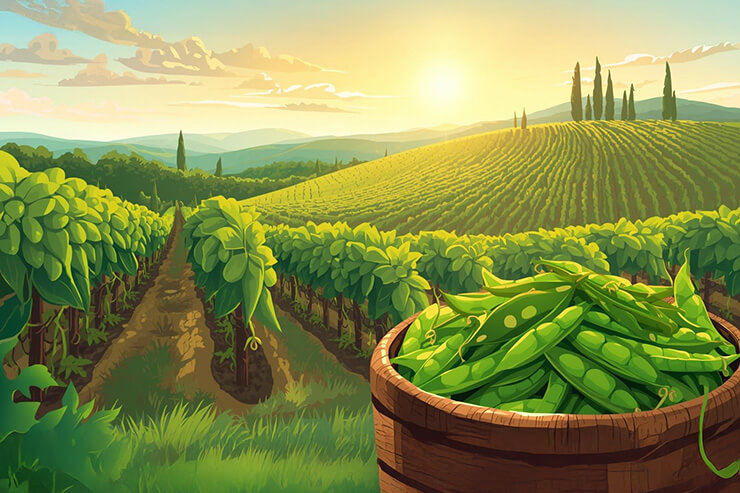
A Fresh Discovery in Tuscany
It happened on a sun-dappled afternoon in the Tuscan countryside. Gail and I had stopped for lunch at a small farmhouse trattoria perched on a hillside surrounded by rows of olive trees and orderly gardens bursting with Spring vegetables. Expecting a traditional lettuce-based salad, we were intrigued when the server placed before us a generous bowl of glistening green snow peas—sweet, crisp, and dressed so simply with golden local olive oil, a splash of sharp Italian vinegar, and a sprinkling of herbs.
No lettuce. No kale. No frilly frisée. Just snow peas as the main event—vibrant, tender, and fresh from the farm that morning. That first bite was a revelation: bright, slightly sweet, with a satisfying crunch that carried the essence of the Tuscan earth. It was a salad that made us both smile and rethink what “garden fresh” really means.
A Tale of the Humble Snow Pea
Snow peas (Pisum sativum var. macrocarpon) have a long and storied history. They’re believed to have been cultivated in parts of China more than 2,000 years ago, where they were prized for their tender, edible pods. Traders along the Silk Road carried their seeds westward into the Middle East and Mediterranean and by the Renaissance, snow peas were thriving in European gardens—especially in Italy and France, where chefs loved their delicate sweetness.
The name “snow pea” hints at their cool-weather preferences. Farmers and gardeners have long planted them in late Winter or early Spring, knowing these hardy vines can tolerate light frost and will happily grow even as the last patches of snow melt away. Today, snow peas are enjoyed around the globe—from stir-fries in Asia to pasta tosses in Europe and now, as we discovered, starring as the heart of a Tuscan salad.
Snow Peas in the Kitchen
Snow peas are the gardener’s friend: versatile, fast-growing, and generous. Their thin, edible pods mean no shelling is required—just pick, rinse, and cook. (Or eat raw!). While often tossed into stir-fries or served as a side, they also make a brilliant base for fresh salads, adding a juicy crunch that holds up to hearty dressings.
Some cooks blanch them briefly to enhance their vibrant green color and sweetness; others prefer them raw for maximum crispness. They also freeze well, ensuring a taste of Springtime in the middle of Winter.
Fun Facts about Snow Peas
- Snow peas are technically a legume, which means they enrich the soil by fixing nitrogen—great news for gardeners who rotate crops.
- The tender vines produce lovely white or purple flowers before setting pods, making them a pretty addition to garden beds and trellises.
- Snow peas are low in calories yet high in vitamins A, C, and K—perfect for a healthy, light garden meal.
- Their pods should be harvested young and flat; the peas inside stay small and sweet, which is the key to that tender crunch.
- The Chinese name for snow peas, hé lán dòu, translates to “Holland bean,” reflecting their popularity in European trade centuries ago.
Tuscan Snow Pea Salad with Italian Herb Dressing
A bright, rustic dish that celebrates the season’s earliest harvest. Perfect as a starter or a light lunch with crusty bread.
Ingredients
For the Salad:
- 4 cups fresh snow peas, trimmed
- 1 cup cherry tomatoes, halved
- 1/2 small red onion, thinly sliced
- 1/4 cup shaved Parmesan cheese
- 1/4 cup toasted pine nuts (optional)
For the Dressing:
- 1/3 cup extra-virgin Tuscan olive oil
- 2 tablespoons red wine vinegar (or white balsamic)
- 1 teaspoon Dijon mustard
- 1 teaspoon fresh oregano, minced
- 1 teaspoon fresh basil, minced
- 1/2 teaspoon fresh thyme, minced
- Sea salt and freshly ground black pepper, to taste
Instructions
- Bring a pot of lightly salted water to a boil. Blanch snow peas for 30–45 seconds, then plunge into ice water to preserve color and crispness. Drain and pat dry.
- In a large salad bowl, combine snow peas, cherry tomatoes, red onion, Parmesan, and pine nuts.
- In a small jar, whisk or shake together the olive oil, vinegar, mustard, herbs, salt, and pepper until emulsified.
- Drizzle dressing over the salad just before serving and toss gently. Serve immediately with crusty bread and a chilled glass of Pinot Grigio or sparkling water with lemon.
A Garden Worth Savoring
Back home in New England, I now find myself eyeing my early Spring garden with a renewed sense of purpose. Instead of lettuce, why not dedicate a raised bed to snow peas and recreate a little taste of Tuscany right here? As gardeners, we often discover that the simplest plants can bring the most delightful surprises to the table.
Have you experimented with snow peas in your salads or garden-to-table dishes? I’d love to hear about your favorite recipes and growing tips in the comments below. ❖




I love snow peas! Coming from the Hawaiian Islands, snow peas were in many of our island dishes, especially in Chinese dishes. We had real “chop suey houses” there and regretfully I can’t find any here like we had back home. But the snow pea can be grown here in the deep South and become a healthy and delicious addition to any meal and stir fry meals. Meanwhile, the sugar pea variety is delicious in what
we call here, English Pea Salad . I just made one yesterday and added diced avocado, it was delicious. This lovely article brings back such sweet memories of island life, thank you!