
 Give a Gift
 Previous
Read by Matilda Longbottom
“Mom, did you really get Sister’s permission for us to take a day off school?” Six curious voices filled the chilly pre-dawn air as we piled into the car, clutching our scarves and mittens. It was 1961, and our mother had handwritten six notes to our teachers, plus one to the principal. Her argument? We city kids needed to see how nature worked—up close and personal.
We were headed to the Pennsylvania Farm Show in Harrisburg, a two-hour journey that took us from the gray city streets of Philadelphia to a bustling Winter wonderland of agriculture. Mom was determined that we experience the sights, sounds, and smells of farm life beyond the flat illustrations in our textbooks.
As we stepped into the cavernous farm-show center, the cold hit our faces, but excitement warmed us. Breath puffed into the frigid air as we wandered past pens of curious cows with gentle eyes and impossibly long lashes. We stood on tiptoe along fences to see towering horses flicking their tails, and squealed with laughter at the ducks waddling up and down a tiny ladder into their pond—some falling off, to our delight.
The bunnies stole our hearts. They weren’t just the pastel caricatures of Easter decorations; they came in every imaginable color, wiggling their noses at us in real life. We begged Mom to let us bring one home. Her firm “no” was softened only by her promise that we could pet them.
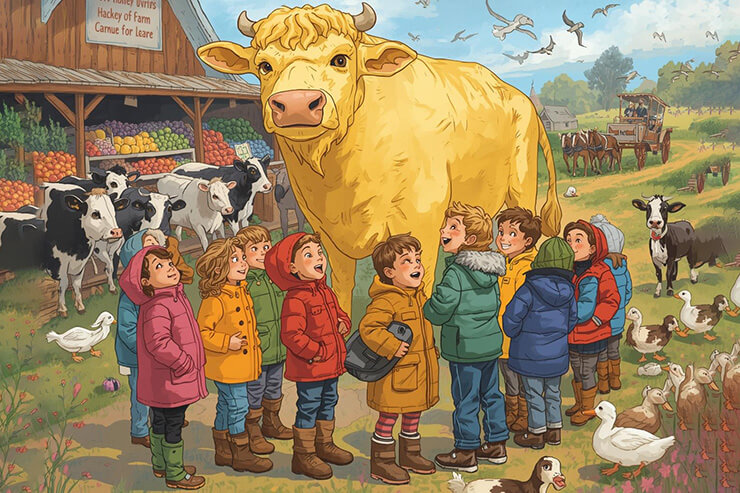
While we showed less enthusiasm for the produce displays, the “Sheep to Shawl” contest captivated us. We watched as farmers sheared sheep, then swiftly washed, dyed, and spun the wool into magnificent shawls. The butter cow—a life-size sculpture carved entirely out of butter—drew our awe and giggles.
It was a revelation to learn about the work behind even the simplest foods. Corn and hay weren’t just abstract concepts anymore; they were lifelines for the animals we’d admired. We realized that behind every slice of bread or sip of milk was someone’s hard labor and dedication.
Our own neighborhood grocery store offered only the basics—celery, onions, potatoes. Anything beyond that came from cans or the newfangled frozen-food aisle. The farm show was our first glimpse of fresh vegetables in vibrant, diverse colors. Though we didn’t appreciate it then, this glimpse planted the seeds of appreciation for local farmers.
The next day at school, we couldn’t stop talking about what we’d seen, touched, and learned. Our classmates listened wide-eyed as we recounted our adventures. Few of their mothers would have gone to such lengths to make farming and gardening real for city kids.
Years later, I found myself walking the same halls of the farm show with my grandchildren. Their world is filled with video games and organized sports, but I wanted them to feel the connection to the land that my mother gave us. The butter cow, the bunnies, the curious cows with their long lashes—it was all still there, and their eyes lit up just like ours did.
Thanks to my mother’s determination, a tradition was born. She passed down more than a love for farm animals or curiosity about plants; she showed us the value of stepping into someone else’s world, even for a day. And now, we’re passing that lesson to the next generation. ❖
About the Author: Hannah Dougherty Campbell, a spirited wordsmith with a heart as lush as her garden, hails from the suburbs of Philadelphia. Inspired by the beauty of nature and the resilience of the human spirit, Hannah found solace and creativity in crafting heartfelt poetry. With a background in teaching and a passion for nurturing creativity, she imparts her wisdom through her creative writing classes, where she encourages others to explore the depths of their souls through the written word. Her cherished tradition of assigning flowers to personalities has blossomed into a family heirloom, enriching the lives of her loved ones and students alike. Through her work, she reminds us all of the delicate dance between nature and humanity, where every petal tells a story and every soul blooms in its own unique way.